




Curious about how a 2 ton/hour tire recycling production line balances large-scale operation with profit margins while addressing environmental challenges? This guide explores its core advantages, optimized processes, equipment selection, and investment logic for mid-size recycling projects.
I. What Makes 2 Ton/Hour the “Sweet Spot” for Mid-Size Enterprises?
For businesses scaling up or targeting regional bulk waste tires, the 2 ton/hour line is a strategic choice, with key advantages:
- Unit Cost Optimization: Reduces fixed costs (depreciation, rent) by 25-35% vs. 1 ton/hour lines, as doubled output offsets incremental investment.
- Wider Resource Adaptability: Processes large truck/engineering tires and industrial rubber—materials small-scale lines can’t handle—expanding raw material supply.
- Policy Eligibility: Meets 30+ tons/day processing thresholds for higher EU/US environmental subsidies and tax incentives.
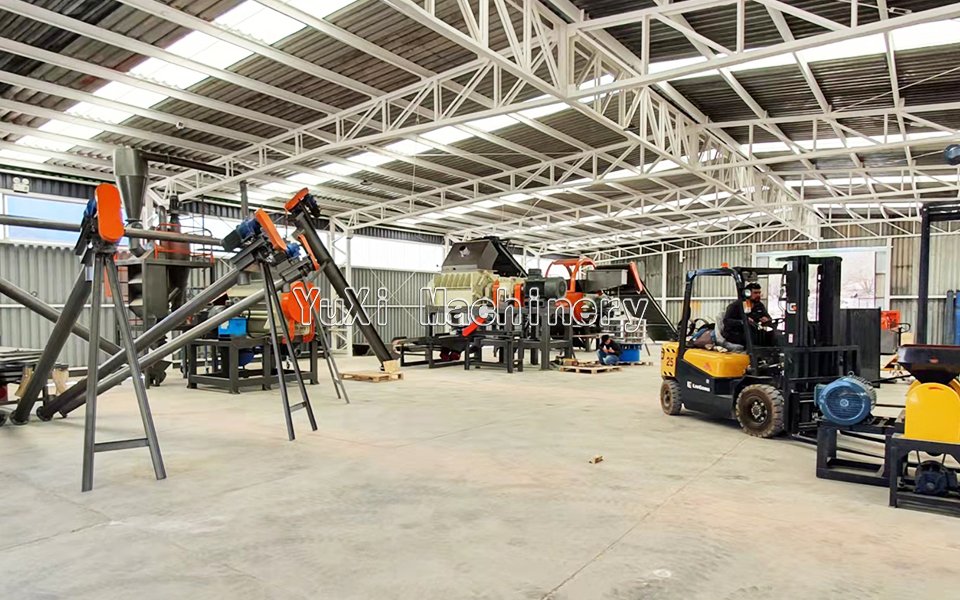
II. Core Production Process of 2 Ton/Hour Tire Recycling Line
The line integrates intelligence and efficiency, with 6 optimized processes:
- Automated Preprocessing
Image recognition sorts tires by type/size; hydraulic cutters handle large tires, and high-frequency screens remove impurities. Pneumatic bead separators (4-5 tires/minute) preserve steel wire value. - Energy-Saving Rough Crushing
Low-noise double-shaft shredders (180-220 HP, AISI 420 cutters) crush tires into 4-6 inches chunks, saving 15-20% electricity. Sound insulation (≤75 dB) meets EU EN ISO 11200 standards. - Closed-Loop Medium Crushing
High-chromium alloy hammers (HRC 60-65) grind chunks into 0.8-1.2 inches particles. Built-in heat recovery reuses crushing heat, cutting energy use by 10-15%. - Cryogenic Fine Grinding
Liquid nitrogen cools particles to -70℃–-80℃ for brittle grinding, producing 60-150 mesh ultra-fine rubber powder. Avoids aging, retaining 95% of rubber’s physical properties for high-end applications. - Multi-Stage Sorting
High-gradient magnetic separators (≥18,000 gauss) and density separators purify steel wire to 99.8% purity. Electrostatic separators recover 98% pure fiber for industrial fabrics. - Intelligent Storage & Packaging
Temperature/humidity-controlled silos prevent agglomeration. Automated systems (50-60 bags/minute) integrate packaging, palletizing, and WMS for real-time inventory tracking.
III. Key Equipment Selection Criteria
- Double-Shaft Shredder: 200 HP IE3 motor, AISI 420 cutters, hexagonal shafts, and automatic reverse for jamming.
- Cryogenic Grinder: ≤50 L/hour liquid nitrogen use, diamond discs (≥2000 hours life), and ≤3μm dust filtration.
- Sorting System: Magnetic separators (≥18,000 gauss), cyclone density separators, and 0-50 kV electrostatic separators.
- Environmental System: Centralized dust removal (≥400,000 CFM, 99.9% efficiency), VOC treatment (EU REACH/US EPA Tier 4 compliant), and 90% wastewater recycling.
IV. Investment & Revenue Analysis (EU/US Standards)
Initial Investment
- Equipment: $120,000–$150,000; Site/Infrastructure: $40,000–$60,000; Other Costs: $20,000–$30,000; Total: $180,000–$240,000.
Operating Costs (8hrs/day, 25days/month)
- Raw Materials: $1,000–$1,300/ton; Energy: $300–$350/ton; Labor: $80–$125/ton; Maintenance: $25–$40/ton; Unit Cost: $1,050–$1,437.5/ton.
Revenue & Profit
- Rubber Powder: $2,500–$5,000/ton (12–15 tons/month); Steel Wire: $3,000–$3,500/ton (2.4–3 tons/month); Fiber: $1,500–$2,000/ton (1.2–1.6 tons/month); Subsidies: $50–$100/ton.
- Monthly Profit: $16,000–$30,700; Payback Period: 6–12 months.
V. Market & Risk Strategies
- Market Expansion: Segment customers (asphalt, medical rubber, special steel), obtain ISO certifications, and extend the value chain.
- Risk Prevention: Diversify suppliers, maintain equipment, and monitor policy changes.
A 2 ton/hour tire recycling line is a high-value, intelligent solution for mid-size enterprises. It transforms waste tires into profitable resources via cryogenic grinding and precision sorting, balancing efficiency, compliance, and profit. With scientific management, it’s a powerful engine for circular economy growth.