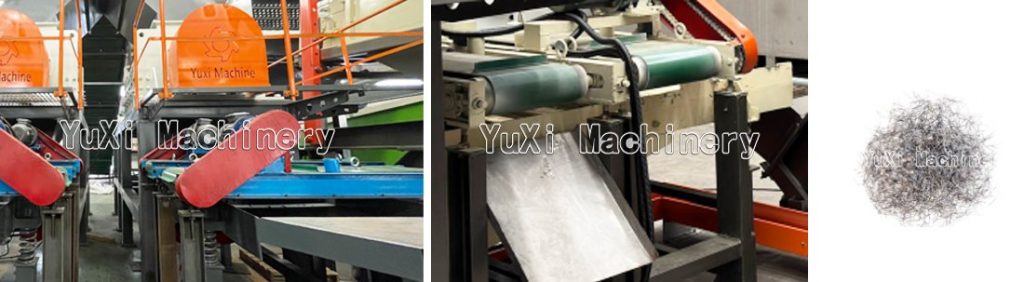
Tire Wire Free Mulch Plant

YUXI Tire Wire Free Mulch Plant converts whole tires or pre-shredded tire chips into 10–20 mm rubber mulch. The complete process uses primary shredding, tire rasping, magnetic steel recovery and, where lower textile content is required, fiber separation. The line can be supplied from whole-tire feeding or configured as a downstream module for an existing tire shredder.

The important buying questions are the accepted feed size, finished mulch range, steel and fiber condition, capacity basis and whether the 10–20 mm product will be sold directly or sent to a finer crumb-rubber stage.

Compare Configurations
Tire Wire Free Mulch Plant
10–20 mm Rubber mulch output
0.5–10 t/h Reference capacity
Whole Tires or Pre-Shredded Chips Flexible feed options

What This Tire Wire Free Mulch Plant Produces

This production line sits between rough tire shredding and finer crumb-rubber processing. It reduces tire chips to a marketable mulch size, releases embedded steel from the rubber, recovers that steel and delivers a more uniform 10–20 mm mulch product.

The line may start from whole tires or from pre-shredded chips. A whole-tire project needs a primary shredder, while an existing tire-recycling plant may only need the rasper and separation module.

Equipment selection begins with the finished product: accepted mulch size, oversize tolerance, visible steel condition, textile-fiber requirement and whether the output will be used directly or sent to a finer granulation stage.

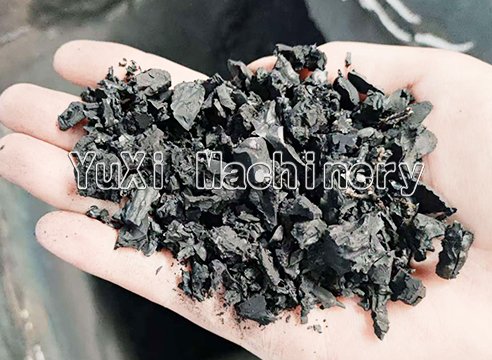
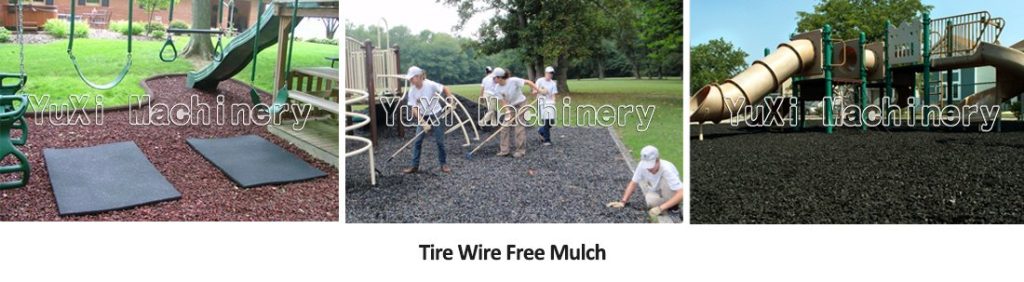
Tire Wire Free Mulch

Two Real-World Configuration Types

Some projects need a complete production line from whole tires. Others already have a tire shredder and only need the rasper, steel-recovery and finishing stages. Separating these two scopes makes quotations easier to compare.

1. Complete Rubber Mulch Production Line

Typical feed: whole passenger or truck tires, and project-confirmed larger tires.

  • Primary tire shredder for rough size reduction
  • Tire rasper for secondary cutting and steel liberation
  • Magnetic separation system
  • Screening and oversize return
  • Conveyors and optional PLC control

This is the right choice when the customer wants a whole tire rubber mulch production line rather than only a downstream module.

2. Mulch Processing Module

Typical feed: pre-shredded tire chips, usually below about 100 mm.

  • Tire rasper as the core machine
  • Magnetic separation for steel recovery
  • Screening and oversize return
  • Optional dust and fiber handling

This configuration is often the better commercial fit when the customer already has a shredder and is mainly looking for a tire rasper machine plus downstream separation and size control.

Rubber Mulch Production Process

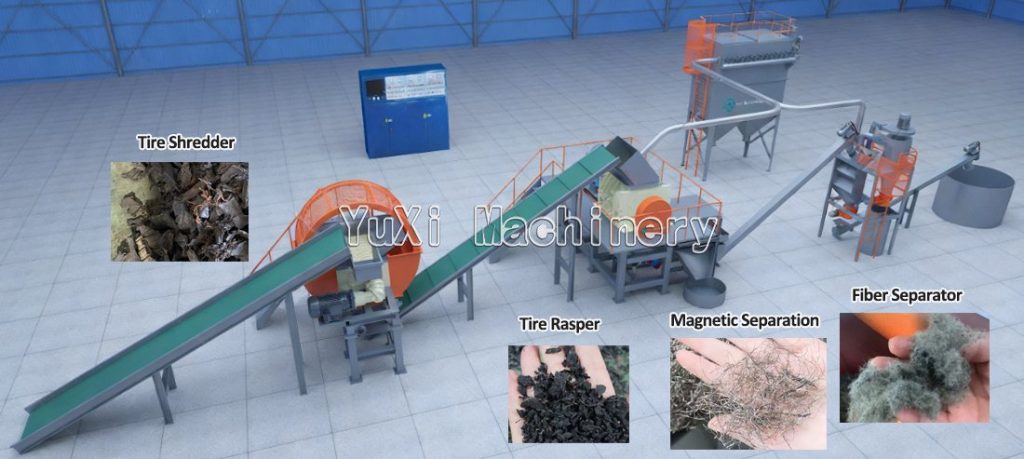
Whole tires are first reduced to rough chips. The tire rasper then cuts the chips to 10–20 mm and liberates embedded steel. Magnetic separation recovers the released steel. Fiber separation is included when the final mulch application requires lower textile content. A screen and return route can be added when the project needs tighter particle-size control.

Tire Wire Free Mulch Plant Process Flow

Original YUXI process image showing the primary shredder, tire rasper, magnetic separation and recovered materials.

Configuration point: the 10–20 mm product range should be confirmed together with the allowed oversize, steel condition and textile-fiber requirement. Screening, return material handling and fiber separation should be listed clearly in the final equipment scope rather than assumed from the headline output size.

Main Machines and Separation Stages

The shredder prepares feed for the rasper. The rasper performs the main secondary cutting and steel liberation. Magnetic separation recovers released steel, while fiber handling and optional screening are selected according to the final mulch specification.

Tire Wire Free Mulch Plant Machine Details
1

Primary Tire Shredder

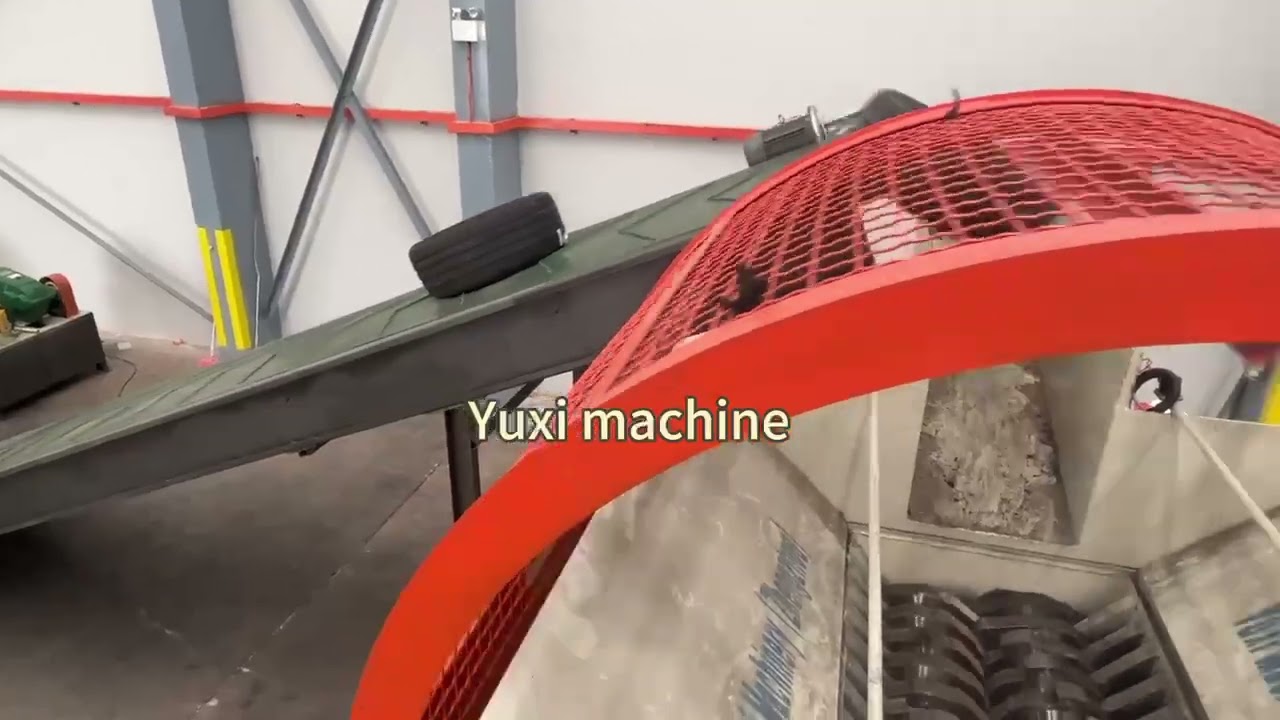
The shredder is used when the plant starts from whole tires. Its job is not to make finished mulch. Its job is to prepare a manageable feed for the rasper.

That distinction matters commercially. A buyer searching for a tire shredder for rubber mulch is often not buying a finished product line in one step. They are buying the first stage of a multi-machine process.

View the Tire Shredder Machine

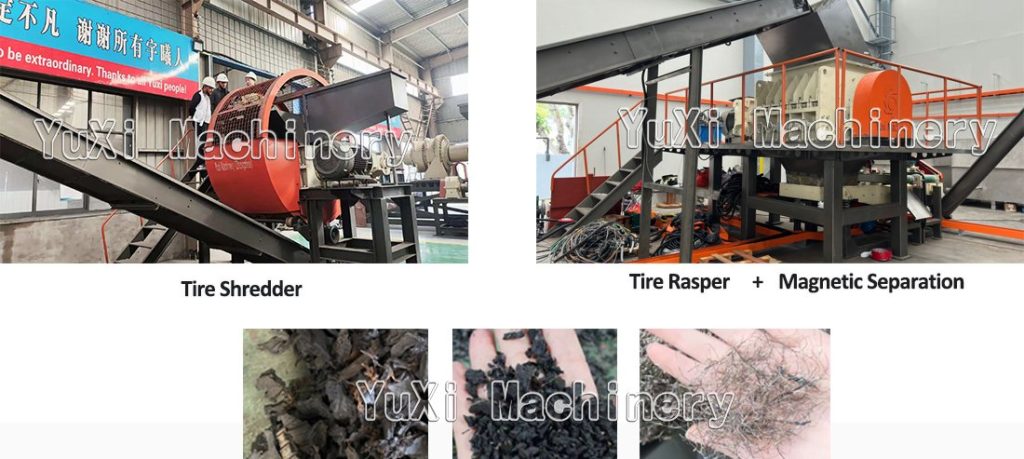
Tire Wire Free Mulch Plant Machine Details real shot
2

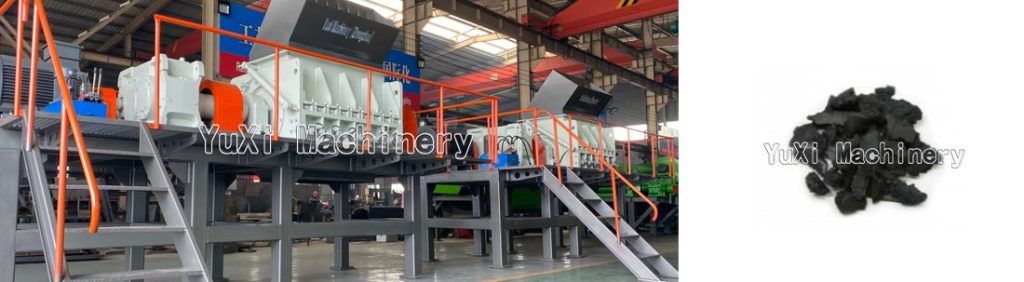
Tire Rasper Machine

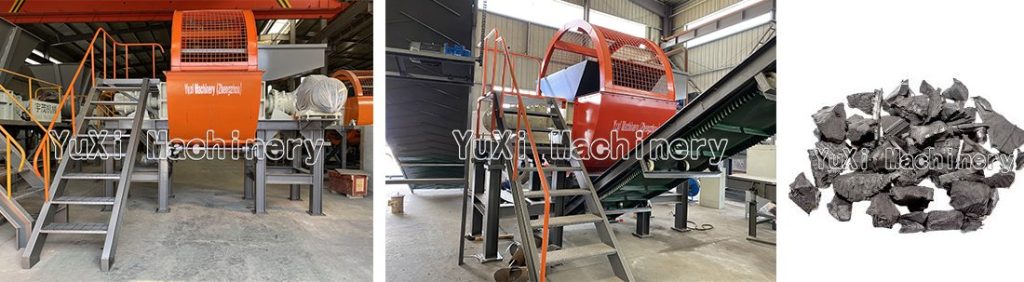
The rasper is the core machine in this page. It cuts the rough tire chips down further and helps liberate embedded steel from the rubber. That is why tire rasper machine and rubber rasper machine are both strong commercial terms for this stage.

The practical output from the rasper depends on feed consistency, cutter condition, tire construction and the way oversize is recirculated. Smaller target mulch usually means more cutting work per ton.

Tire Wire Free Mulch Plant Machine Details in factory
3

Magnetic Separation

The magnetic separator receives 10–20 mm rubber chips mixed with liberated steel and textile fiber. Its job is to recover the steel released by the rasper. The remaining rubber-and-fiber fraction moves to the next finishing stage.

Steel liberation, magnetic recovery and final rubber purity are separate measurements. They should be checked independently when comparing line configurations.

Fiber Separator

After steel removal, the rubber can still contain textile cord. A fiber separator is used when the finished mulch market requires lower textile content. The separated textile fraction should be collected and handled according to the local end-use or disposal route.

The original line image shows a fiber-separation stage. Whether it is included as standard equipment or added for a specific purity target should be stated in the final quotation.

Screening and Return Material

A screen and oversize-return route are useful when the buyer needs a tighter 10–20 mm size distribution. Oversized chips return to the rasper instead of leaving with the finished mulch.

This stage affects capacity: a tighter screen keeps more material in circulation and increases cutting work per ton.

Stage Inputs, Outputs and Purity Terms

The existing product data includes useful stage-level figures. They should be read as process references, not combined into one final-purity claim.

StageTypical inputTypical outputHow to read the figure
Primary tire shredderWhole tires or prepared tire sectionsRough tire shredsPrepares stable feed for the rasper; it does not make the finished mulch.
Tire rasperRough tire shreds below approximately 100 mm10–20 mm rubber chips with steel liberated from the rubberThe existing specification lists 99% liberated steel. Liberation is not the same as final mulch purity.
Magnetic separator10–20 mm rubber chips mixed with steel and fiberRecovered steel plus a rubber-and-fiber fractionThe existing specification lists 97–98% steel wire recovery. This does not mean the rubber is 97–98% pure.
Fiber separatorRubber mixed with textile fiberCleaner rubber mulch plus separated textile fiberUse this stage when the buyer defines a lower fiber-content requirement.

Final rubber quality should be confirmed by an agreed sampling method covering visible steel, textile fiber and particle-size distribution.

Output Quality & Product Definition

Output Size and What “Wire-Free” Means

The main product discussed on this page is 10–20 mm rubber mulch. In practice, size control, steel recovery and textile-fiber condition should be defined together, because they affect both the usable market and the final line scope.

How to Read “Wire-Free” Correctly

The phrase “wire-free” should be explained carefully. In real production, it is more useful to separate the process into three measurements rather than rely on one simplified purity claim.

Steel liberation

How effectively the tire rasper releases embedded steel from the rubber chips.

Steel recovery

How effectively the magnetic separation system removes the released steel from the material flow.

Final mulch quality

The practical steel-and-fiber condition and the finished size range in the delivered mulch product.

Purity figures are only useful when the test basis is clear. The proposal should distinguish steel liberation, magnetic recovery and the actual steel-and-fiber condition of the finished mulch.

Points to Confirm Before Finalizing the Line

  • Required mulch size range
  • Allowed oversize
  • Expected steel condition
  • Whether fiber removal is required
  • Direct-use or further-processing target
  • Sampling and inspection method
What Determines Actual Capacity?

The reference line range is 0.5–10 t/h, but the figure is only useful when the test basis is clear. Finished 10–20 mm mulch output depends on feed type, rasper load, screen setting, return-material rate and the required steel-and-fiber condition.

Feed Type

Whole tires, pre-shredded chips, passenger tires and truck tires do not load the line in the same way. Feed route changes the real line balance.

Target Size

Smaller or tighter mulch size increases recirculation and cutting work. That is why a fine and uniform result usually reduces finished throughput.

Operating Basis

Shift length, loading method, knife condition, contamination level and screen performance all affect practical production.

Better quotation basis: ask suppliers to state whether the capacity figure is based on incoming feed or accepted finished mulch, and whether the test feed is passenger tires, truck tires or mixed tire chips.
Applications & Product Direction

Applications: Direct Use vs Further Processing

Tire wire free mulch can be sold directly into several loose-fill markets, while other end products require an additional downstream processing stage.

Tire Wire Free Mulch Plant Applications
Direct-use mulch marketsLandscaping · Playgrounds · Horse arena footing

The same 10–20 mm mulch output can support different business routes. Some customers sell it as a finished loose-fill product, while others use this stage as an intermediate step before crumb rubber or powder production.

01

Direct-Use Mulch Markets

These applications can often use mulch directly when the size range and steel-and-fiber condition meet the buyer’s specification.

  • Landscaping mulch
  • Playground ground cover
  • Horse arena footing
  • Loose-fill shock-absorbing surfaces
02

Applications Requiring Further Processing

These markets usually need finer size reduction, lower fiber content or tighter control of the finished material.

  • Rubber tiles and molded rubber products
  • Sports flooring systems
  • Asphalt modification
  • Finer crumb or rubber powder production

A direct-use mulch project normally has different fiber and particle-size requirements from a line feeding a later granulation stage. Confirm the target market before the equipment scope and separation stages are finalized.

Common Buyer Problems and Practical Solutions

The following issues commonly affect output quality, installation planning and quotation accuracy.

“We only need a 5 t/h line.”

Problem: tonnage alone says very little.
Solution: define the feed route, target mulch size, acceptable oversize and the finished-product basis before comparing quotations.

Steel is still visible in the mulch

Problem: the rasper has not liberated enough steel, or the magnetic-recovery stage is not matched to the material flow.
Solution: check rasper blade condition, feed size, material layer depth, magnet position and the agreed final-steel condition.

Mulch size is too uneven

Problem: the line has insufficient screening or excessive screen wear.
Solution: verify screen openings, return-material flow and rasper wear before increasing machine power.

Truck tires reduce output more than expected

Problem: heavily reinforced tires create more cutting work.
Solution: separate the feed assumptions for passenger tires, truck tires and larger off-road tires in the proposal.

Blade wear is faster than expected

Problem: foreign metal, unstable feed and overloading shorten blade life.
Solution: improve feed inspection, pre-shredding consistency, maintenance checks and wear-part planning.

The customer is not sure whether to sell mulch or go to crumb rubber

Problem: the product route is unclear.
Solution: evaluate the local market first. In some cases 10–20 mm mulch is easier to sell directly; in others, the better route is to design the line as a step toward finer crumb processing.

How We Configure the Line

The production line should be configured around the customer’s actual feedstock, finished product and future expansion plan. The table below provides a practical quotation framework.

Project requirementCore process directionKey decision
Whole tires to 10–20 mm mulchPrimary shredding → tire rasping → magnetic separation → fiber separation as required → screening/collectionConfirm tire mix, finished steel-and-fiber condition and whether tighter size control is required
Pre-shredded tire chips to mulchRasper → magnetic separation → fiber separation as required → screening/collectionConfirm feed chips below approximately 100 mm, target purity and finished size range
Higher-purity direct-use mulchCore line plus defined magnetic and fiber-separation stagesAgree the sampling method and acceptable visible steel and textile content
Mulch feeding a future crumb-rubber lineConfigure the mulch stage as part of a modular processReserve conveyor interfaces, electrical capacity and space for granulation and further fiber separation

What Affects Rubber Mulch Machine Price?

The price of a rubber mulch production line depends more on project scope than on the rasper alone. A whole-tire line, a mulch-only upgrade and a higher-purity finishing system require different equipment and controls.

  • Whole-tire line or mulch-only module
  • Capacity and feed route
  • Target mulch size and oversize tolerance
  • Steel and fiber purity requirement
  • Magnetic-separation stages
  • Screening and recirculation complexity
  • PLC, conveyors and electrical standard
  • Dust handling, layout and installation scope
  • Wear parts and spare-parts package

Information That Improves Quotation Accuracy

  • Feed: whole tires or pre-shredded chips, plus tire type and size range
  • Output: required mulch size, oversize tolerance and purity expectation
  • Production target: finished-product tons per hour, shifts and annual working days
  • Project conditions: floor area, power supply, loading method and future expansion plans

The more clearly these points are stated, the easier it is to compare offers on a real engineering basis rather than on a vague headline capacity.

Tire Wire Free Mulch Plant Video

The working video helps buyers review feeding stability, rasper load, magnetic separation, discharge consistency and access for maintenance.

When reviewing the line, look for stable material flow, limited visible steel in the finished mulch, consistent output size and practical access to blades, screens and separators.

Tire Wire Free Mulch Plant working video

Common Buyer Questions

What is the main product of the Tire Wire Free Mulch Plant?

The main product is 10–20 mm rubber mulch after steel recovery. A fiber-separation stage is included when the finished product requires lower textile content.

Can the line start from whole tires?

Yes. A complete line begins with a primary tire shredder. If the customer already has pre-shredded chips below approximately 100 mm, the project can begin from the rasper stage.

What does “wire-free” mean in practical terms?

It means the rasper liberates embedded steel and the magnetic separator recovers that released steel. Final quality should still be defined by an agreed check for visible steel, textile fiber and particle-size distribution.

What do the 99% and 97–98% figures mean?

The existing specification uses 99% for steel liberation at the rasper and 97–98% for steel-wire recovery at magnetic separation. These are stage references and should not be combined into one final-rubber-purity percentage.

Is fiber separation part of the line?

The line layout shows a fiber-separation stage. Its final configuration should be confirmed according to the allowable textile content and whether the mulch is sold directly or sent to further processing.

What information is needed for a quotation?

Provide the feed route, tire or chip size, required 10–20 mm output, accepted oversize, steel and fiber condition, finished tons per hour, power supply and whether the line should allow later crumb-rubber expansion.

Configure the Line Around the Mulch You Plan to Sell

Send the tire or chip feed, target 10–20 mm output, expected finished capacity and accepted steel-and-fiber condition. YUXI can then separate the standard machines from the options needed for tighter screening, lower textile content or future crumb-rubber expansion.

Tire Wire Free Mulch Plant Cluster

Submit Your Inquiry

zhengzhouyuxi@yuximachine.com
+86-13674998188
WhatsApp:+86 13674998188