



 EnglishEnglish
Waste Tire Recycling Equipment
YUXI tire recycling equipment is used to prepare, cut, shred, and size-reduce waste tires before they enter TDF, rubber mulch, crumb rubber, or rubber powder production. The correct equipment layout depends on tire type, steel content, required output size, and whether the project needs standalone machines or a complete tire recycling line.
Tire recycling equipment refers to the group of machines used to turn waste tires into smaller, reusable materials. In a real recycling plant, the equipment is not selected by machine name alone. It is selected according to the incoming tire size, bead wire structure, production capacity, and final product target.
Wire drawing, bead cutting, and tire cutting machines prepare whole tires before heavy shredding. This stage is especially important for truck tires and tires with strong bead wire.
A tire shredder reduces whole or pre-cut tires into tire chips. These chips can be used for TDF production or sent to further granulation and separation.
After shredding, rubber can be processed into rubber chips, wire-free mulch, crumb rubber, or rubber powder with granulators, separators, screens, and grinding equipment.
For this category page, the focus is on the first machines used in many tire recycling plants: tire wire drawing machine, waste tire bead cutting machine, tire cutting machine, and tire shredder. These machines form the front-end equipment group of a waste tire processing line.
A complete tire recycling plant may include many machines, but the front-end process usually follows the same logic: remove or cut the strongest steel sections, reduce the tire size, then feed the material into a shredder for controlled size reduction.
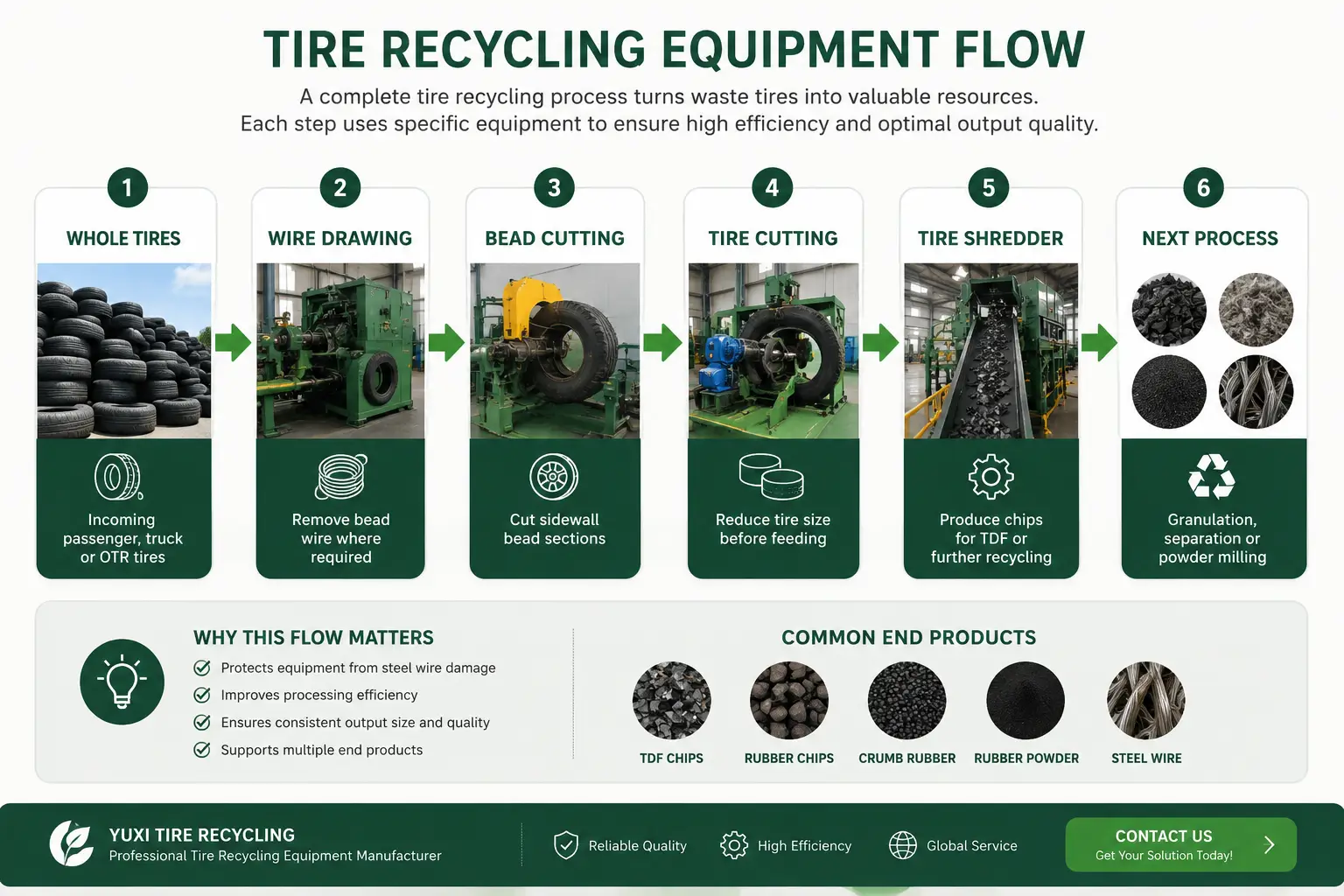
The following equipment is commonly used in waste tire recycling plants for tire preparation, bead wire removal, size reduction, and shredding. The equipment sequence follows the actual processing workflow used in many tire recycling lines.
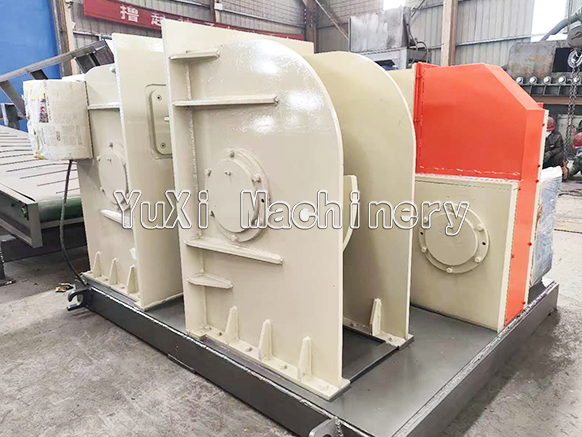
Removes steel bead wires from waste tires before cutting or shredding. It is commonly used for truck tires and tires with heavy bead wire.
Bead wire removalTruck tiresPre-processing
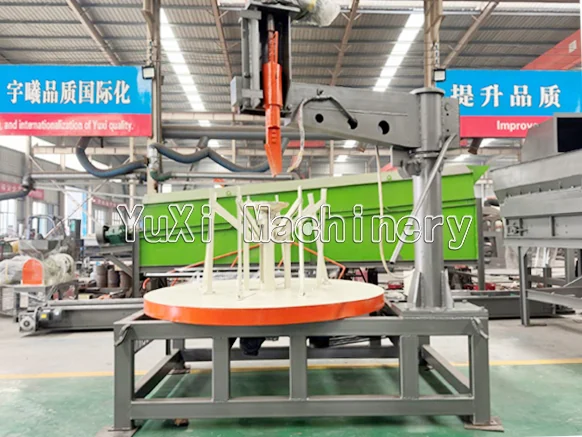
Cuts tire sidewall and bead sections to reduce steel impact on downstream cutters and shredders. Suitable for preparing waste tires before size reduction.
Sidewall cuttingBlade protectionScrap tire processing
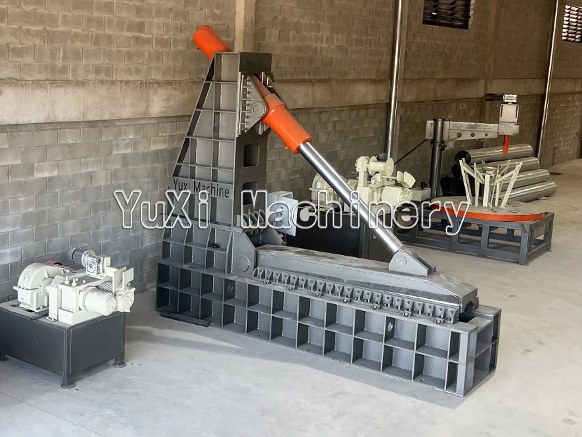
Cuts whole tires or large tire sections into smaller pieces for easier feeding. It helps stabilize the feed size before primary shredding.
Tire size reductionStable feedingBefore shredding
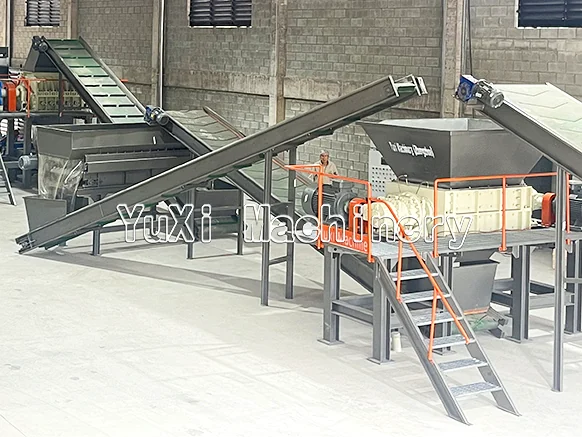
Processes whole or pre-cut tires into tire chips for TDF, rubber mulch, or further granulation. It is the core size-reduction machine in many tire recycling plants.
Tire shredding equipmentTDF chipsPrimary shredder
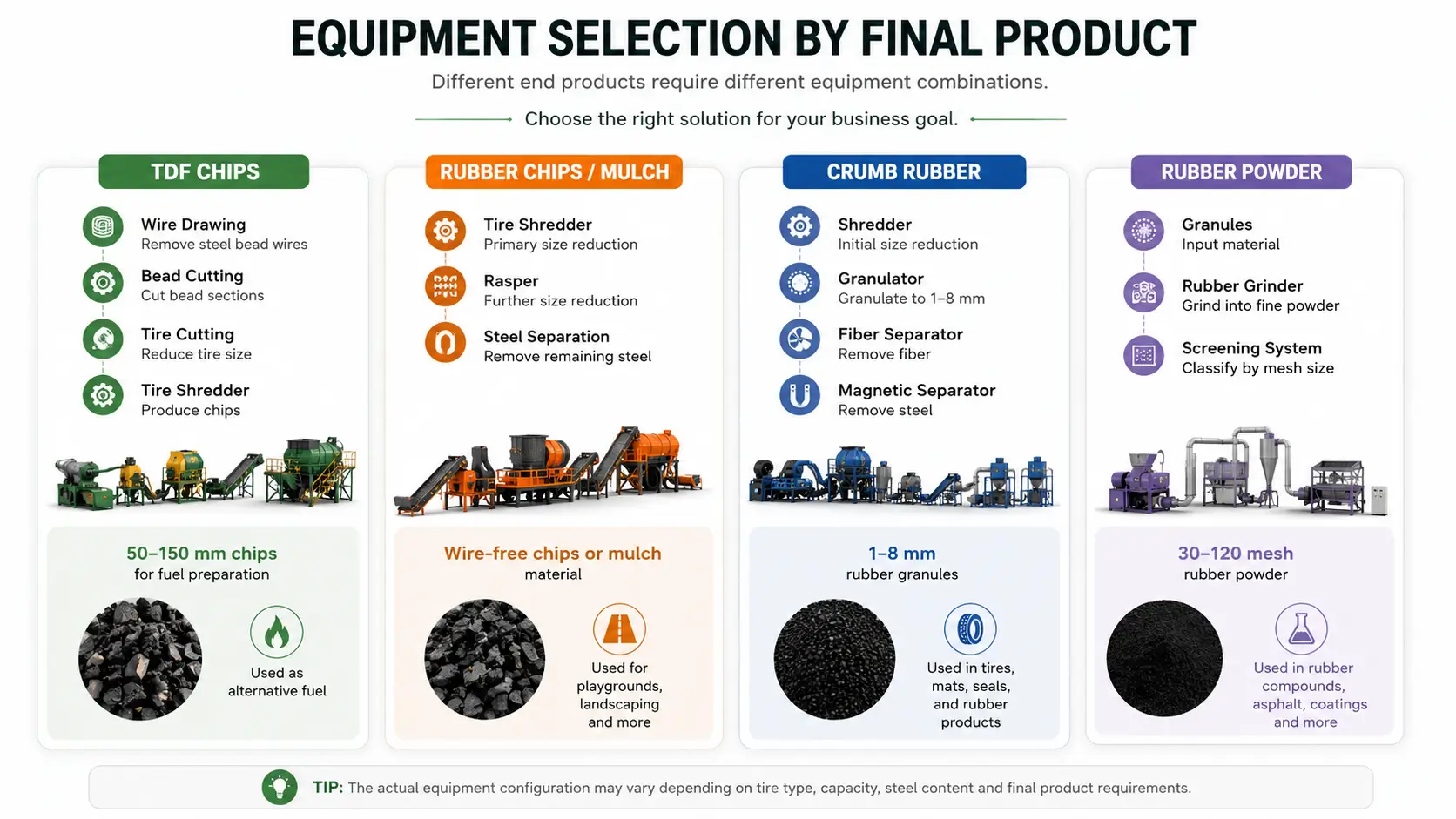
Different waste tire recycling equipment combinations are used for different output products. A customer making TDF chips usually needs a simpler front-end line, while a crumb rubber or rubber powder project needs additional granulation, separation, screening, and grinding systems.
| Final Product | Typical Equipment Route | Common Application | Related YUXI Page |
|---|---|---|---|
| TDF Chips | Wire drawing / bead cutting → tire cutting → tire shredder | Alternative fuel preparation, cement kilns, industrial fuel projects | Tire TDF Plant |
| Wire-Free Mulch | Shredding → steel liberation → magnetic separation → screening | Landscape mulch, civil engineering, rubber chip applications | Tire Wire Free Mulch Plant |
| Crumb Rubber | Shredding → rasping / granulation → fiber separation → magnetic separation | Rubber tiles, mats, modified asphalt, molded rubber products | Tire Rubber Crumb Plant |
| Rubber Powder | Granules → fine grinding → screening → collection | Fine rubber powder, rubber compound, reclaimed rubber applications | Tire Rubber Powder Plant |
Passenger tires are smaller and usually easier to feed. Depending on the plant layout, they may enter a tire shredder directly or pass through a simple cutting stage first.
Truck tires contain stronger bead wire and heavier rubber sections. Wire drawing, bead cutting, or tire cutting is often recommended before shredding to reduce cutting load.
Large mining or engineering tires need a customized pre-processing plan. The equipment selection depends on tire diameter, section thickness, steel content, and the feeding opening of the downstream shredder.
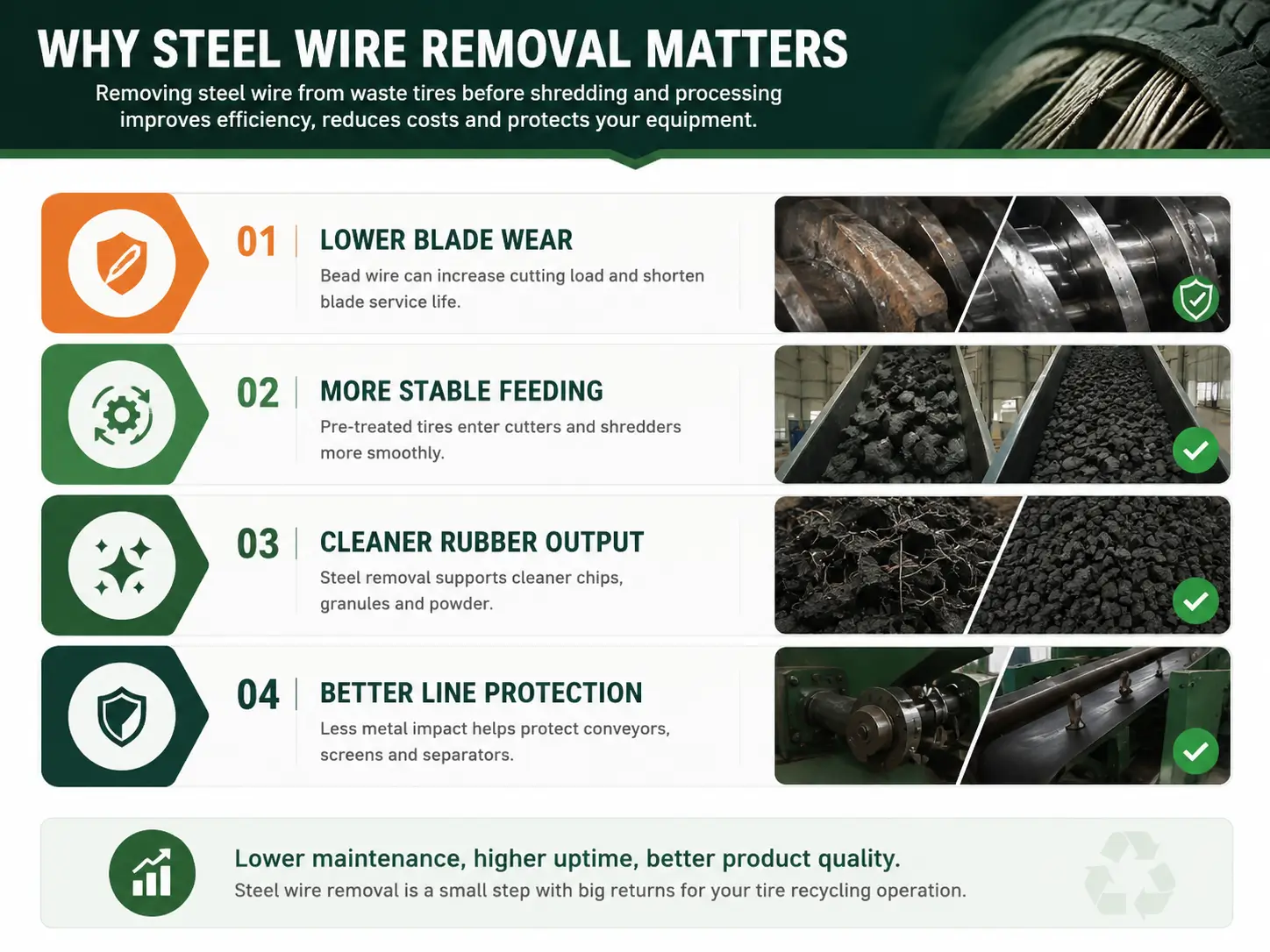
Steel bead wire is one of the toughest parts of a waste tire. Removing or cutting bead sections before shredding can improve line stability and reduce unnecessary wear on size-reduction equipment.
| Machine | Main Function | Best Used For | When to Choose |
|---|---|---|---|
| Tire Wire Drawing Machine | Pulls steel bead wire out of tire bead area | Truck tires, bus tires, tires with heavy bead wire | Choose when steel wire recovery and blade protection are important |
| Waste Tire Bead Cutting Machine | Cuts bead or sidewall sections before further processing | Pre-processing lines, sidewall handling, tire section preparation | Choose when tires need to be opened or cut before size reduction |
Standalone tire recycling machines are suitable for existing plants that need to replace old equipment, add a pre-processing step, improve feeding stability, or expand capacity. In this case, machine dimensions, feeding method, motor power, blade structure, and discharge size should match the existing line.
A complete tire recycling line is better for new projects because the machines, conveyors, separators, screening equipment, and dust-control system can be designed as one process. This reduces mismatch between upstream and downstream equipment.
YUXI focuses on waste tire shredding and recycling systems, including tire shredders, tire cutters, tire debeaders, tire rasper machines, rubber grinders, and complete tire recycling plants. The company information on the current site highlights 36 years of production experience, export service, CE certificates, ISO management certificates, and tire recycling line patent information.
Equipment is selected around tire type, target output, and line layout instead of a one-machine-fits-all approach.
Customers can purchase one machine or request a complete tire recycling plant layout.
YUXI can match equipment routes for TDF chips, rubber mulch, crumb rubber, and rubber powder projects.
Spare parts, blade maintenance, installation guidance, and operation training should be considered during project planning.
A basic tire recycling line may use a tire wire drawing machine, bead cutting machine, tire cutting machine, tire shredder, conveyors, magnetic separation, fiber separation, screening, and grinding equipment depending on the final product.
For many truck tire or heavy-tire projects, wire drawing or bead cutting is the first step. For smaller passenger tires, the line may start with tire cutting or direct shredding depending on the shredder design.
Removing bead wires helps reduce blade wear, lower cutting load, protect downstream machines, and improve steel recovery.
Some tire shredders can process whole passenger tires, but truck tires, OTR tires, or high-steel tires may require wire drawing, bead cutting, or pre-cutting before shredding.
A TDF line usually uses tire pre-processing equipment and a tire shredder to produce chips. The target chip size is commonly larger than the material used for crumb rubber production.
Crumb rubber production usually requires shredding, granulation, steel separation, fiber separation, screening, and sometimes fine grinding, depending on the required particle size.
Yes. Tire wire drawing machines, bead cutting machines, tire cutting machines, and tire shredders can be used as standalone machines or integrated into a complete tire recycling line.
Start with four questions: what tire types will be processed, what output size is required, what daily capacity is expected, and whether the final product is TDF, rubber chips, crumb rubber, or rubber powder.
Compare supplier strengths and tire shredder selection factors.
Example production line layout for waste tire recycling.
Higher-capacity line example for commercial tire recycling projects.