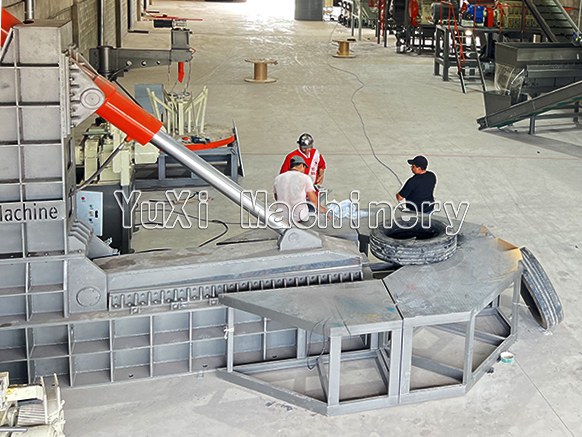
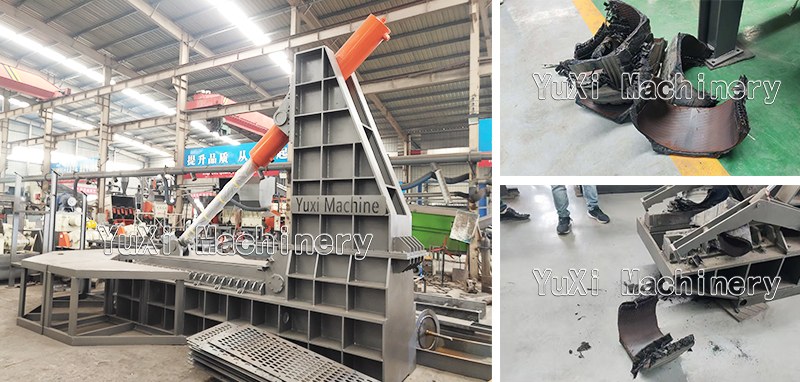
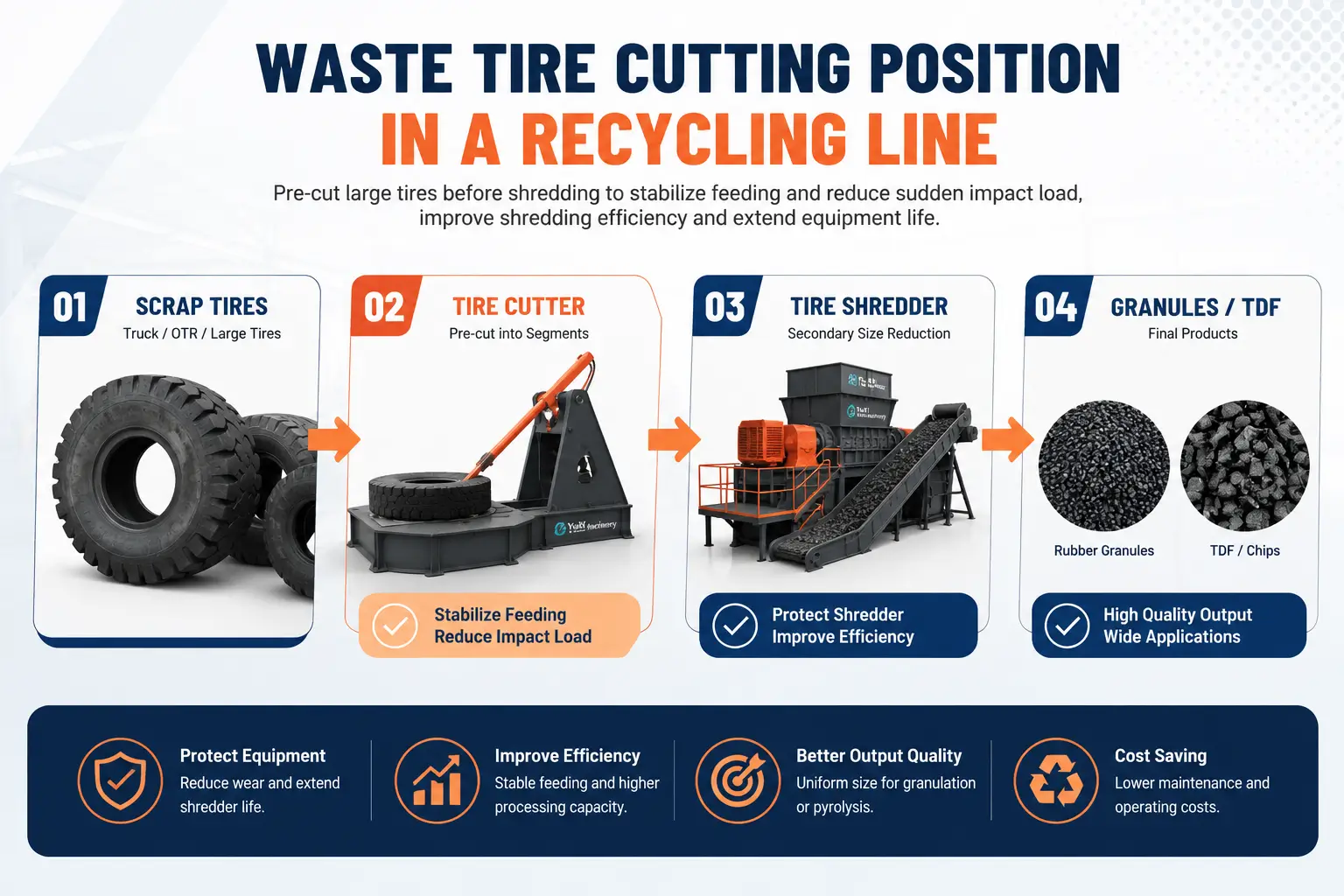
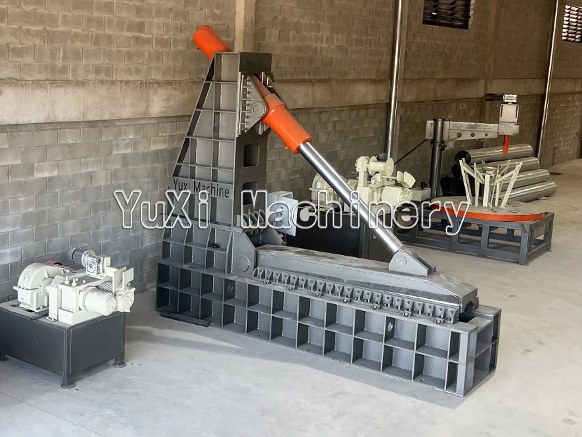
YUXI tire cutting machine is built for cutting large scrap tires into manageable sections before tire shredding, rubber granulation, TDF preparation or pyrolysis pre-treatment. It is especially useful when truck tires, all-steel radial tires, agricultural tires or OTR tires are too heavy or too stiff to feed directly into a shredder.
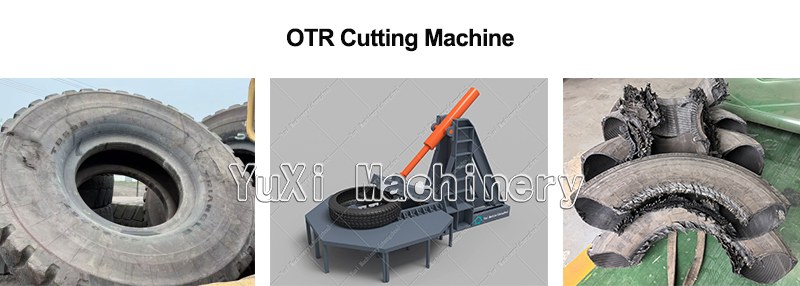
A waste tire cutting machine, also called a tire cutter machine, tyre cutting machine or hydraulic tire cutter, is a pre-processing machine used to cut whole scrap tires into smaller sections. Instead of forcing oversized tires directly into the shredder, the cutter opens the tire structure first, making the next step safer and easier to control.
In a real recycling plant, this machine is not only about “cutting”. Its value is in reducing the shock load on the tire shredder, avoiding irregular feeding, and helping operators handle tires that are too large, too heavy or too steel-reinforced for direct processing. For OTR tire recycling, mining tire disposal and truck tire recycling, a tire cutting machine is often the practical first step after inspection or debeading.
Materials
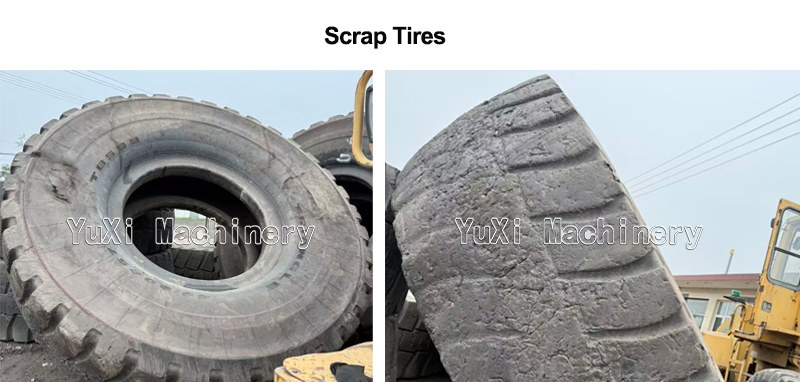
Scrap Tires This Machine Can Process
The machine is designed for high-strength waste tires that are difficult to process by hand or feed directly into a tire shredder. The final configuration should be confirmed according to tire diameter, steel content, sidewall thickness and downstream equipment.
All-steel radial truck tires
Common in commercial tire recycling plants. Pre-cutting helps reduce feeding resistance and prepares tire sections for shredding.
OTR and mining tires
Large off-the-road tires require stronger clamping, hydraulic cutting force and a working table that supports heavy tire bodies.
Agricultural and machinery tires
Suitable for loader, tractor, excavator and other large equipment tires when direct shredding is not economical or stable.
Working Principle
How the Hydraulic Tire Cutter Works
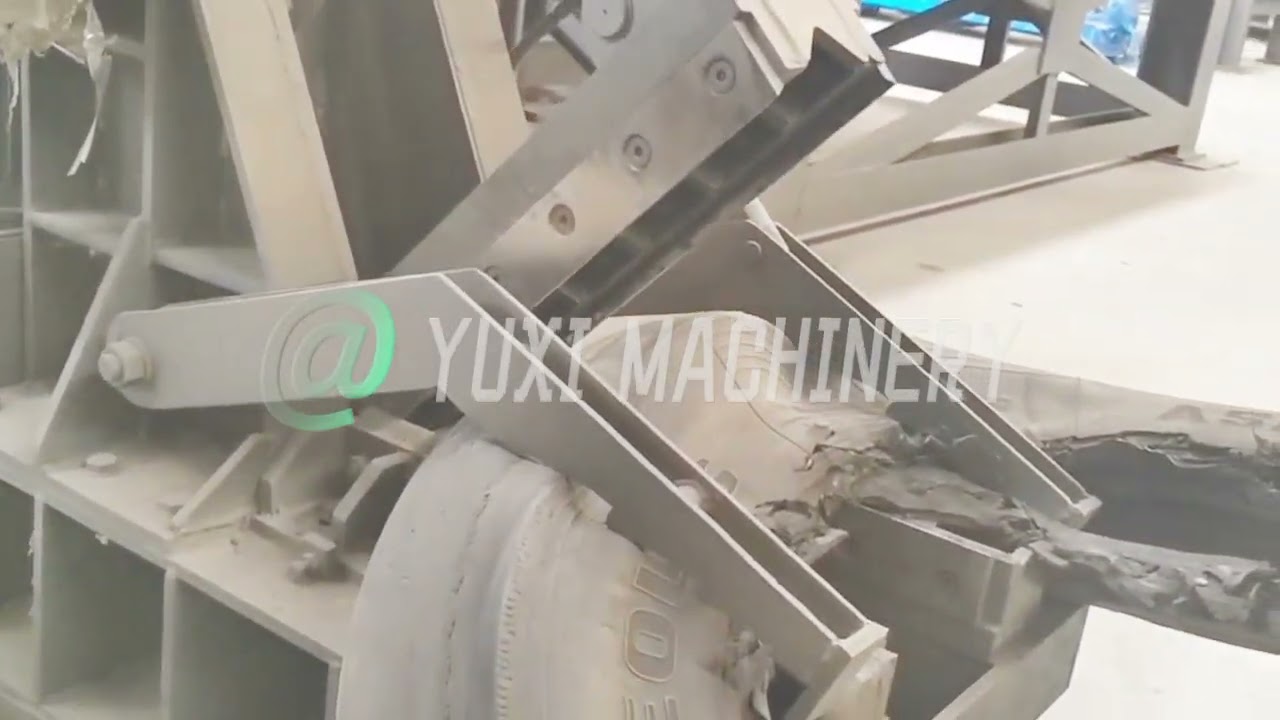
YUXI tire cutting machine uses hydraulic power to clamp and cut the tire. The process is simple for operators, but the machine structure must be strong enough to deal with thick rubber, bead wire and steel cord layers.
Load & Position
The whole tire or pre-treated tire is placed on the working platform and adjusted to the cutting position.
Hydraulic Clamping
The clamping structure holds the tire body to reduce movement during cutting.
Powerful Cutting
The hydraulic cutter descends and applies shear force to cut the tire into sections.
Discharge
The cut tire pieces can be moved to a tire shredder, granulator, pyrolysis feeding system or temporary storage area.
Recycling Line Matching
Where It Works in a Tire Recycling Line
For many waste tire recycling projects, cutting is the bridge between raw tire storage and mechanical size reduction. It is especially valuable when the line handles mixed tire sizes or large steel-reinforced tires.
Before tire shredder: cuts oversized tires into feedable pieces and reduces sudden load peaks.
Before rubber granulation: prepares tires for primary shredding and secondary size reduction.
Before pyrolysis: helps reduce tire size for more stable feeding and loading.
For OTR tire recycling: makes very large tires easier to handle, transport and further process.
Provides the cutting force needed for all-steel radial tires and large tire bodies with thick sidewalls.
Alloy steel cutter
The core blade is made for repeated impact and shear work. Blade material and thickness can be matched to tire type.
Safer clamping control
Hydraulic locking and electrical control help reduce tire movement and operator risk during the cutting stroke.
Stable downstream feeding
Cut sections are easier for conveyors and shredders to handle than whole large tires.
Factory test available
Customers can confirm tire size, cutting effect and process route before finalizing the machine configuration.
Custom layout support
The cutter can be planned with loading tools, tire shredder, conveyor and discharge area according to plant space.
Selection Guide
How to Choose a Tire Cutting Machine
A good tire cutter should be selected by tire condition and line purpose, not only by motor power. Before quotation, YUXI normally confirms the following project details.
Selection Factor
Why It Matters
What to Confirm
Tire size range
Truck tires and OTR tires require different table size, clamping structure and cutting force.
Outer diameter, width, tire type and maximum tire weight.
Shredding, granulation and pyrolysis may need different cut section sizes.
Target next machine and desired feeding size.
Operation method
Manual loading, forklift loading or line integration changes the layout.
Labor condition, available space and daily working schedule.
Safety requirements
Large tire cutting involves heavy material and strong hydraulic force.
Clamping, guard design, electrical controls and operator workflow.
Working Video
Tire Cutting Machine Video
Watch the cutting process and use it to compare tire size, feeding method, cutting action and discharge result with your own waste tire project.
YUXI Manufacturing
Factory-built Tire Cutter for Practical Recycling Work
For a waste tire recycling line, the cutter must match the real tires coming into the plant. YUXI can help evaluate whether your project needs tire cutting, bead wire removal, direct shredding, or a combined pre-treatment route.
For small passenger tire streams, direct shredding may be enough. For large steel tires, OTR tires and irregular tire stockpiles, a hydraulic tire cutting machine can make the whole line easier to operate. This is why the best solution is usually designed around tire size range, labor method, plant layout and the final output target.
FAQ
Frequently Asked Questions
What is the difference between a tire cutting machine and a tire shredder?A tire cutting machine cuts whole tires into larger sections. A tire shredder reduces tires or tire sections into smaller chips. For large OTR or truck tires, cutting before shredding can improve feeding stability.
Can this machine cut OTR tires?Yes, it can be configured for OTR tire cutting, but the final design depends on tire diameter, width, weight and steel content.
Do tires need debeading before cutting?It depends on the tire type and downstream process. Some projects use bead removal first; some cut large tires first and then shred. YUXI can recommend a route based on your tire photos and output target.
Is it suitable before a pyrolysis plant?Yes. Tire cutting can reduce oversized tires into sections for easier loading or feeding before pyrolysis, depending on the plant design.
What information is needed for quotation?Please provide tire type, maximum tire size, approximate capacity requirement, downstream process and available workshop layout.
Need a tire cutter for truck, agricultural or OTR tires?
Send tire photos, tire size range and your next processing step. YUXI will help match the tire cutting machine with the full recycling route.




 English