




Wondering how Tire-Derived Fuel (TDF) plants balance energy utilization and environmental compliance while achieving stable profitability? This article combines typical cases from three European and American regions to break down the core processes, equipment configurations, and market logic of TDF production, helping you accurately grasp the key points of this resource recycling track.
I. Why Has TDF Become the Mainstream Direction for Waste Tire Recycling?
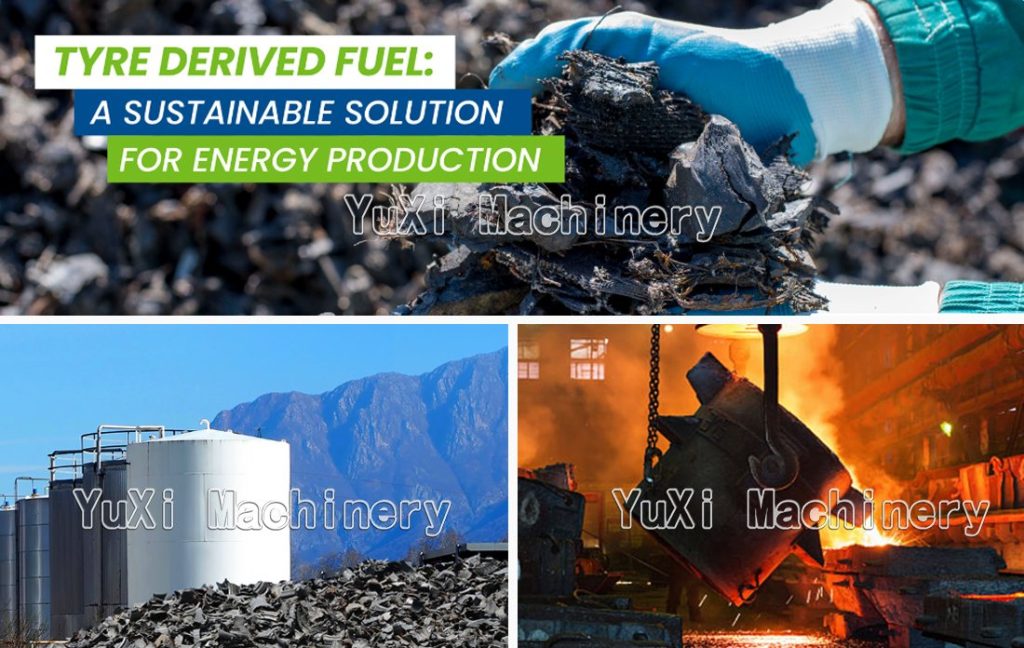
Over 60% of global waste tire recycling enterprises take TDF production as their core business — as a clean alternative fuel, TDF can be widely used in industrial scenarios such as cement kilns, power plants, and steel mills. Compared with raw coal:
- Higher calorific value (4200-4500kcal/kg, far exceeding raw coal’s 3500-4000kcal/kg)
- Lower sulfur content (<0.5%)
- Ash after combustion can be recycled, reducing solid waste emissions
Core advantage: The production process is relatively simple, the investment return cycle is short (usually 2-3 years), and it conforms to the global policy trend of “reducing coal and carbon emissions”, with sustained growth in market demand.
II. Foreign Cases: On-Site Practice of Tire TDF Plants
Case 1: TDF Plant Supporting Cement Kilns in Barcelona, Spain
Holcim, Spain’s largest cement producer, built a TDF plant in Barcelona specifically to supply alternative fuel for its cement kilns. It processes 300 tons of waste tires per day and produces approximately 100,000 tons of TDF annually.
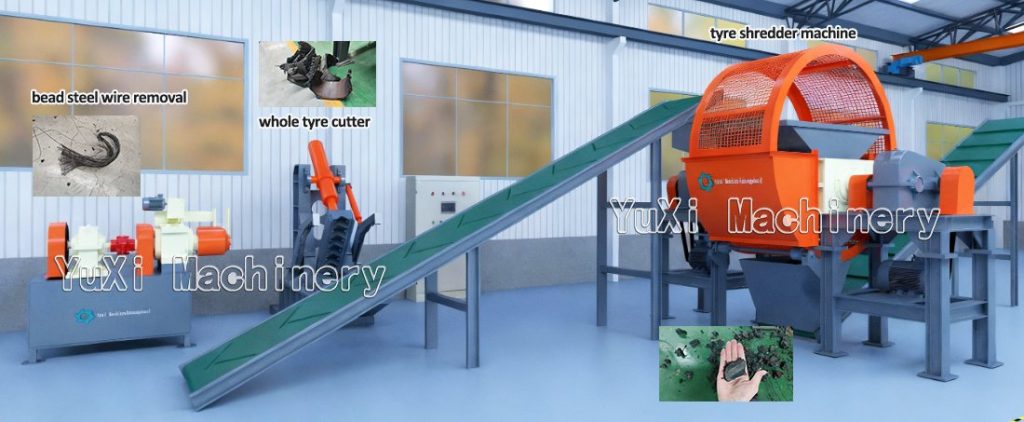
- Process Configuration: Adopts an integrated production line of “shear crushing + magnetic separation + screening”. Finnish Metso’s single-shaft shearer crushes waste tires to below 50mm, high-intensity magnetic separator (magnetic field strength 15,000 gauss) separates steel wire (recovery rate 99.9%), and then vibrating screen classifies into 3-30mm TDF particles.
- Environmental Control: Equipped with pulse bag filter (emission concentration <3mg/m³) and activated carbon adsorption device to solve dust and VOCs problems. Noise is controlled below 70dB(A), fully adapting to working conditions around cities.
- Profit Model: TDF is directly supplied to its own cement kilns, replacing 30% of raw coal consumption, saving about 12 million euros in fuel costs annually. The separated steel wire is sold to local steel enterprises, creating an additional annual income of 1.8 million euros.
Case 2: Large-Scale TDF Production Base in Ohio, USA
The TDF plant built by Tire Derived Products in Ohio, USA, is one of the largest waste tire resource utilization bases in North America. It processes 500 tons of waste tires per day and supplies products to 10 surrounding power plants.
- Customized Design: Aiming at the characteristics of a large number of engineering tires in the United States, a two-stage crushing process of “pre-cutting + shredding” is added. American SSI’s dual-shaft shredder (shearing force 200 tons) is used to process giant tires, avoiding jamming problems and increasing production efficiency by 40%.
- Energy Recycling: Utilizing waste heat generated during TDF production, a 500kW waste heat boiler is built to meet 85% of the plant’s electricity demand, and the remaining electricity is connected to the local power grid.
- Market Expansion: Through ISO 17298-2 certification, TDF products can be directly exported to Europe, with an annual export volume of 30,000 tons, a net profit of about 50 US dollars per ton, and a total annual income of over 20 million US dollars.
Case 3: Industrial Heating TDF Plant in Milan, Italy
The TDF plant built by Eni Group in Milan, Italy, focuses on providing heating services for industrial parks. It processes 200 tons of waste tires per day and supplies steam to 20 chemical enterprises in the park.
- Core Technology: Adopts “low-temperature drying + precise screening” process to remove moisture and impurities from waste tires. TDF’s calorific value is stable at 4400kcal/kg, and combustion efficiency is over 95%.
- Compliant Operation: Strictly follows the EU Industrial Emissions Directive (IED), equipped with flue gas desulfurization and denitrification system. NOx emission <50mg/m³, SO₂ emission <30mg/m³, far exceeding industry standards.
- Cooperation Model: Signs long-term heating agreements with park enterprises, charges according to steam supply volume, and enjoys renewable energy subsidies from the Italian government, with an annual subsidy of about 3 million euros and an investment payback period of only 2 years.
III. Core Technical Details of Tire TDF Plants
Crushing Link: Adapting to Different Tire Types
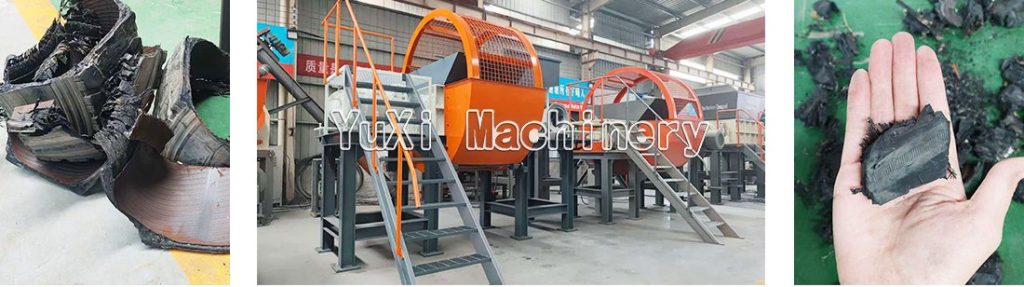
- Passenger car tires: Priority is given to single-shaft shearers. Blade material is AISI D2 tool steel, service life up to 10,000 tons, and crushing particle size can be adjusted to 10-50mm.
- Engineering/mining tires: Need to be equipped with dual-shaft shredder + secondary crusher, with shearing force ≥150 tons to ensure efficient crushing of giant tires.
Sorting Link: Improving TDF Purity
- Steel wire separation: Magnetic separator magnetic field strength ≥12,000 gauss, ensuring steel wire separation rate ≥99.8% to avoid damaging boilers during combustion.
- Impurity removal: Air classifier (wind speed 1.5-2.0m/s) separates fibers and light impurities, with TDF purity over 99%.
Storage and Transportation: Ensuring Safety and Stability
- Storage: Uses closed silos, equipped with temperature monitoring system (alarm temperature ≥60℃) to prevent TDF spontaneous combustion.
- Transportation: Uses special sealed tank trucks to avoid dust leakage, complying with road transportation safety standards.
IV. Frequently Asked Questions (FAQ)
What is the initial investment for a tire TDF plant?
Depending on the processing scale, the total equipment investment (including crushing, sorting, and environmental protection facilities) for a plant with a daily processing capacity of 100 tons is about 600,000-800,000 euros, and for a plant with a daily processing capacity of 300 tons, it is about 1.5-2 million euros.
How many operators does the plant need?
A plant with a daily processing capacity of 200 tons, adopting PLC automatic control system, only needs 5-6 operators (2 for feeding, 1 for central control, 2 for finished product packaging, 1 for equipment maintenance), and can realize 24-hour continuous operation.
What are the main application fields of TDF market demand?
- Cement kilns: The world’s largest TDF application field, accounting for about 60%, used to replace raw coal and reduce costs.
- Power plants: Accounting for about 25%, used as auxiliary fuel to improve combustion efficiency.
- Industrial heating: Accounting for about 15%, providing steam for chemical, textile and other industries.
What environmental protection indicators do plants need to meet?
- Dust emission <5mg/m³
- NOx emission <80mg/m³
- SO₂ emission <50mg/m³
- Noise ≤75dB(A)
With the advantages of “simple process, stable income, and environmental compliance”, tire TDF plants have become the core track in the field of waste tire recycling. From supporting cement kilns in Spain to large-scale exports in the United States, these foreign cases prove that as long as market demand is accurately matched and equipment configuration is optimized, TDF plants can achieve a win-win of “resource recycling + commercial profitability”. With the continuous advancement of global carbon reduction policies, the market space for TDF will continue to expand, becoming a new growth point in the environmental protection industry.