




Curious about how a 3 ton/hour tire recycling production line achieves the dual leap of “large-scale processing” and “high-value output”, and becomes a key layout for enterprises to seize the global circular economy dividend? This in-depth guide explores its innovative technical path, refined operation logic, scientific investment layout, and market expansion strategies, revealing the core competitiveness of large-capacity tire recycling projects.
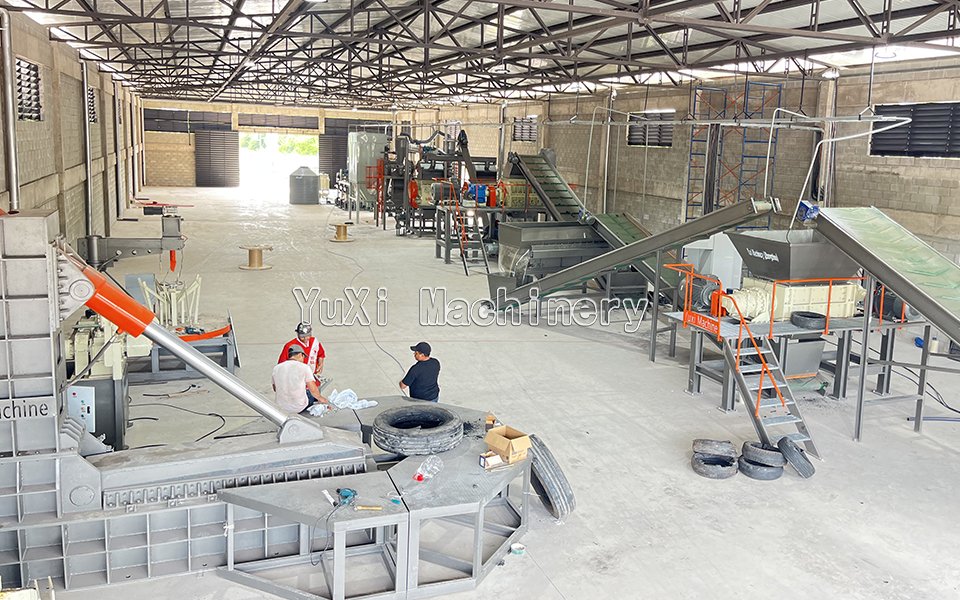
I. Why is 3 Ton/Hour the “Profit Engine” for Large-Scale Recycling Layouts?
For enterprises with mature industrial chains, abundant capital, or plans to expand into the international market, the 3 ton/hour tire recycling production line is not a simple capacity upgrade, but a strategic choice that integrates efficiency, value, and scale advantages:
- Scale Profit Maximization: Compared with 2 ton/hour lines, the 3 ton/hour model reduces unit operating costs (raw material procurement, labor, logistics) by 35-45%. Bulk procurement of waste tires can save 15-20% of raw material costs, while centralized sales to large downstream enterprises (such as global asphalt companies, auto parts manufacturers) can gain 10-15% higher product pricing power. The unit depreciation cost is reduced by 30% due to the economies of scale, significantly improving the overall profit margin.
- Full-Scenario Material Adaptability: It can efficiently process extreme-specification waste rubber materials, including ultra-large engineering tires (diameter ≥ 3 meters), military tires, aircraft tires, and large industrial rubber products such as rubber dams and marine fenders. The upgraded crushing cavity, high-torque transmission system, and wear-resistant components solve the problem of low efficiency and high loss when medium-capacity lines process hard and large materials.
- High-Value Chain Extension: Equipped with a full set of deep processing systems, it can produce 120-200 mesh ultra-fine rubber powder, special functional modified rubber (such as flame-retardant, conductive, oil-resistant), and high-strength recycled fiber composites. These products are widely used in aerospace, new energy vehicle batteries, medical equipment, and other high-end fields, with a profit margin 2-3 times that of ordinary rubber powder.
- Policy and Brand Dual Dividends: In Europe, North America, and Southeast Asia, large-scale recycling projects with a daily processing capacity of 50 tons or more can obtain policy support such as priority land supply, tax exemptions for 3-5 years, and per-ton subsidies of 100-180 USD. At the same time, large-scale production helps enterprises establish industry-leading brands, enhance international competitiveness, and open up overseas markets.
II. Core Production Process of 3 Ton/Hour Tire Recycling Production Line
The 3 ton/hour line integrates “automation, intelligence, and deep processing”, with 6 streamlined core processes that balance large-scale efficiency and high-value output:
- Intelligent Preprocessing
AI 3D laser sorting systems classify tires in 0.3 seconds, while 1000-ton hydraulic cutters handle ultra-large tires. High-frequency screens (3mm mesh) and multi-channel metal detectors remove 99.9% of impurities, and dual-station bead separators (8-10 tires/minute) separate steel wire without damage. - High-Torque Rough Crushing
Super-large double-shaft shredders (350-400 HP IE4 motor, AISI 440C cutters) crush tires into 5-7 inches chunks via “shear+extrusion+tearing”. Modular cutters reduce maintenance time by 40%, and built-in magnetic separation (≥15,000 gauss) initializes 80% steel wire separation. Noise ≤65 dB meets EU EN ISO 11201 Class 1. - Closed-Loop Medium Crushing
Heavy-duty impact crushers (2m³ cavity) with high-chromium hammerheads (≥3000 hours life) produce 1.0-1.5 inches particles. Closed-loop heat recovery reuses 180℃ crushing heat, cutting energy by 20-25%, and negative pressure dust collection keeps emission ≤5mg/m³ (US EPA Tier 4 Final compliant). - Three-Stage Cryogenic Grinding
Liquid nitrogen cools particles to -80℃–-100℃, then three-stage grinding (roller + ultra-fine) produces 120-200 mesh ultra-fine rubber powder. Intelligent temperature control (±1℃) retains 98% rubber properties, ideal for new energy and medical fields. - Multi-Dimensional Sorting
Comprehensive system (high-gradient magnetic separator ≥20,000 gauss, eddy current, density, electrostatic) purifies steel wire to 99.8% and fiber to 99% (98% recovery rate). Both are upgraded for high-end industrial use. - Intelligent Storage & Environmental Compliance
Temperature/humidity-controlled silos store finished products, while automatic logistics systems (80-100 bags/minute) integrate packaging, AGV handling, and WMS. Centralized environmental protection (dust removal ≥99.99%, VOC removal 99%, wastewater recycling 95%) achieves zero emission.
III. Core Equipment Selection: Balancing Efficiency, Durability, and Compliance
The performance of a 3 ton/hour production line depends on the rationality of equipment configuration. The following are the key selection criteria for core equipment:
Double-Shaft Shredder
Prioritize equipment with a 350 HP IE4 ultra-high-efficiency motor, AISI 440C cutters, and a triangular cutter shaft. The shredder should have a modular design, automatic reverse jamming protection, and a daily processing capacity of ≥ 30 tons. The cutter service life should be ≥ 2000 hours, and the maintenance time should be ≤ 2 hours per week.
Cryogenic Grinding System
Choose a three-stage grinding system with liquid nitrogen consumption ≤ 80 L/hour, diamond grinding discs (service life ≥ 3000 hours), and intelligent temperature control (accuracy ±1℃). The grinding range should be 40-200 mesh, and the built-in dust collector should have a filtration accuracy ≤ 1μm.
Comprehensive Sorting System
The magnetic separator should have a magnetic field strength ≥ 20,000 gauss and a processing capacity of ≥ 5 tons/hour. The eddy current separator should have an adjustable frequency of 50-80 Hz. The electrostatic separator should have a voltage range of 0-80 kV to adapt to different types of fibers.
Environmental Protection System
The centralized dust removal system should have an air volume ≥ 600,000 CFM and a filtration efficiency ≥ 99.99%. The waste gas treatment system should be able to remove 99% of VOCs and meet EU REACH and US EPA Tier 4 Final standards. The wastewater recycling system should have a recycling rate ≥ 95%.
Intelligent Control System
Configure a PLC control system with a touch screen and remote monitoring function, which can realize centralized control of the entire production line, including automatic feeding, equipment interlock, fault diagnosis, and production data statistics. The system should support connection with MES and ERP systems to realize integrated management of production, sales, and inventory.
IV. Investment and Revenue Analysis (Global Market Standards)
Initial Investment
- Equipment Purchase: Approximately 280,000-350,000 USD, including core equipment such as AI sorting system, super-large shredder, cryogenic grinding system, comprehensive sorting system, modification system, intelligent packaging system, and environmental protection system.
- Site and Infrastructure: Approximately 80,000-120,000 USD, including 800-1200 sq ft workshop rental (annual rent), ground hardening, water and electricity transformation, and silo installation.
- Technical and Other Expenses: Approximately 50,000-80,000 USD, including equipment installation and commissioning, technical training, international certification application (ISO 14001, ISO 9001, REACH), and initial raw material inventory.
- Total Initial Investment: Approximately 410,000-550,000 USD.
Operating Costs (Based on 10 Hours/Day, 25 Days/Month)
- Raw Material Cost: Approximately 900-1,200 USD/ton, with a daily demand of 30 tons and a monthly cost of 67,500-90,000 USD.
- Energy Cost: The total power of the production line is about 800 HP, with an hourly electricity consumption of 600 kWh. Calculated at 0.18 USD/kWh, the monthly electricity cost is 27,000-32,400 USD. The liquid nitrogen consumption for cryogenic grinding is about 80 L/hour, with a monthly cost of 24,000-32,000 USD.
- Labor Cost: 6-8 workers are needed (including 1 production manager, 3 equipment operators, 1 quality inspector, 1 environmental protection supervisor, and 1 logistics coordinator), with an average monthly salary of 5,000-6,000 USD per person. The monthly labor cost is 30,000-48,000 USD.
- Maintenance and Consumables Cost: Including cutter replacement, lubricating oil, filter bags, and other consumables, the monthly cost is 15,000-25,000 USD.
- Other Costs: Including rent, insurance, transportation, and management expenses, the monthly cost is 20,000-30,000 USD.
- Total Monthly Operating Cost: Approximately 183,500-257,400 USD, and the unit operating cost per ton is about 1,223-1,716 USD.
Revenue and Profit Calculation
- Ultra-Fine Rubber Powder Revenue: The monthly output is about 45-55 tons (accounting for 60-70% of waste tires). The 120-150 mesh rubber powder is sold at 4,000-5,000 USD/ton, and the 150-200 mesh rubber powder is sold at 6,000-8,000 USD/ton. Assuming 50% of each type, the monthly revenue is 225,000-385,000 USD.
- Steel Wire Revenue: The monthly output is about 9-12 tons (accounting for 10-15% of waste tires), with a market price of 3,500-4,000 USD/ton. The monthly revenue is 31,500-48,000 USD.
- Fiber Revenue: The monthly output is about 4.5-6 tons (accounting for 5-8% of waste tires), with a market price of 2,000-2,500 USD/ton. The monthly revenue is 9,000-15,000 USD.
- Policy Subsidy: With a monthly output of 750 tons, the subsidy is 100-180 USD/ton, bringing monthly income of 75,000-135,000 USD.
- Total Monthly Revenue: Approximately 340,500-583,000 USD.
- Monthly Profit: Approximately 157,000-325,600 USD, and the annual profit is about 1,884,000-3,907,200 USD. The investment payback period is about 14-28 months.
V. Market Expansion and Risk Prevention Strategies
Market Expansion
- High-End Customer Development: Target new energy vehicle manufacturers, aerospace enterprises, and medical equipment companies, providing customized modified rubber powder and fiber composites. Establish long-term exclusive supply contracts to ensure stable sales.
- International Certification and Branding: Obtain global certifications such as ISO 14001, ISO 9001, and REACH, and participate in international exhibitions (e.g., International Tire Recycling Exhibition) to expand overseas markets in Europe, North America, and Southeast Asia.
- Industrial Chain Extension: Cooperate with research institutions to develop downstream products such as rubber-modified plastics and fiber-reinforced composites, extending the profit chain and enhancing competitiveness.
Risk Prevention
- Raw Material Risk: Sign long-term contracts with multiple global suppliers to ensure stable supply. Use futures tools to lock in raw material prices and cope with market fluctuations.
- Technology Risk: Choose equipment suppliers with independent R&D capabilities and long-term after-sales support. Allocate 8-12% of annual profits to technological upgrading to maintain technical leadership.
- Policy and Compliance Risk: Establish a professional policy research team to track environmental protection and subsidy policies in major markets. Ensure the production line meets the latest EU and US environmental standards to avoid compliance risks.
A 3 ton/hour tire recycling production line is a strategic layout for enterprises to enter the high-end circular economy market, integrating large-scale processing, high-value output, and green compliance. Through innovative technologies such as AI sorting, three-stage cryogenic grinding, and multi-dimensional sorting, it transforms waste tires into high-value resources, breaking through the profit bottleneck of medium-capacity lines. With scientific equipment configuration, refined operation management, and flexible market strategies, it can become a core profit engine for enterprises in the global resource recycling industry.