




If you have a stable supply of large quantities of recycled tires but are wondering “how to scale up” or “how to secure higher-margin orders”, this article will explain how a 2-ton-per-hour production line turns “volume” into “profit” for you.
I. First, Understand: What’s the Difference Between a 2-Ton-per-Hour Production Line and Small-Capacity Equipment?
Many people think “a 2-ton line is just two 1-ton lines put together”, but it’s actually a highly adaptable large-scale system—not only can it process 2 tons of tires per hour (40-45 tons per day), but it also automatically adjusts parameters based on raw material types to produce more high-value customized finished products. It’s not a “simple combination” of small equipment at all.
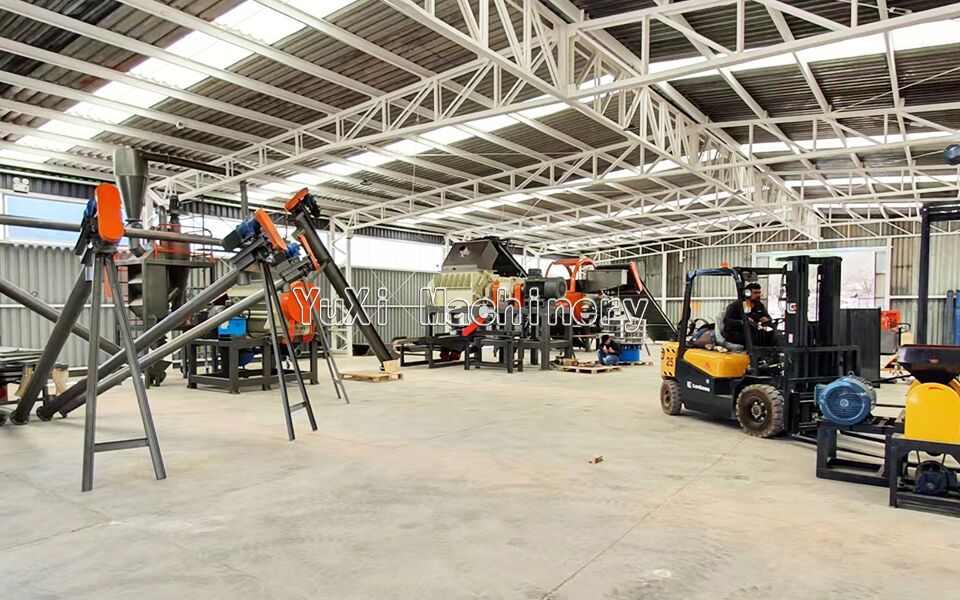
Core Configuration (2025 Chile Project Actual Data)
- Raw Material Compatibility: 75% car tires + 25% truck tires; also handles engineering tires with a diameter ≤ 59 inches
- Finished Product Flexibility: Produces particle sizes of 0.04-0.08 inches, 0.12-0.16 inches, and 0.2-0.24 inches; plus mesh sizes of 10-30 mesh, 40-60 mesh, and 60-80 mesh
- Downstream Matching: Finished products directly meet the “customized needs” of floor tile factories and modified asphalt factories, no secondary processing required
- Service Support: Full on-site technical guidance from site renovation to commissioning
II. 3 Key Values of a 2-Ton-per-Hour Production Line
No Wasted Raw Materials: Process All the Tires You Have
If you receive 30+ tons of tires per day, small-capacity equipment will let raw materials pile up like a “mountain”, while a 2-ton line can just “digest” these materials—its 24/7 continuous operation mode turns daily recycled quantities into finished products, avoiding “stockpiling” or “supply shortages”. You can also negotiate “lower purchase prices” with tire shops.
More Valuable Finished Products: Produce Custom Materials That Customers Compete For
Small-capacity equipment can only produce single-spec rubber powder, while a 2-ton line adjusts finished products to customer needs:
- 60-80 mesh fine powder for floor tile factories (2900-3200 USD/ton)
- 40-60 mesh medium powder for asphalt factories (2600-2900 USD/ton)
- 10-30 mesh coarse powder for rubber product factories (2300-2600 USD/ton)
This allows you to secure “long-term customized orders” and earn 20%+ more than selling bulk products.
More Cost-Effective: The Larger the Scale, the Less You Spend per Ton
- Electricity: Only 70-90 kWh per ton of tires, 10% cheaper than 1-ton lines
- Labor: 1 person can monitor the entire production line, keeping labor costs per ton under 45 USD
- Tool Wear: Special D2 steel blades last 1000 tons of tires before replacement, with tool costs per ton only 7.5 USD
In total, the comprehensive cost per ton is 15% lower than small-capacity equipment.
III. Actual Profit Calculation for a 2-Ton-per-Hour Production Line
Taking 2025 Chile project data as an example:
- Raw Material Cost: 1000-1300 USD/ton (150-300 USD lower than individual collectors due to large volumes)
- Output Distribution:
◦ 0.6 tons of fine powder (2900 USD/ton) → 1740 USD
◦ 0.2 tons of medium powder (2600 USD/ton) → 520 USD
◦ 0.15 tons of steel wire (3200 USD/ton) → 480 USD
◦ 0.05 tons of fiber (300 USD/ton) → 15 USD
- Total Cost: 1000+70+45+7.5=1122.5 USD/ton
- Profit per Ton: 1740+520+480+15-1122.5=1632.5 USD (based on the lowest raw material price)
- Annual Profit: 40 tons/day × 300 days × 1632.5 USD/ton=19,590,000 USD
IV. Key Considerations for Implementing a 2-Ton-per-Hour Production Line
Leave Room for the Site
- The equipment itself requires 3767-4305 sq ft; also reserve space for a raw material warehouse (at least 5 days of stock) and a finished product warehouse (for categorized storage)
- Workshop height must be ≥16.4 ft to accommodate conveyor belts and dust collection systems
Collect Raw Materials by Category
- Separate car tires and truck tires for storage to allow more precise parameter adjustments and higher finished product purity
- Negotiate “engineering tire recycling” with construction teams in advance—these tires have lower purchase prices and larger profit margins
Find Customers in Advance
- Sign “intent orders” with floor tile and asphalt factories 3 months before commissioning to confirm finished product specifications and prices
- Send samples to customers for testing first, so you can ship directly upon commissioning without waiting for “sales channels”
V. Frequently Asked Questions
Q1: Can a 2-ton-per-hour production line meet environmental requirements?
A: Yes. It is equipped with a 3229 sq ft central dust collection system, with dust concentration ≤0.008 g/cu m and noise ≤75 dB(A).
Q2: Is equipment maintenance complicated?
A: No. Just check tool wear and the dust collection system daily, and lubricate bearings monthly. The technical supplier will provide a “maintenance manual”.
Q3: Will insufficient raw material volume occasionally damage the equipment?
A: No. The production line supports “intermittent operation”; you can slow down the speed when raw materials are scarce without damaging the equipment.
VI. Conclusion: Who Is a 2-Ton-per-Hour Production Line For?
If you:
- Have a stable “30+ tons per day” tire supply channel
- Want to move from “small-scale operations” to “large-scale profitability”
- Are willing to lay out “high-value customers” in advance
A 2-ton-per-hour tire recycling production line is your “profit amplifier”—it turns “large volume” into “large profit” and transforms your recycling business from “earning hard money” to “earning scale money”.