The real buyer question: “Will this shredder make fuel my customer accepts?”
A recycling investor rarely starts with a perfect technical specification. More often, the first message sounds like this: “We have access to waste tires, a cement plant may buy TDF, and we need a tire shredder. What machine should we choose?” That is the right starting point, but it is not enough to select a machine safely.
For TDF, the shredder is judged by the chips it produces. The buyer of tire-derived fuel cares about feeding behavior, rough chip size, steel exposure, moisture, contamination, delivery consistency and the ability to meet their permit or internal fuel-handling rules. A powerful shredder that makes irregular strips can still create trouble if the chips bridge in a hopper, overload a conveyor, or fail a buyer’s receiving inspection.
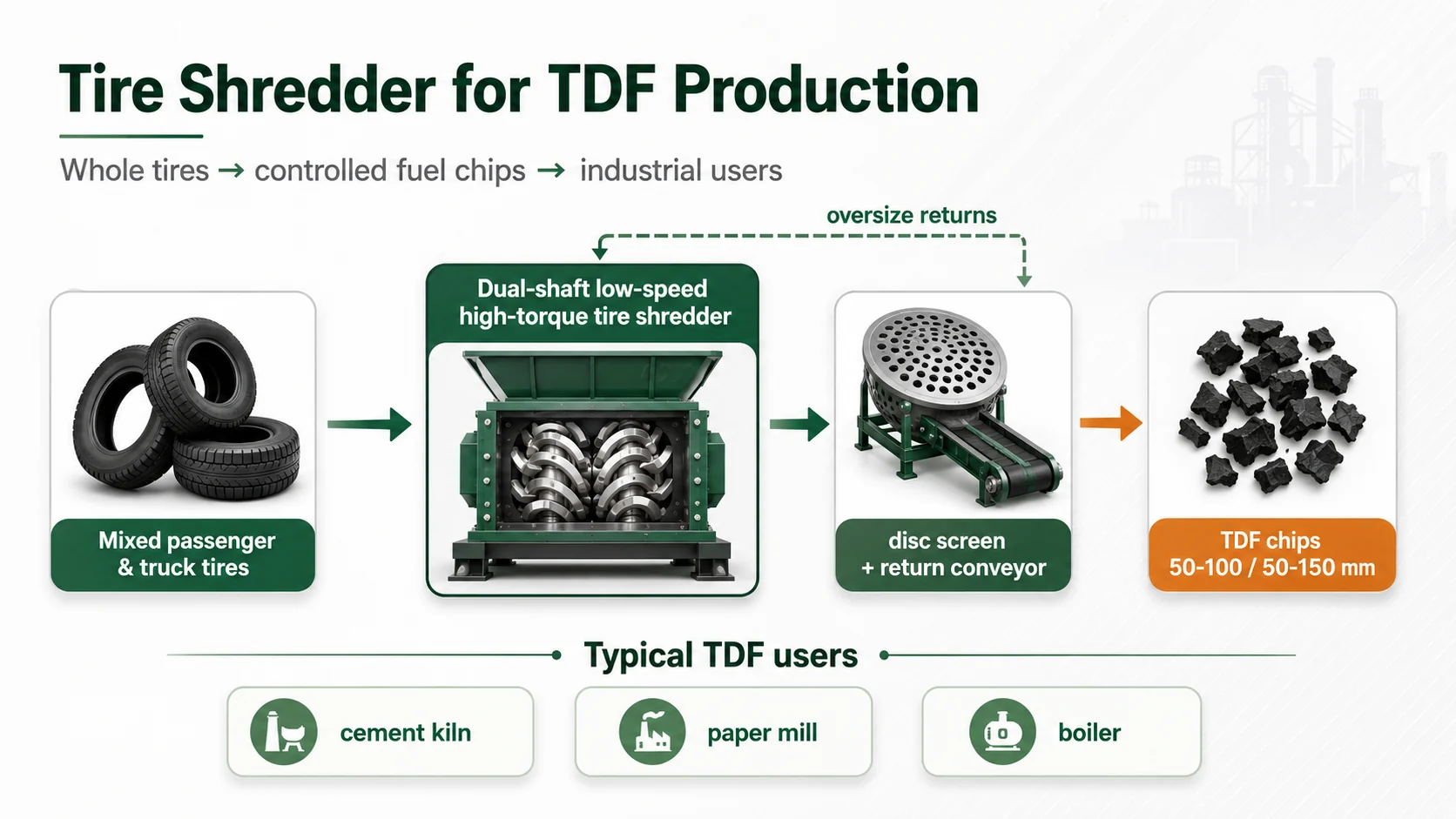
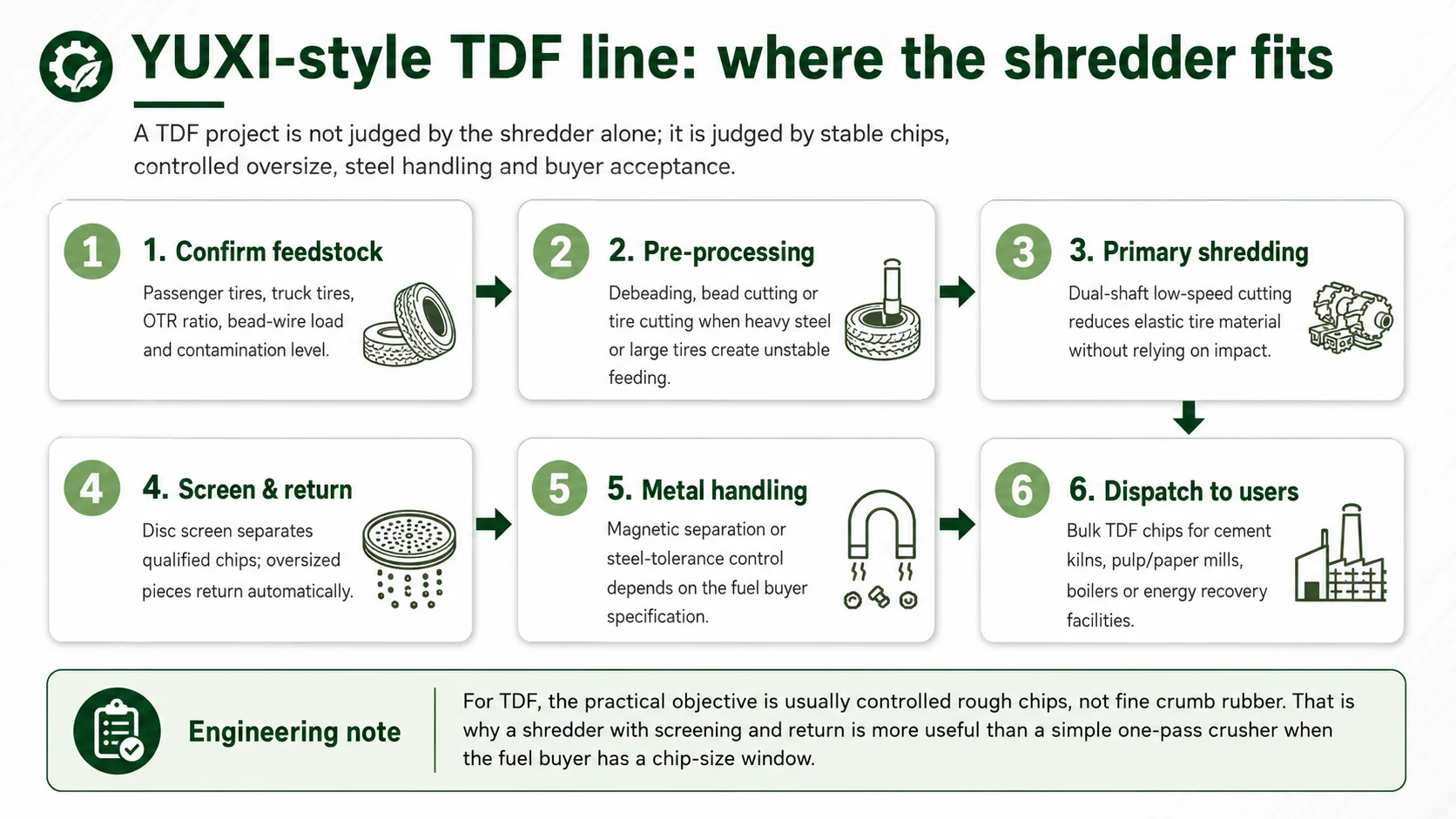
That is why a tire shredder for TDF should be evaluated as part of a production route: tire preparation, feeding, low-speed shredding, screening, oversize return, optional magnetic separation and bulk dispatch. YUXI’s tire recycling equipment category page follows this process-based logic, noting that equipment choice depends on tire type, steel content, required output size and whether the project needs a standalone machine or a complete line.
The best answer is therefore not “buy the biggest motor.” It is “define the TDF chip your fuel user will accept, then configure the shredder and surrounding equipment to produce that chip repeatedly.”
What TDF production requires before equipment selection
Tire-derived fuel is made from scrap tires used as supplemental fuel in suitable industrial systems. The U.S. EPA explains that tires may be used whole or shredded depending on the combustion device, and that size reduction or de-wiring may be required before use. EPA also notes the high heating value of tires compared with coal and supports responsible TDF use where facilities have storage, handling, permitting and environmental controls in place.
From a plant-design perspective, this creates four practical requirements:
Defined chip size. TDF buyers normally specify a chip size range or screen size rather than accepting random strips.
Stable feeding. The fuel must move through conveyors, metering systems and combustion feed equipment without bridging or excessive fines.
Controlled steel. Some exposed wire is expected in rough TDF, but bead wire and long steel strands can create handling and acceptance issues.
Traceable supply. Fuel users may ask for documentation on tire source, storage method, contamination control and delivery tonnage.
ASTM D6700-19 is the recognized ASTM guide covering scrap tires used as tire-derived fuel. A machine supplier does not replace the fuel user’s specification, but it should help the project owner ask the right questions before buying the equipment.
Where the YUXI tire shredder fits in a TDF line
YUXI’s product information positions the tire shredder as the core size-reduction machine for TDF chips, rubber mulch and downstream granulation. The dedicated tire shredder machine page describes a dual-shaft cutting chamber working with a disc screen return system, so oversized pieces are sent back automatically rather than being manually sorted.
For TDF work, that return system matters. Whole tires are elastic and reinforced with steel. A simple one-pass machine may reduce volume, but the discharge can include large loops, strips and inconsistent pieces. A screen-and-return route gives the line a second chance to cut oversized material before it reaches the customer’s truck or downstream fuel storage.
YUXI’s TDF plant page describes a route that can include bead steel wire removal, whole tire cutting and tire shredding. The same page lists flexible output around 50–150 mm for rough shreds or rubber chips, while the product summary highlights 50–100 mm TDF output for specific configurations. In practice, the exact target should be confirmed with the fuel user before the shredder knives, screen opening and return conveyor are finalized.
Typical YUXI-style route for TDF chips
A project can be configured differently depending on tire type and capacity, but a practical TDF route often looks like this:
Inbound tire sorting. Separate passenger tires, truck tires, oversized tires and dirty material. Remove stones, rims and non-tire waste before feeding.
Bead or sidewall preparation when needed. Heavy truck tires and high-steel tires may need wire drawing, bead cutting or tire cutting to stabilize the shredding load.
Primary shredding. A low-speed, high-torque,double-shaft shredder grabs the tire and cuts it into rough chips.
Screening and return. Qualified chips pass forward; oversized pieces recirculate to the shredder for another cut.
Steel control and discharge. Depending on the buyer’s tolerance, the line may add magnetic separation or stricter upstream bead removal.
Bulk loading.According to local logistics,the chip is loaded into walking bottom trailers,terminal dump trucks,containers or on-site storage.
Output size: 50–100 mm, 50–150 mm, or something else?
Many TDF equipment pages mention 50–100 mm or 50–150 mm output, and YUXI’s TDF product information uses both ranges in different parts of the site. These are useful starting points, not universal promises for every fuel user. Cement kilns, pulp and paper mills, industrial boilers and dedicated energy facilities may have different feed systems and different tolerance for oversize pieces or wire exposure.
A larger rough shred is easier and less energy-intensive to make, but it may not feed smoothly in every combustion system. A smaller chip is easier to meter, but it usually requires tighter screening, more recirculation, more blade wear and sometimes additional processing. This is why the most expensive mistake in TDF projects is buying for “smallest possible size” without checking the buyer’s real acceptance window.
Primary shredding may be enough, but not always accepted as TDF.
50–150 mm TDF chips
Common rough TDF target for industrial fuel projects
Dual-shaft shredder plus screening and return is recommended.
50–100 mm controlled chips
Stricter TDF buyer requirements or more controlled fuel feed
More attention to screen setting, recirculation, blade wear and capacity derating.
Below 50 mm chips
Special fuel systems or pre-feed for further recycling
May require secondary shredding, chipping or granulation; not always necessary for TDF.
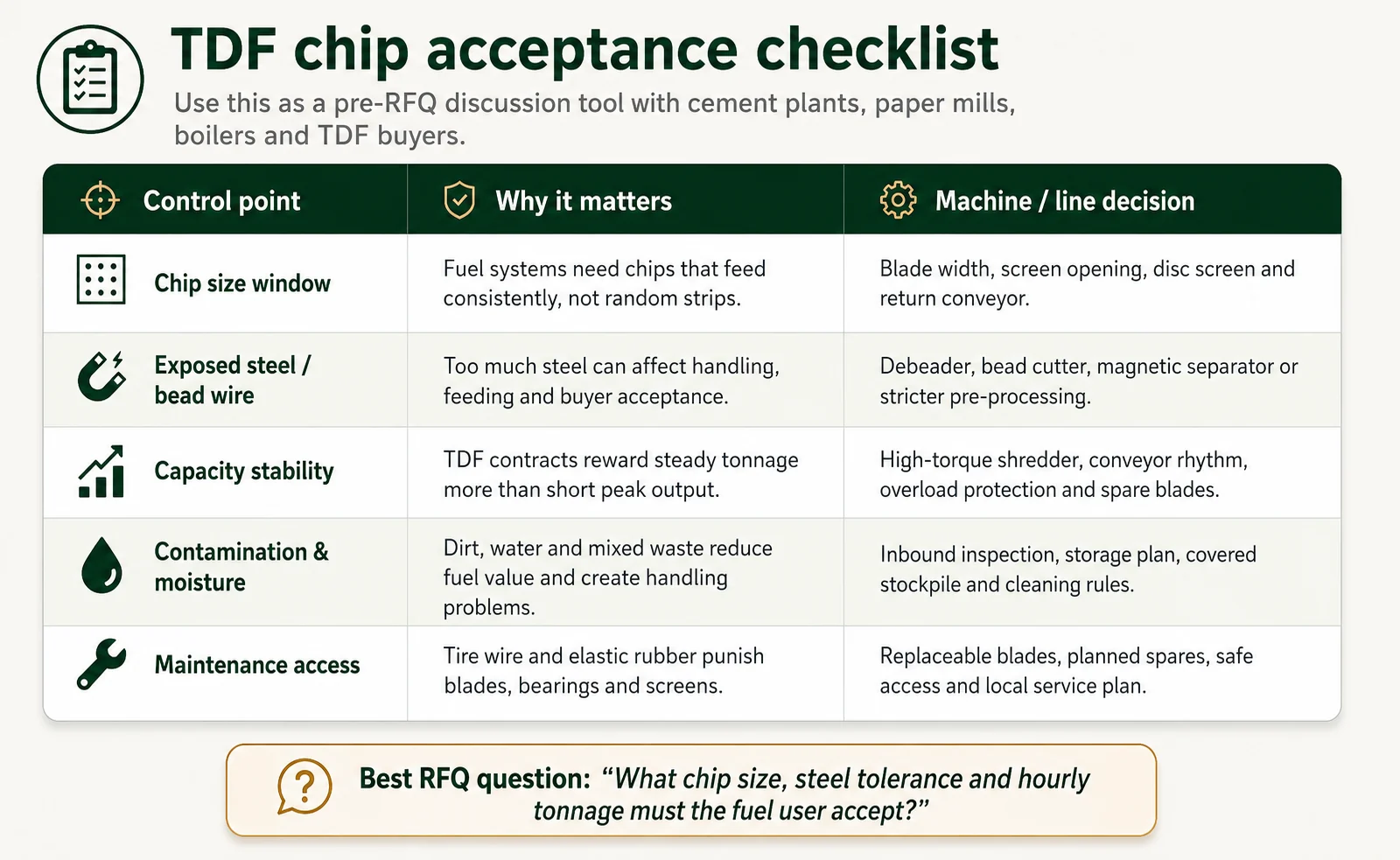
The practical way to specify a tire shredder for TDF is to ask the fuel buyer for three values: maximum chip dimension, acceptable oversize percentage and acceptable exposed wire or metal content. With those numbers, the supplier can propose a realistic line capacity instead of a catalog capacity measured under easier conditions.
Steel-wire handling: the hidden part of TDF shredder selection
Steel is not a small detail in tire recycling. Passenger tires contain bead wire and steel belts; truck tires carry heavier reinforcement; OTR tires can be extremely demanding. The shredder can cut steel-reinforced rubber, but heavy bead wire and long exposed strands can accelerate blade wear, increase load spikes and create problems for downstream handling.
YUXI’s front-end equipment group includes machines for tire preparation before shredding. A tire wire drawing machine can remove bead wire from tires where steel recovery and blade protection are important. A tire cutting machine can reduce large tires or tire sections before they enter the shredder. For sidewall and bead-area preparation, the waste tire bead cutting machine may be used when tires need to be opened or cut before size reduction.
For TDF, the question is not always “remove every wire.” Some TDF buyers accept rough chips with embedded steel, while others need lower exposed wire, better magnetic separation or a more controlled pre-processing route. The right solution depends on the fuel user, local handling system and the value of recovered steel in the project’s market.
How to choose a tire shredder for TDF
Use the following selection logic when comparing a standalone shredder, a partial upgrade or a complete line.
1. Start from the TDF buyer’s acceptance specification
Before asking for motor power or blade price, ask the buyer for chip size, steel tolerance, delivery moisture, contamination rules, preferred truck loading method and test-load procedure. A plant that has a written fuel acceptance specification will buy equipment more confidently than a plant that only targets “TDF chips.”
2. Define the incoming tire mix
Passenger tires, truck tires, bus tires, agricultural tires and OTR tires do not behave the same way in a shredder. Truck tire ratio has a strong effect on torque requirement, blade wear and throughput. Oversized tires may require pre-cutting or custom feeding. If the feedstock changes seasonally, build that into the capacity plan.
3. Match the shredder to the screen and return system
A shredder without output control may reduce tires, but it cannot guarantee a fuel chip window. Screening and return help stabilize the discharge. For YUXI’s TDF approach, this is the reason the disc screen return system is a central design point rather than an optional decoration.
4. Separate catalog capacity from contract capacity
Catalog capacity often assumes a relatively clean and stable feed. Contract capacity should consider truck tire percentage, desired chip size, return ratio, wire load, operator rhythm, blade condition and downtime for maintenance. If the contract requires 8 tons per hour of accepted chips, the shredder may need to be sized above that number to allow for recirculation and real-world variation.
5. Plan maintenance before installation
TDF production is abrasive and tough on knives, shafts, bearings, screens and conveyors. Ask about blade material, replacement method, access space, lubrication, overload protection, spare blade plan and expected service intervals. A cheaper line can become expensive if it is difficult to maintain or if spare parts are not planned before commissioning.
6. Design the layout around flow, not only equipment footprint
TDF plants need room for tire storage, feeding, return material, discharge chips, maintenance access, dust and debris control, steel handling and truck loading. A compact layout may look efficient on paper but create bottlenecks when loaders, conveyors and maintenance staff share the same space.
Recommended configurations by buyer scenario
New TDF supplier for cement kilns
Focus on controlled chip size, low oversize, stable bulk loading and a clear documentation process. A shredder with screening and return is more important than chasing the lowest upfront machine price.
Collection yard adding fuel-chip sales
Start with tire mix and buyer demand. If the yard mainly receives passenger tires, a simpler route may work. If truck tires are common, add bead or cutting preparation to protect the shredder and improve throughput.
Existing tire recycler upgrading output
Check whether the bottleneck is the shredder, screen, return conveyor, magnetic separation or loading system. Many upgrades fail because only the shredder is replaced while the old conveyor and screen still limit accepted tonnage.
OTR or mining tire processor
Do not select from passenger tire data. Confirm tire diameter, section thickness, bead structure, loader method and pre-cutting plan before sizing the shredding chamber and hydraulic or conveyor feeding route.
RFQ checklist for a YUXI TDF shredder project
To receive a useful configuration, send the supplier more than a target capacity. The following information helps YUXI match the line to real TDF production conditions:
Daily and hourly capacity target in accepted TDF chips, not only raw tire input.
Tire types: passenger, truck, bus, agricultural, OTR or mixed.
Approximate truck tire percentage and maximum tire diameter.
Fuel buyer’s required chip size and oversize tolerance.
Steel-wire requirement: rough TDF, low-exposed-wire chips or magnetic separation needed.
Available plant area, feeding method, power supply and loading method.
Whether the project needs a standalone shredder, a front-end preparation line or a complete Tire TDF Plant.
With these details, the conversation moves from generic quotation to engineering selection: shredder chamber size, blade arrangement, motor and reducer configuration, disc screen, return conveyor, optional pre-processing equipment and spare parts plan.
Common mistakes when buying a TDF tire shredder
Buying only by motor power
Motor power matters, but it does not describe knife design, shaft strength, screen control, return ratio, feeding stability or ease of maintenance. A well-matched lower-speed, high-torque machine can be more useful for tire work than an impressive horsepower number on a generic shredder.
Ignoring the return material percentage
If the screen sends too much material back, the line’s accepted output can be far lower than the raw shredding rate. Ask the supplier to explain expected return behavior for your tire mix and chip-size target.
Assuming all TDF buyers accept the same chip
They do not. Cement kilns, paper mills and boilers may differ in feeding equipment, storage rules and metal tolerance. A test load or written specification is better than a verbal size range.
Skipping the spare blade plan
TDF production is continuous work. Blade replacement, sharpening or spare sets should be planned before installation. Waiting until output quality declines can interrupt fuel deliveries and damage buyer confidence.
FAQ: Tire shredder for TDF
What is the best tire shredder for TDF production?
The best shredder is usually a low-speed, high-torque tire shredder configured with screening and return. The exact model depends on tire type, target chip size, steel-wire requirement and hourly accepted output.
Can a tire shredder make 50–100 mm TDF chips?
Yes, a properly configured TDF line can target 50–100 mm chips, but capacity, return ratio and blade wear must be evaluated. YUXI’s TDF information lists 50–100 mm output for specific TDF configurations and also describes flexible 50–150 mm rough chip output.
Does TDF production need tire debeading?
Not always. Passenger tire projects may go directly to shredding depending on line design. Truck tires, heavy bead wire or stricter steel requirements often justify debeading, bead cutting or tire cutting before shredding.
Is TDF the same as crumb rubber?
No. TDF is a fuel product, normally rougher and larger. Crumb rubber requires additional granulation, steel separation, fiber separation and screening to produce smaller particles for rubber products, asphalt or molded goods.
What capacity can a TDF tire shredding line reach?
YUXI’s TDF plant page lists capacity ranges up to 0.5–20 t/h for the TDF plant series, but the practical output for a specific project depends on tire mix, chip size, steel handling and return percentage.
What should I send before requesting a quote?
Send tire photos, maximum tire diameter, tire mix, truck tire percentage, target chip size, required capacity, steel tolerance, plant layout and the fuel buyer’s acceptance rules.
References and source notes
External sources for technical background: U.S. EPA Tire-Derived Fuel guidance and FAQ; USTMA 2023 End-of-Life Tire Management Report pages; ASTM D6700-19 Standard Guide for Use of Scrap Tires as Tire-Derived Fuel.
Marie has 8+ years of experience in tire shredding and recycling equipment,with a focus on tire shredders,rubber recycling machines,TDF production,rubber crumb processing,and complete tire recycling systems.