




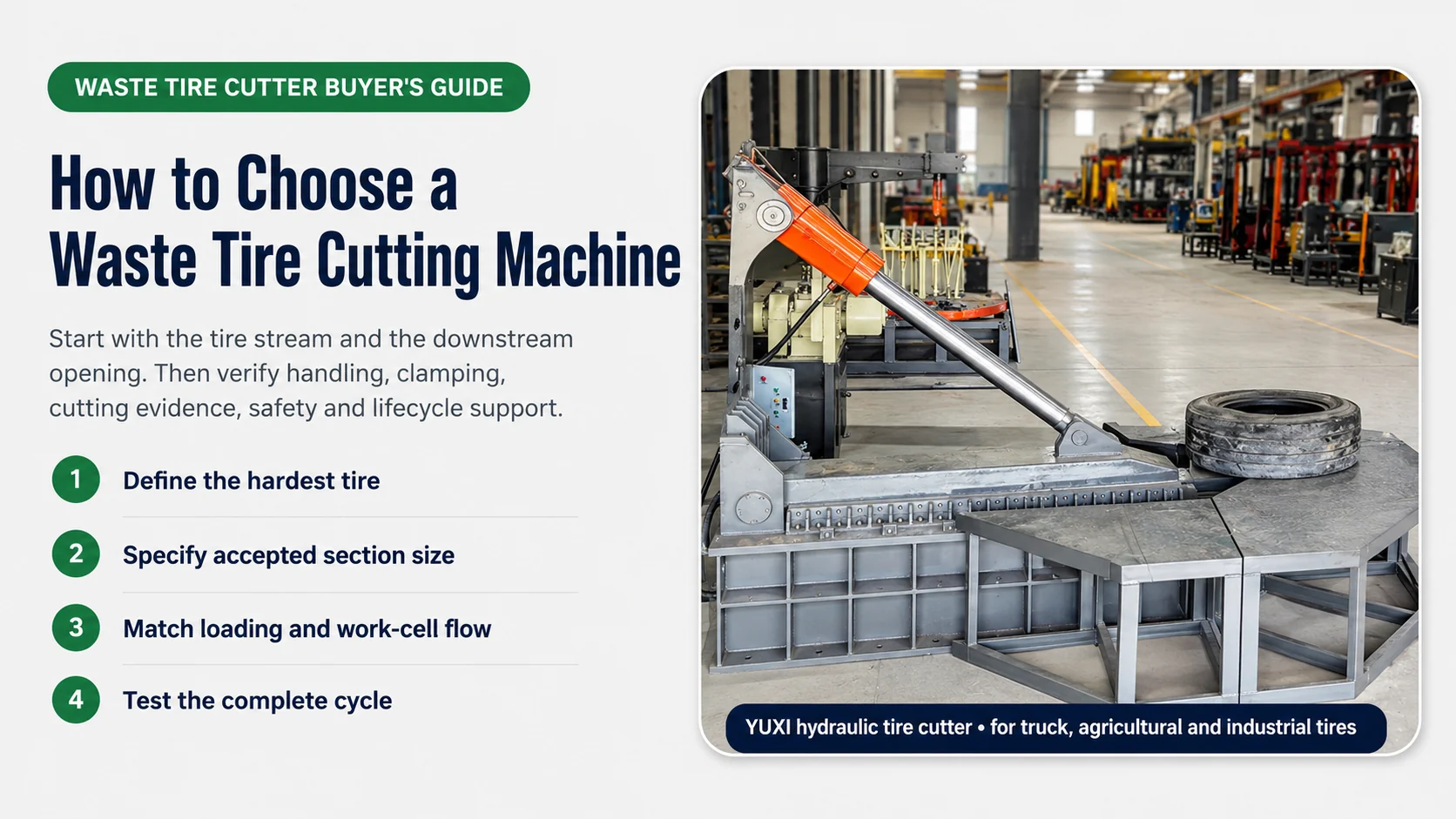
Resposta rápida
Conteúdo
- Primeiro, decida se é necessário usar um cortador
- Definir o fluxo real de pneus
- Especifique a seção aceita
- Escolha a célula de manuseio
- Verificar a capacidade de corte
- Avaliar o desgaste da lâmina e o acesso para manutenção
- Compare a capacidade prática
- Verifique a segurança e o isolamento
- Confirmar os serviços públicos e o layout
- Utilize um quadro de avaliação de fornecedores
- Onde o YUXI se encaixa
- Lista de verificação para solicitação de cotação
- Erros comuns na hora de comprar
- PERGUNTAS FREQUENTES
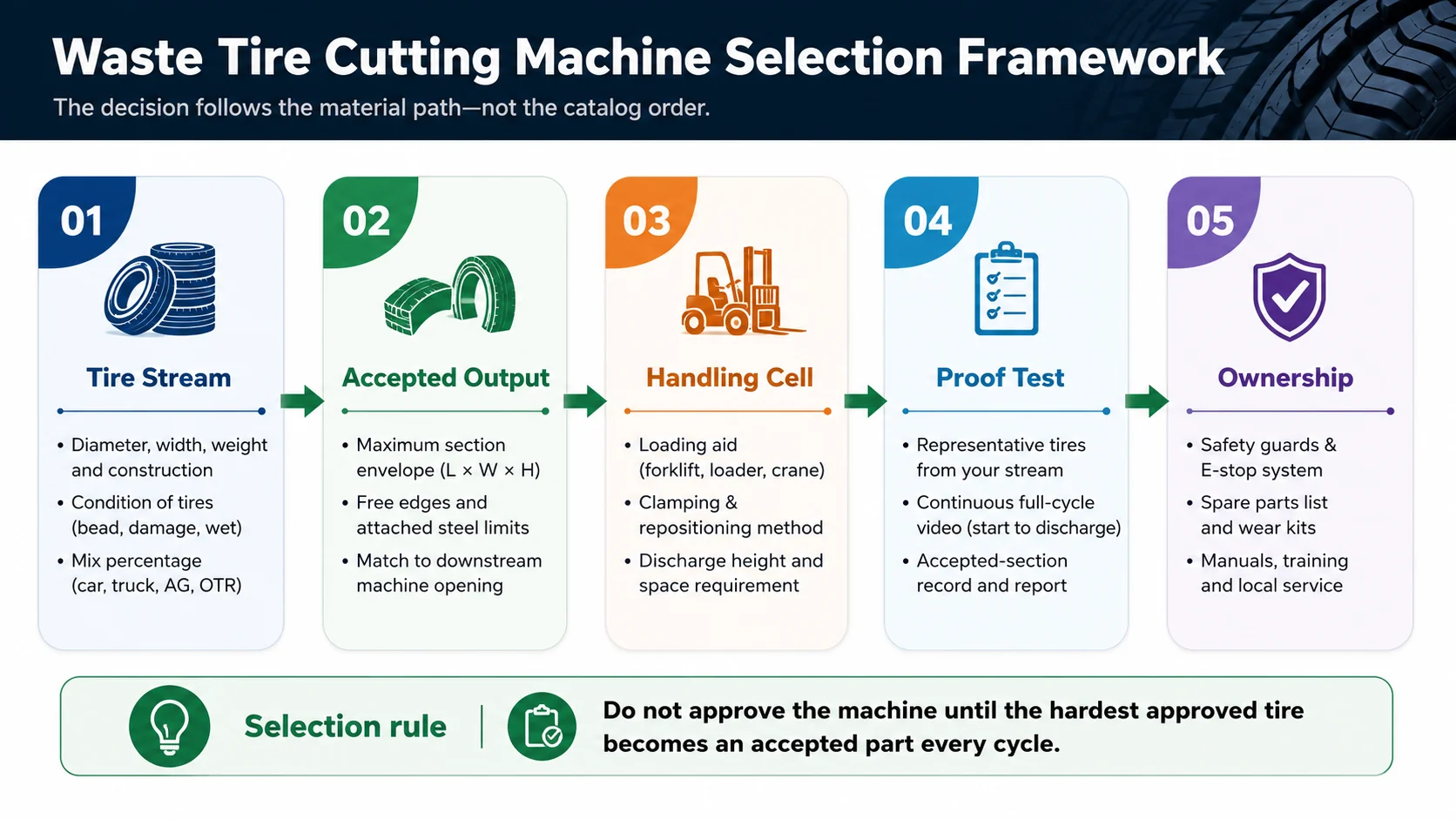
Primeiro, decida se você precisa de uma máquina de corte de pneus
É mais provável que um cortador agregue valor quando:
- o pneu de maior dimensão excede a abertura de alimentação testada ou o limite de manuseio da máquina seguinte;
- pneus inteiros que atravessam a ponte, saltam ou entram no triturador em ângulos instáveis;
- Os pneus OTR ou agrícolas exigem um espaço de manobra menor antes do transporte, da trituração ou do carregamento em lotes;
- o projeto precisa de bordas livres expostas para que o triturador possa segurar o material de maneira mais previsível;
- O corte manual é repetitivo, lento, inconsistente ou difícil de controlar.
Pode não ser necessário utilizar um cortador separado quando:
- a linha processa principalmente pneus de passageiros, e o triturador selecionado foi projetado e testado para receber pneus inteiros;
- o material chega pré-cortado ou já inserido na abertura a jusante;
- o volume é muito baixo para justificar uma célula de trabalho adicional;
- o corte acrescenta uma etapa de transferência, mas não resolve um problema específico de alimentação ou manuseio;
- uma rota de pré-tratamento diferente — como, por exemplo, o tratamento com esferas em primeiro lugar — é a verdadeira restrição.
1. Defina o fluxo de pneus antes de comparar máquinas
Comece com o pneu aprovado mais duro
| Campo de entrada | Por que isso altera a seleção | Provas a serem enviadas |
|---|---|---|
| Família de pneus | Os pneus para caminhões, agrícolas e para veículos fora de estrada diferem na geometria da carcaça, no reforço e no comportamento de manobrabilidade. | Fotos do piso, da parede lateral, da área do talão e do pneu inteiro. |
| Diâmetro externo máximo | Afeta o tamanho da mesa, o curso do cortador, o suporte e o espaço útil total da máquina. | Valor máximo medido, e não apenas as marcações nominais na parede lateral. |
| Largura máxima | As influências dizem respeito ao contato, ao alcance da braçadeira e à geometria da seção. | Medida no ponto mais largo real. |
| Peso aproximado | Determina o auxílio ao carregamento, a carga no piso, o esforço de reposicionamento e o método de descarga. | Dados do fornecedor, registro de pesagem ou estimativa fundamentada. |
| Construção e teor de aço | As estruturas OTR totalmente em aço e de grande espessura alteram a carga e o desgaste do cortador. | Tipo de pneu, marca/marcações, quando disponíveis, e amostra representativa. |
| Condição | Pneus deformados, danificados, enlameados ou parcialmente desgastados podem não oferecer o mesmo suporte ou aderência que uma carcaça normal. | Fotos de danos e contaminações típicos. |
| Porcentagem da mistura | Uma pequena parcela de pneus problemáticos pode ser a principal causa do tempo de inatividade e do desgaste das ferramentas. | Porcentagem estimada mensal ou por turno, por família de pneus. |
2. Especifique a seção que a próxima máquina pode aceitar
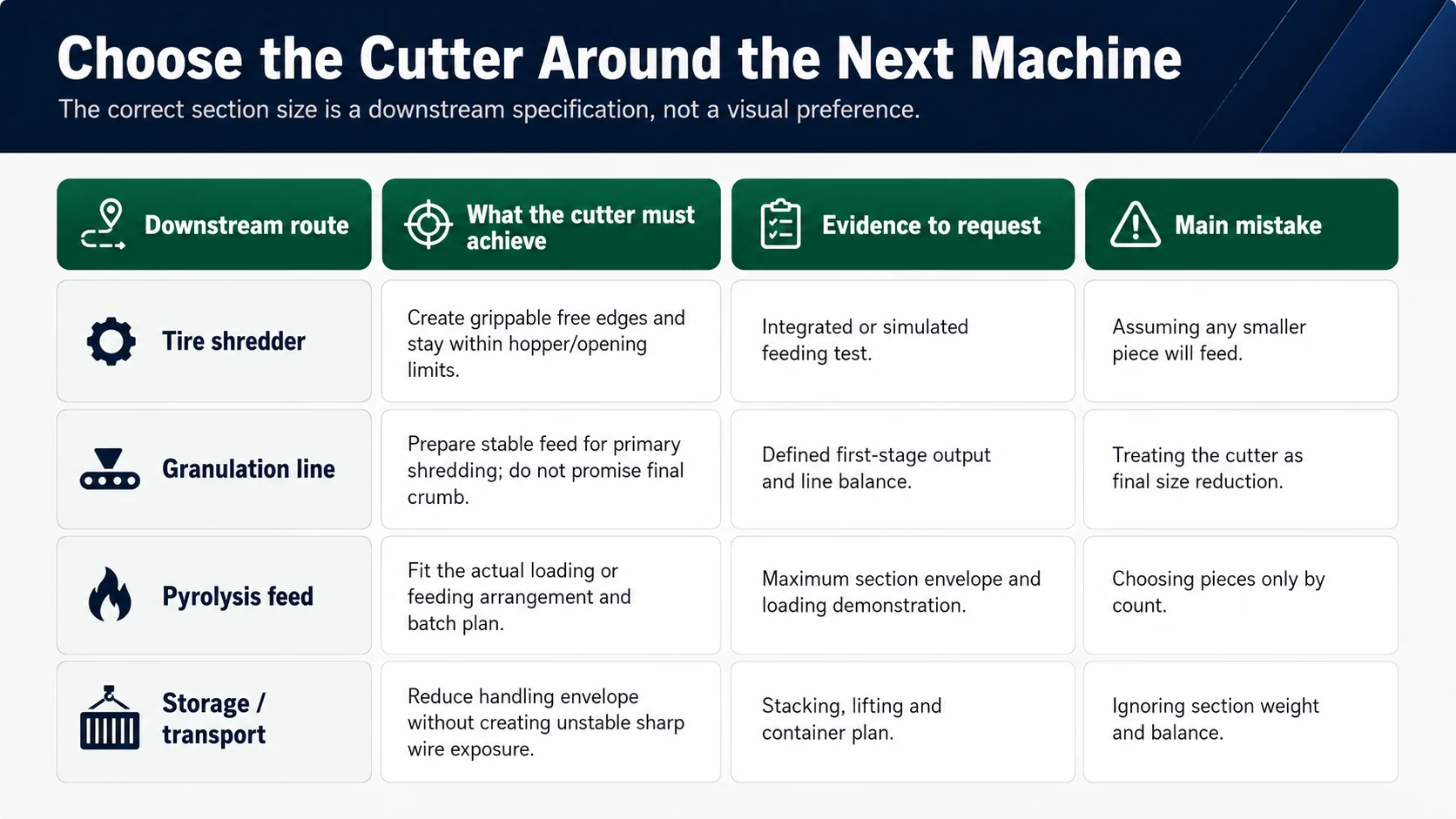
3. Escolha a máquina e a célula de manuseio em conjunto
Método de carregamento
Suporte e fixação
Reposicionamento após o primeiro corte
4. Verifique a capacidade de corte com evidências, e não com base em um único número
Provas úteis
- um vídeo contínuo mostrando o carregamento, a fixação, todos os cortes necessários, o reposicionamento e a descarga;
- marcas visíveis nos pneus ou dimensões registradas;
- medidas das seções acabadas;
- uma folha de teste indicando os operadores, os meios auxiliares de manuseio, os limites do ciclo e as interrupções;
- confirmação de que a máquina testada corresponde à configuração hidráulica, estrutural e de cortadores indicada na cotação;
- uma verificação integrada ou simulada da alimentação a jusante, quando a capacidade de alimentação é o motivo do corte no projeto.
Evidência fraca
- um breve close-up de um golpe com a lâmina;
- um pneu desconhecido, sem registro de tamanho ou construção;
- um valor de capacidade baseado exclusivamente no tempo de corte;
- um teste utilizando uma máquina maior do que o modelo indicado;
- peças de aparência idêntica, sem envelope a jusante;
- uma afirmação de que “os pneus OTR são compatíveis”, sem definir a linha de pneus OTR aprovada.
Definir o teste de aceitação de fábrica antes do pedido
5. Avaliar o cortador como peça sujeita a desgaste
| Pergunta | Por que isso é importante | O que uma resposta útil deve conter |
|---|---|---|
| Quais são os materiais e as geometrias das fresas fornecidas? | Diferentes composições de borracha e reforços podem alterar o comportamento de desgaste. | Descrição do material, desenho ou número da peça, aplicação aprovada do pneu e limites do fornecedor. |
| A lâmina pode ser invertida, afiada ou apenas substituída? | Altera o planejamento de manutenção e a quantidade de peças de reposição. | Método de atendimento aprovado e critérios de rejeição. |
| Como ele é removido com segurança? | Uma peça pesada e afiada, sob a ação da energia hidráulica armazenada, representa um risco para a manutenção. | Isolamento, método de bloqueio/apoio, pontos de levantamento, acesso e sequência documentada. |
| Qual pacote de peças de reposição é recomendado? | O prazo de entrega das exportações pode tornar uma pequena falta de peças de reposição muito cara. | Peças de reposição para comissionamento, peças de desgaste do primeiro ano e prazo de reabastecimento. |
| Como é monitorado o desgaste? | Ficar esperando por cortes incompletos repetidos é uma atitude reativa. | Frequência de inspeção, critérios relativos às condições das bordas e sintomas operacionais. |
6. Compare a capacidade do ciclo completo, e não a velocidade das pás
7. Considerar a proteção e o isolamento energético como critérios de seleção
O comprador verifica se o funcionamento está normal
- De que forma a proteção ou o dispositivo de segurança impede o contato do corpo com a trajetória da lâmina e com o movimento da braçadeira?
- O operador pode carregar e reposicionar o pneu aprovado sem contornar a proteção prevista?
- Onde estão posicionados os controles normais, a parada de emergência e o botão de reinicialização em relação ao material?
- O que acontece após uma queda de energia, a abertura da proteção ou uma parada de emergência?
- Uma seção pode se mover, rolar ou cair na direção do operador durante a liberação e a descarga?
Verificações do comprador relativas à manutenção
- Os pontos de isolamento elétrico e hidráulico estão claramente identificados e podem ser travados?
- Como a energia hidráulica armazenada é liberada, contida ou verificada quanto à sua segurança?
- Como as peças elevadas ou móveis são sustentadas mecanicamente durante a manutenção?
- A substituição do cortador, a inspeção e a limpeza da mangueira podem ser realizadas a partir de um local de acesso controlado?
- Quais procedimentos, desenhos e documentos de treinamento específicos da máquina são fornecidos?
8. Confirmar os serviços públicos, a área útil e os detalhes da exportação
Elétrica
Hidráulica e meio ambiente
Planta e fundação
9. Utilizar um quadro de avaliação ponderado de fornecedores
| Área de avaliação | Exemplo de peso | Pergunta sobre pontuação |
|---|---|---|
| Compatibilidade aprovada entre pneus e potência | 25% | O fornecedor aprova explicitamente o conjunto de pneus mais duros e o envelope de seção exigido? |
| Evidências de testes representativas | 20% | Existe uma verificação contínua, compatível com a configuração, com medições e um ciclo definido? |
| Manuseio e disposição | 15% | O método efetivo de carregamento, reposicionamento e descarga pode ser executado no espaço disponível na fábrica? |
| Pacote de segurança e isolamento | 15% | As medidas de segurança para operação normal, os pontos de isolamento e os procedimentos de manutenção estão claros? |
| Peças de desgaste e facilidade de manutenção | 10% | As peças do cortador, o acesso, o método de substituição, as peças de reposição e o prazo de entrega estão documentados? |
| Ferramentas, documentos e suporte | 10% | O pacote está em conformidade com as normas locais de energia e inclui desenhos, manuais e suporte para o comissionamento? |
| Condições comerciais | 5% | O preço, o escopo, as exclusões, a garantia e as responsabilidades de aceitação estão definidos de forma inequívoca? |
10. Onde a máquina de corte de pneus YUXI se encaixa
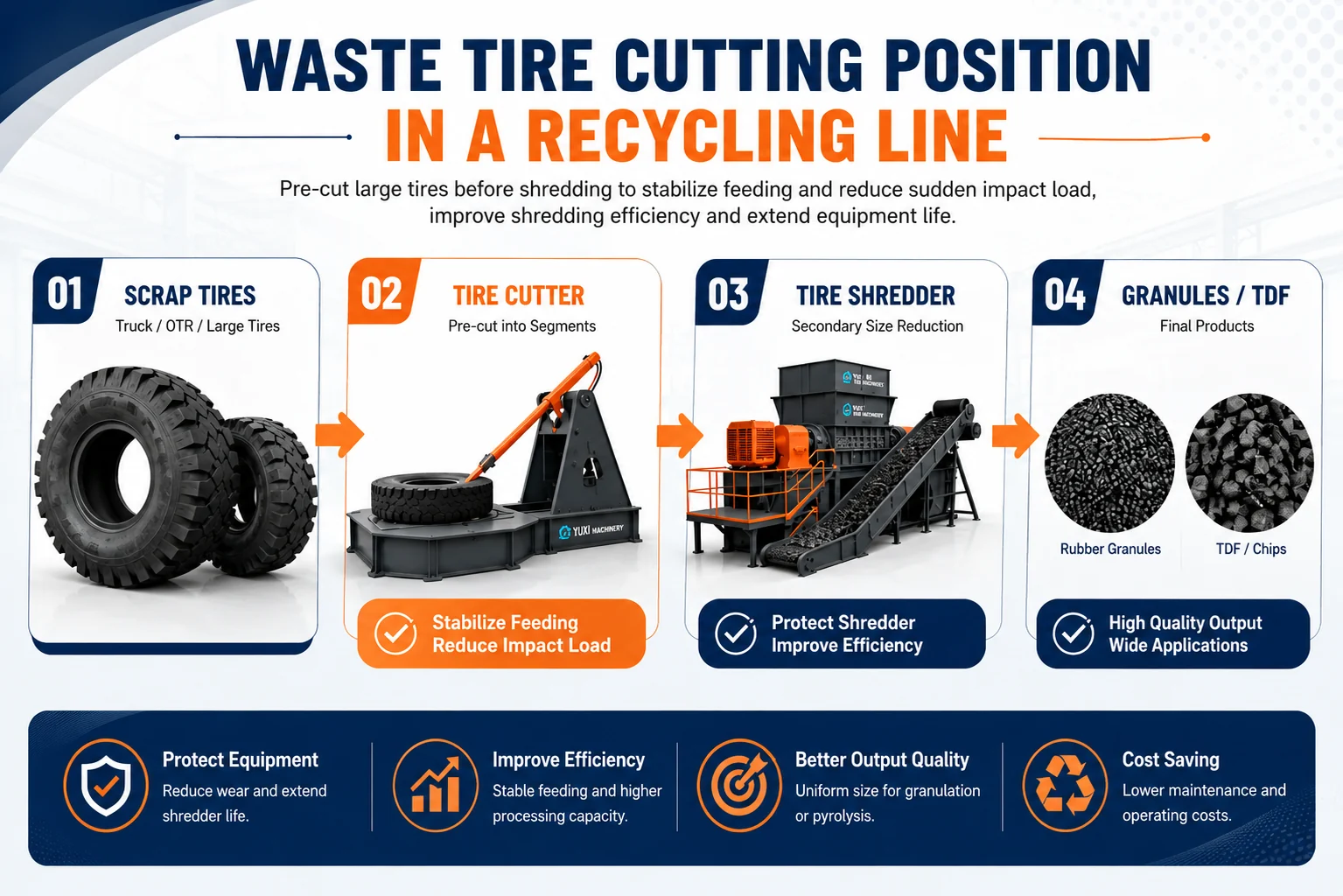
A YUXI é uma opção lógica quando:
- o projeto apresenta um problema específico relacionado ao fornecimento de pneus para caminhões, veículos agrícolas ou veículos fora de estrada;
- o comprador pode fornecer dados representativos sobre os pneus e os requisitos desejados para a seção;
- o cortador deve estar integrado a um triturador, transportador, dispositivo auxiliar de carregamento ou ao layout da planta;
- o comprador deseja que seja realizado um teste na fábrica antes que a configuração final seja aceita;
- O fornecedor está sendo avaliado com base no processo como um todo, e não apenas em um único número de catálogo.
11. Lista de verificação para solicitações de cotação: o que enviar e o que solicitar
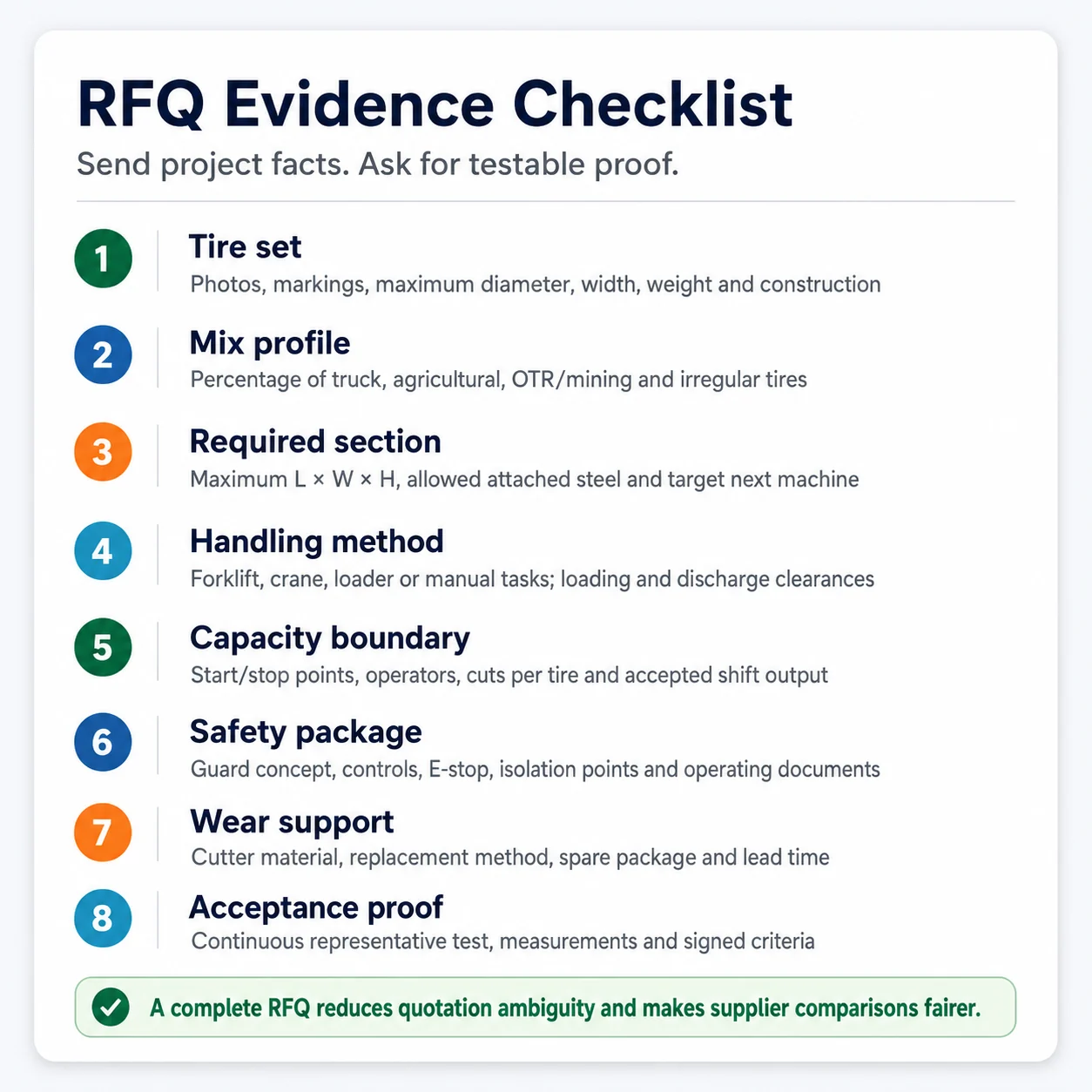
Informações a serem enviadas
- fotos de pneus representativos e de pneus em condições extremas, incluindo marcações visíveis;
- diâmetro externo máximo, largura máxima e peso aproximado;
- família de pneus, construção e porcentagem estimada da composição;
- condição: intacto, danificado, deformado, sujo, parcialmente sem bordas ou pré-tratado;
- dimensões máximas exigidas para a seção e quantidade permitida de aço acoplado;
- máquina a jusante, tamanho da abertura e método de alimentação;
- meta de pneus aceitos ou toneladas por hora/turno, com indicação do horário de trabalho;
- método planejado de carga e descarga;
- tensão, fase e frequência locais;
- planta da oficina, portas de acesso e espaço operacional disponível;
- país de destino, idioma do documento e expectativas quanto à tradução.
Documentos e provas a serem solicitados
- proposta técnica que identifique a linha de pneus aprovada e as exclusões;
- desenho de disposição geral com folgas de serviço e manuseio;
- resumo elétrico e hidráulico, requisitos de energia e dados da placa de identificação;
- conceito de proteção, descrição do controle e pontos de isolamento;
- especificações do cortador, lista de peças de reposição e método de substituição;
- teste contínuo em fábrica, de acordo com os critérios de aceitação acordados;
- documentação de operação, manutenção, instalação e segurança;
- lista de embalagem, divisão do envio, responsabilidade pela montagem e escopo do suporte;
- limites da garantia e uma lista de consumíveis ou peças sujeitas a desgaste que não estão cobertas.
Transforme os dados dos seus pneus em uma configuração testável
Envie à YUXI fotos representativas dos pneus, as dimensões e o peso máximos, a composição da família de pneus, o envelope de seção exigido, o processo posterior, a produção alvo por turno, o método de carregamento, o fornecimento local de energia e o layout da oficina. Solicite a cotação final para identificar todos os campos ainda não confirmados e as evidências necessárias para resolvê-los.
12. Erros comuns na hora de comprar
Compra com base na potência do motor
Utilização do tamanho nominal do pneu sem medições reais
Especificar o número de peças por pneu, em vez das dimensões aceitas da seção
Teste apenas do curso da lâmina
Ignorando o segundo e o terceiro corte
Deixar as questões de segurança e manutenção para depois da entrega
Comparação de cotações com diferentes condições de teste
Perguntas frequentes
Como escolher a máquina de corte de pneus usados certa?
Comece com o pneu aprovado maior e mais difícil e, em seguida, defina a seção máxima que a próxima máquina pode aceitar. Adapte a lâmina de corte, a mesa de apoio, o sistema de fixação, o método de carregamento, o sistema de segurança e o pacote de serviços a essas condições e verifique o resultado por meio de um teste contínuo representativo.
Devo comparar os cortadores de pneus com base na potência do motor?
Não. A potência do motor, por si só, não comprova a adequação ao corte. Compare a linha de pneus aprovada, a configuração hidráulica e estrutural, o sistema de retenção dos pneus, o projeto da lâmina de corte, os dados de ciclo completo, as funções de segurança e a potência nominal.
Uma única máquina de corte de pneus pode processar pneus de caminhão e pneus OTR?
Ele pode ser configurado para ambas as opções, mas o projeto final depende do diâmetro, da largura, do peso, da construção, do teor de aço, do método de carregamento e do tamanho da seção exigido. O fornecedor deve testar ou aprovar explicitamente a família de pneus mais resistente.
É preciso usar um cortador de pneus antes de um triturador de pneus?
Nem sempre. Um triturador projetado e testado para pneus inteiros de veículos de passageiros ou caminhões pode não precisar de um sistema de corte separado. Um cortador se torna mais relevante quando os pneus são grandes, rígidos, pesados ou irregulares demais para uma alimentação direta segura e estável.
O que deve ser incluído em um teste de aceitação em fábrica?
Defina o conjunto representativo de pneus, o plano de corte exigido, o envelope de seção aceito, os pontos de início e término do ciclo, o número de operadores, o método de carregamento, as paradas permitidas, as verificações das funções de segurança e os comprovantes a serem mantidos antes do início do teste.
Que informações devo enviar à YUXI para solicitar um orçamento?
Envie fotos dos pneus, marcações, diâmetro e largura máximos, peso aproximado, composição do pneu, tamanho de seção desejado, equipamentos a jusante, meta de capacidade, método de carregamento, tensão local e layout da oficina.
Referências e notas de fonte
- Associação dos Fabricantes de Pneus dos EUA, “Como um pneu é fabricado”. Camadas da carcaça do pneu, cintos e construção do talão com fios de aço. Fonte
- NIOSH/CDC, “Diretrizes ergonômicas para o manuseio manual de materiais” e recursos da Equação de Levantamento revisada do NIOSH. Fatores de risco relacionados ao manuseio manual e intervenções de engenharia. Fonte
- Administração de Segurança e Saúde Ocupacional dos EUA, 29 CFR 1910.212, Requisitos Gerais para Todas as Máquinas. Proteção do ponto de operação e exemplos, incluindo cortadoras tipo guilhotina e tesouras mecânicas. Fonte
- Administração de Segurança e Saúde Ocupacional dos EUA, 29 CFR 1910.147, Controle de Energia Perigosa. Programa de controle de energia, desligamento, isolamento, controle de energia armazenada e verificação. Fonte
- EPA dos EUA, “Pneus usados: Manual sobre aplicações de reciclagem e gestão para os EUA e o México”. Contexto do processamento e da redução de tamanho de pneus usados. Fonte