A practical guide for buyers comparing tire bead cutters, tire sidewall cutters and waste tire pre-processing machines before building a tire shredding, rubber granule or rubber powder line.
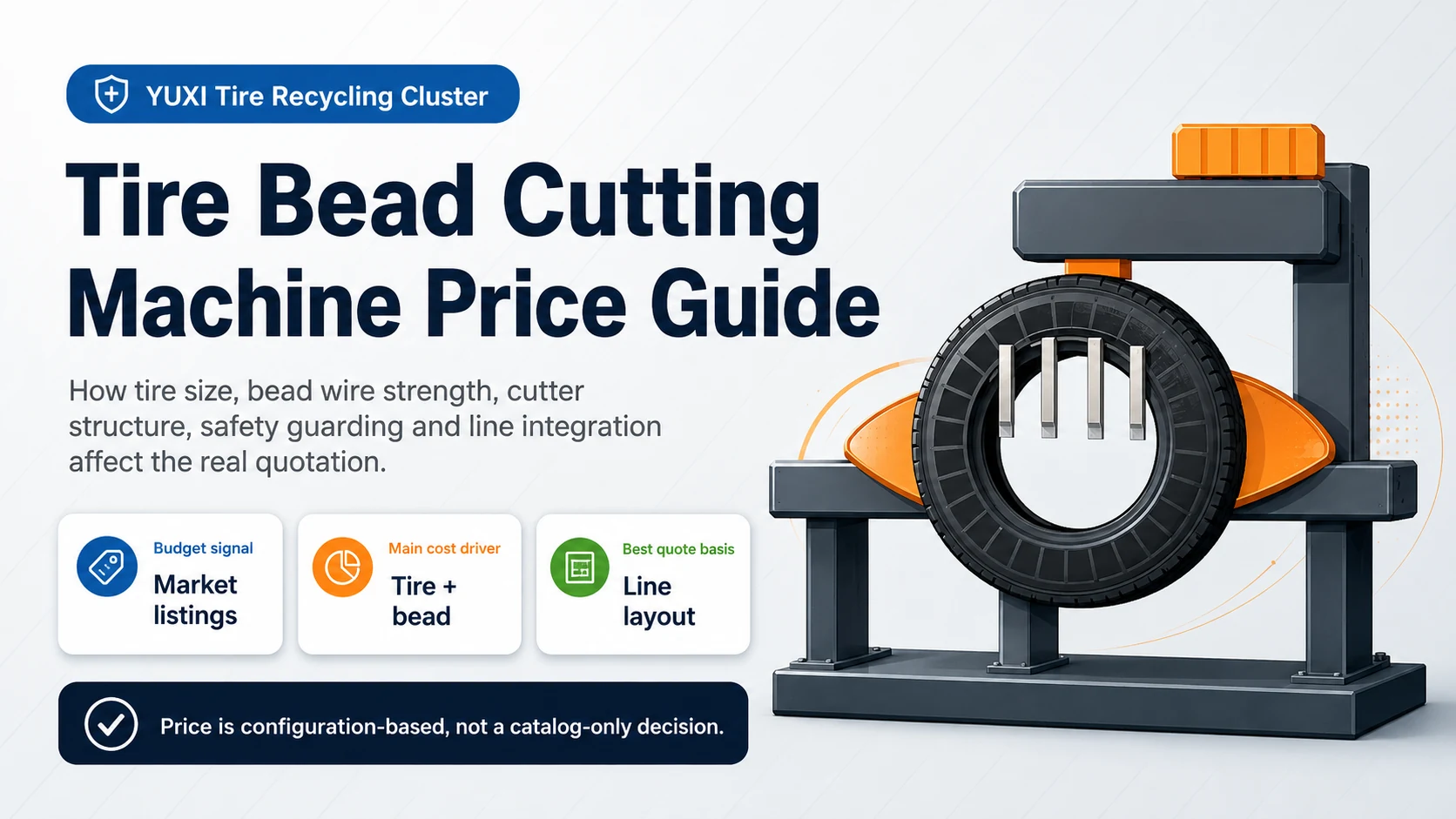
Tire bead cutting machine price depends on tire size, bead wire strength and line configuration.
A tire bead cutting machine looks simple from the outside: a worktable, positioning structure and cutter working around the bead area. But the price is rarely simple. Two machines with similar photos may be built for very different tire streams, blade loads and daily operating schedules.
YUXI describes its waste tire bead cutting machine as pre-processing equipment used to cut the steel-reinforced bead area and separate the bead ring or bead-sidewall section before shredding. This matters because the bead is one of the hardest parts of a scrap tire; if it is sent directly into downstream size-reduction equipment, it can increase concentrated impact on cutters and make feeding less stable.
Quick Answer: What Is a Realistic Tire Bead Cutting Machine Price?
There is no single responsible price for a tire bead cutting machine without tire data. Public B2B listings show that simple small tire sidewall cutters can be advertised from the low hundreds to a few thousand US dollars, semi-automatic bead and sidewall cutters may appear around several thousand dollars, and larger tire cutting systems or complete pre-processing groups can move into much higher budgets. Those numbers are useful for orientation, not for final purchasing.
Buyer takeaway: Use public online prices only as a market signal. For production use, the real quote should be based on tire diameter range, passenger/truck tire mix, bead wire strength, target tires per hour, cutter and guard design, voltage, packing and the next machine in the recycling line.
Price Level
Typical Machine Type
Where It May Fit
Main Risk If Chosen Only by Price
Entry level
Manual or light sidewall cutter
Occasional small tire cutting, low daily volume
More manual handling, lower consistency, limited suitability for truck tires
Small and medium-sized tire recycling plants that need to be
cut repeatedly must still match the tire size, tool material and downstream capacity.
Heavy-duty / integration
More powerful bead cutting, tire cutting or combined pretreatment system
Truck tires, bus tires, mixed scrap tires or production line integration projects
Higher initial cost; need a better layout, loading and maintenance plan
Market Price Ranges: Useful Signals, Not Final Quotations
Public marketplace prices vary widely because sellers group different machines under similar names. Tire bead cutter, tire sidewall cutter, tire ring cutter, tire cutting machine and tire wire removal machine may refer to different designs.
What You May See Online
What It Usually Means
How to Explain It
A list of low-priced sidewall cutting machines
Smaller and simpler machines, suitable for limited tire sizes
Check whether it cuts one sidewall, both sidewalls or steel bead areas; confirm blade life and protection.
List of semi-automatic bead/sidewall cutting machines
Rotating table, cutter machine mechanism and more repeatable positioning
are closer to the machine types of many small recycling plants, but the configuration is still important.
Large tire cutter or system prices
Hydraulic cutting or multi-machine pre-processing group
Not directly comparable to a bead cutter; may include tire chopper, slitter, wire remover or heavy tire handling.
For example, public B2B listings at the time of research showed semi-auto bead and sidewall cutter products advertised around several thousand dollars, while broader tire cutting systems and complete equipment groups could be much higher. Use these listings to understand the market spread, then ask for a project-based quotation that specifies tire size range, operation method, safety design and shipping terms.
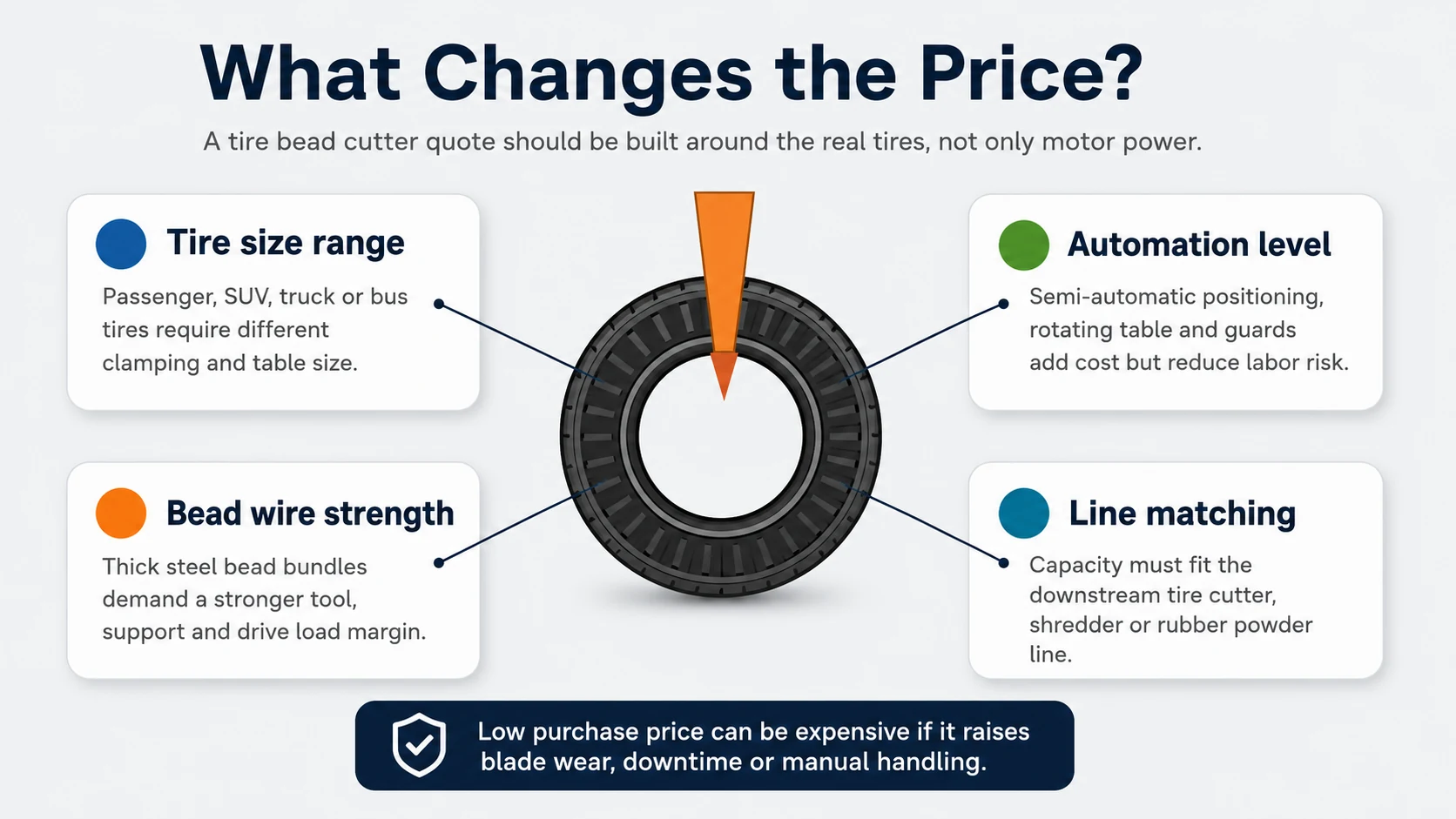
Key cost drivers to compare before selecting a waste tire bead cutting machine.
Seven Factors That Change Tire Bead Cutting Machine Price
1. Tire size range
Passenger tires, SUV tires, light truck tires, common truck tires and bus tires are not the same job for the machine. Larger diameter and thicker sidewall structures require stronger positioning, a more suitable worktable and more stable cutting support. YUXI also notes that oversized OTR tires or very thick industrial tires should be confirmed by tire size, bead wire structure and required output capacity.
2. Bead wire strength
The bead area concentrates steel wire and rubber in a small section. This is why a cheap cutter that appears strong enough in a photo may perform poorly on all-steel truck tire streams. A heavier bead bundle increases cutter load, replacement frequency and the need for stable clamping.
3. Cutter material and replacement plan
YUXI describes the cutting tool as an alloy cutter suitable for rubber and steel bead contact. Price should not be judged only by the initial machine cost. Ask about blade material, expected replacement cycle for your tire type, blade access and whether spare blades are included in the first shipment.
4. Positioning and worktable structure
In production use, stable positioning is one of the biggest differences between a low-cost cutter and a practical recycling machine. If the tire moves during cutting, the operator loses time, the cutter sees uneven load and the output becomes inconsistent. Adjustable tire positioning and a line-friendly layout add manufacturing cost, but they reduce daily operating problems.
5. Safety guarding and operation method
Manual cutting with torches or handheld tools is slow, inconsistent and risky. A dedicated machine can provide a more controlled process when suitable guarding and correct operating procedures are used. Buyers should confirm emergency stop layout, operator position, moving part protection and whether the tire is loaded manually, by hoist or by forklift.
6. Output target and bottleneck risk
A bead cutter should not be selected as an isolated machine. If the downstream shredder can process more tires than the bead cutter can prepare, the bead cutter becomes the bottleneck. If the downstream line is small, buying an oversized bead cutter wastes capital. Capacity should be evaluated in tires per hour, minutes per tire and operator workflow.
7. Export configuration, voltage and packaging
Export projects may need a specific voltage, motor configuration, control cabinet design, packing method and spare parts list. These details affect price, delivery time and after-sales support. A quotation that ignores the destination country and plant power supply is incomplete.
How the YUXI Machine Fits Into a Waste Tire Recycling Line
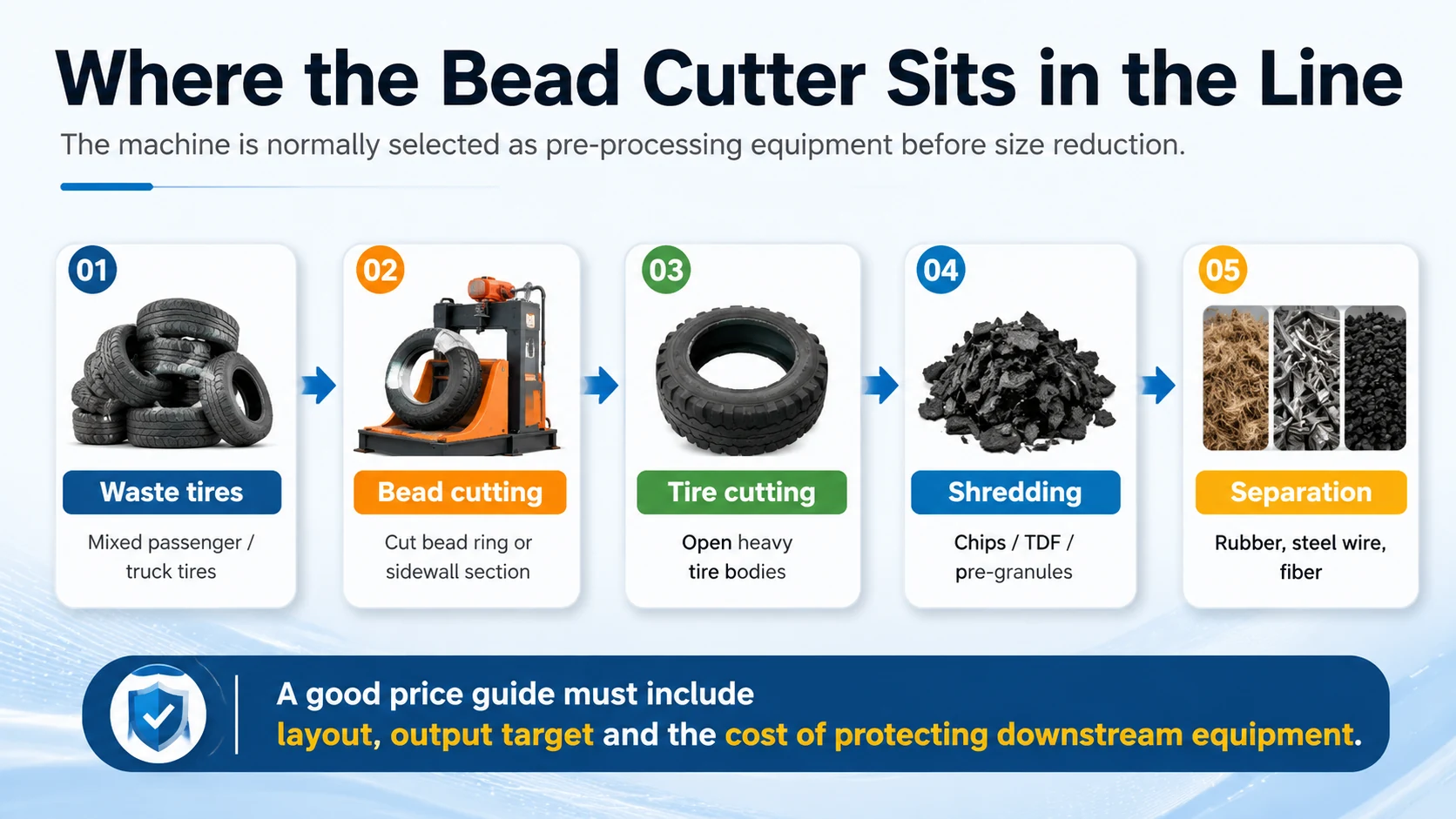
The YUXI product page positions the waste tire bead cutting machine before size reduction equipment. A typical route is waste tire collection → tire bead cutting machine → tire cutting machine → tire shredder → rubber crusher or granulator → steel wire and fiber separation. If large truck or OTR tires must be opened first, a tire cutting machine may be used to cut heavy tires into manageable sections. For primary size reduction, a tire shredder machine can then produce chips or prepare feedstock for further processing.
Typical pre-processing route for waste tire recycling before shredding or granulation.
This process view is important for pricing. A buyer who only needs a standalone cutter for occasional tire preparation may choose a simpler machine. A buyer building a rubber powder or granule plant must match bead cutting output with the next machines. YUXI’s tyre recycling equipment site explains that waste tyres can be turned into rubber granules, rubber powder, tire-derived fuel, steel wire and fiber materials, so pre-processing should support the final product target rather than only the first cut.
Practical selection rule: Do not ask only “How much is the tire bead cutter?” Ask “What bead cutter configuration protects my next machine and supports my target product?”
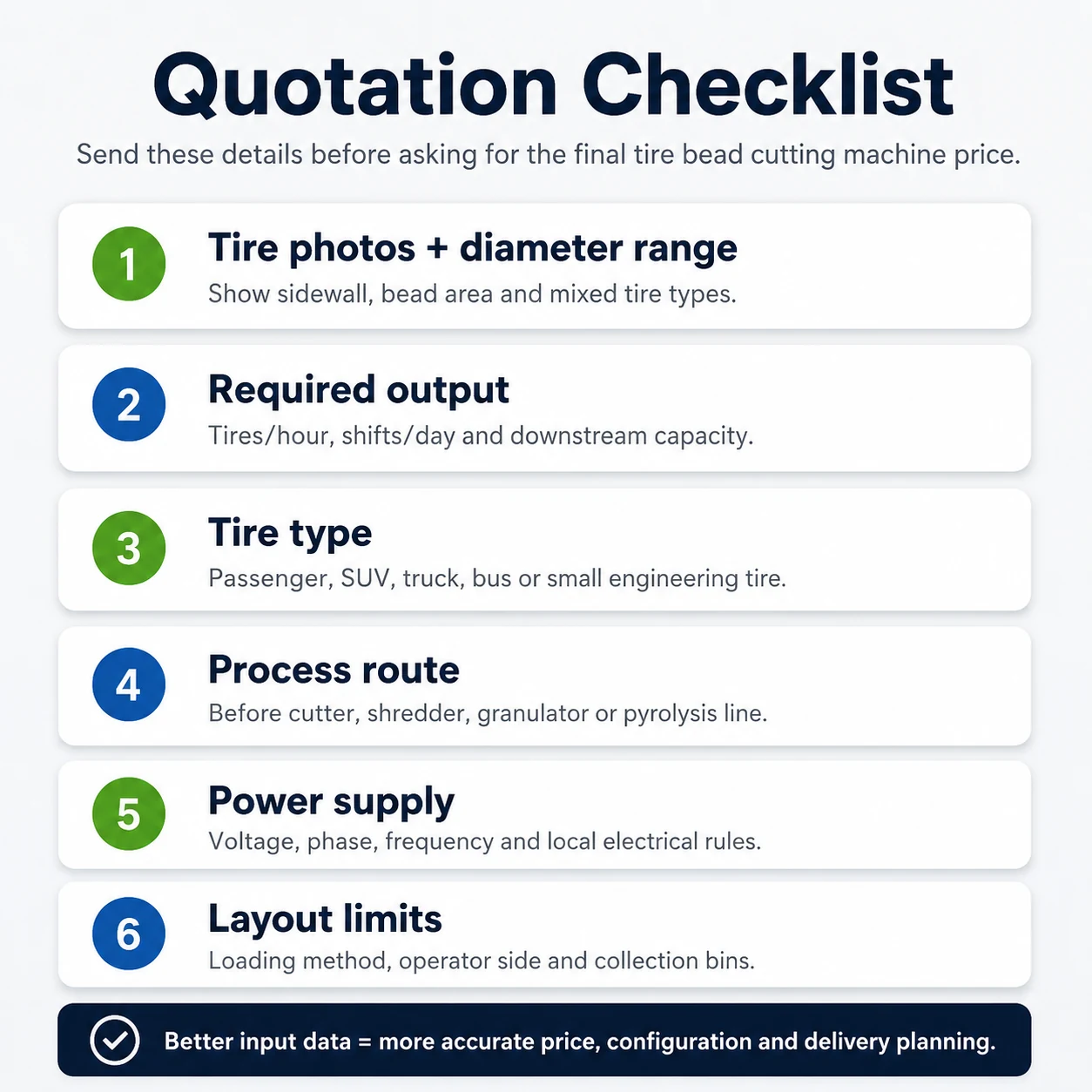
Quotation Checklist: Information to Send Before Asking for Price
A serious supplier will ask for more than the machine name. The more complete your first inquiry is, the more accurate the quotation will be.
Details buyers should send to receive a realistic machine quotation.
Tire photos: show tread, sidewall, bead area and typical damage condition.
Size range: outer diameter, tire width and the largest tire expected.
Tire mix: passenger, SUV, light truck, common truck, bus or small engineering tires.
Daily capacity: hourly expected tires, daily shifts and monthly working days.
Factory layout: loading side, discharge area, tire storage, bead ring collection and available floor space.
Export needs: destination port, packaging expectation, spare blades and any local safety requirements.
ROI Logic: The Cheapest Machine Can Become Expensive
The direct purchase price is only a part of the decision. Bead cutters create value in reducing manual cutting, improving tire feed, protecting downstream blades and maintaining the smooth operation of the production line. If a low-cost machine saves money at purchase but increases stoppages, blade changes or labor time, the total cost may be higher.
Cost Area
What to Compare
Why It Matters
Labor
Operator time per tire, loading method, repositioning frequency
Manual handling can quietly dominate the operating cost.
The bead area contains concentrated steel, so blade cost is not optional.
Downstream downtime
Feeding stability, shredder overload risk, jam frequency
One jam in a shredder line may cost more than a small price difference.
Safety and compliance
Guards, emergency stop, operator position, training
Unsafe shortcuts increase accident risk and may stop production.
Spare parts
Blade set, bearings, electrical parts and supplier response
Export buyers should avoid waiting weeks for simple replacement parts.
Simple ROI formula: Real machine value = purchase cost + freight + installation + spare parts + labor time + blade wear + downtime risk. A strong bead cutter is worth more when it keeps the whole tire recycling line stable.
Bead Cutter vs. Debeader vs. Tire Cutter: Do Not Compare the Wrong Prices
Many buyers compare quotations that are not actually for the same machine. A tire bead cutting machine cuts around the sidewall and steel-reinforced bead area. A tire sidewall cutter may be similar or may remove one or both sidewalls. A tire debeader or bead wire remover usually pulls the bead wire bundle out using hydraulic or mechanical force. A tire cutting machine cuts the whole tire body into larger sections. These machines may appear in the same search results, but their price and function can be very different.
Machine Name
Usual Function
Price Comparison Advice
Tire bead cutting machine
Cuts the bead ring or bead-sidewall section before size reduction
Confirm whether it actually cuts the steel bead zone or only separates sidewall rubber.
Tire debeader / bead wire remover
Pulls bead wire from the tire
Compare pulling force, tire size range, cycle time and remaining rubber on wire.
Tire cutting machine
Cuts whole tires into larger sections
Usually stronger and more expensive; not the same category as a bead cutter.
Recommended Buying Process
Define your tire stream. Separate passenger tires, truck tires and special tires by size and steel content.
Choose the process route. Decide whether you need bead cutting, tire cutting, direct shredding or a combination.
Ask for a working video. Watch tire positioning, cutter entry, worktable rotation and discharge.
Request a configuration quote. Include tire photos, capacity and voltage instead of asking for “best price” only.
Compare total cost. Include spare blades, shipping, layout, training and downstream downtime risk.
Confirm after-sales details. Ask about wear parts, maintenance access and recommended lubrication points.
Need a Project-Based Tire Bead Cutter Quote?
Send tire photos, maximum tire diameter, expected tires per hour, voltage and the next processing step. YUXI can recommend a bead cutting configuration for waste tire shredding, rubber granule production, rubber powder production or tire recycling pre-processing.
The cost depends on configuration. Small simple cutters may appear at low online prices, while semi-automatic and line-ready machines cost more because of stronger positioning, cutter design, safety guarding and export configuration. For a reliable quote, send tire size range, tire type, capacity target, power supply and downstream process.
Why does tire size affect the price so much?
Larger tires and thicker bead areas need a stronger worktable, cutter support and clamping design. Truck and bus tires also increase blade load because their bead and sidewall sections are more demanding than passenger tires.
Is the tire sidewall cutter the same as the tire bead cutter?
Sometimes suppliers use the terms together, but not always. A sidewall cutter may remove sidewall sections, while a bead cutter should be evaluated by whether it handles the steel-reinforced bead area. Always confirm the actual cutting path and output material.
Should I buy the cheapest tire bead cutter online?
Only if it matches your tire stream and daily workload. For a recycling plant, the lowest purchase price may lead to more labor, unstable cutting, blade wear or downstream downtime. Compare the total operating cost, not just the invoice price.
What information does YUXI need before quotation?
Provide tire photos, tire diameter and width range, expected capacity, downstream equipment, voltage, workshop layout and whether the project is a standalone machine or part of a complete tire recycling line.
Tyres Europe / ETRMA perspective: the processing rate of the whole Europe is 97%, and the ELT generated in Europe in 2024 is 3.9 million tons. Source
USTMA 2021 Scrap Tire Management Report: USTMA cooperates with states, environmental protection bureaus and industries to develop markets and support the recycled waste tire market. Source
Public marketplace reference: Made-in-China tyre bead cutter price listings; use as market signal, not a YUXI quotation. Source
Public marketplace reference: Alibaba small tire cutter and tire cutting machine listings; use as market signal, not a final procurement standard. Source
Marie has 8+ years of experience in tire shredding and recycling equipment,with a focus on tire shredders,rubber recycling machines,TDF production,rubber crumb processing,and complete tire recycling systems.