When a buyer asks for a “tire crusher,” they may actually need a tire shredder. The right answer depends on the feed tire, steel wire condition, target output size and where the machine sits in the process.
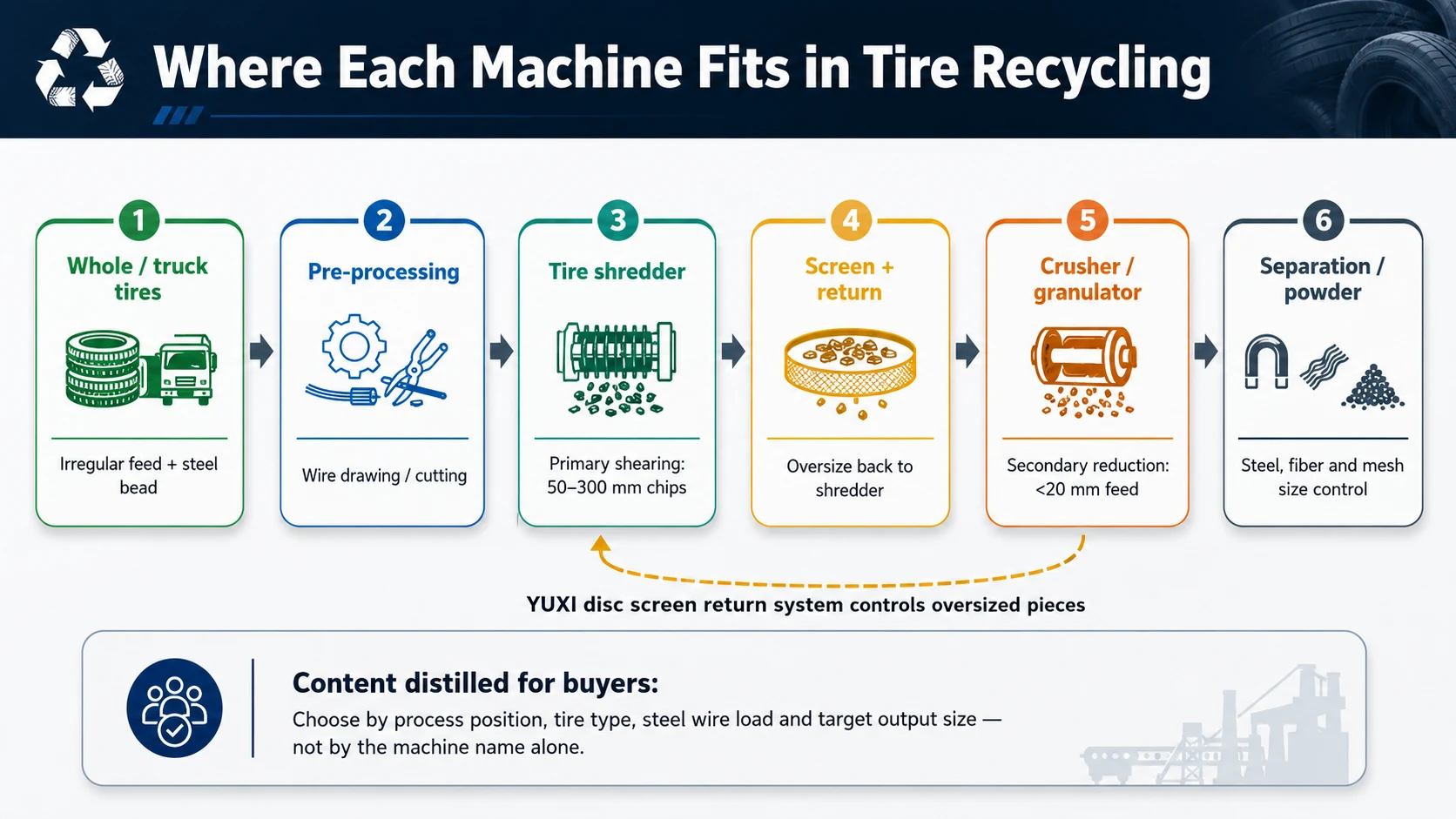
The practical difference: the tire shredder opens the whole or pre-cut tires; when the material has been controlled, the crusher belongs downstream.
Quick answer
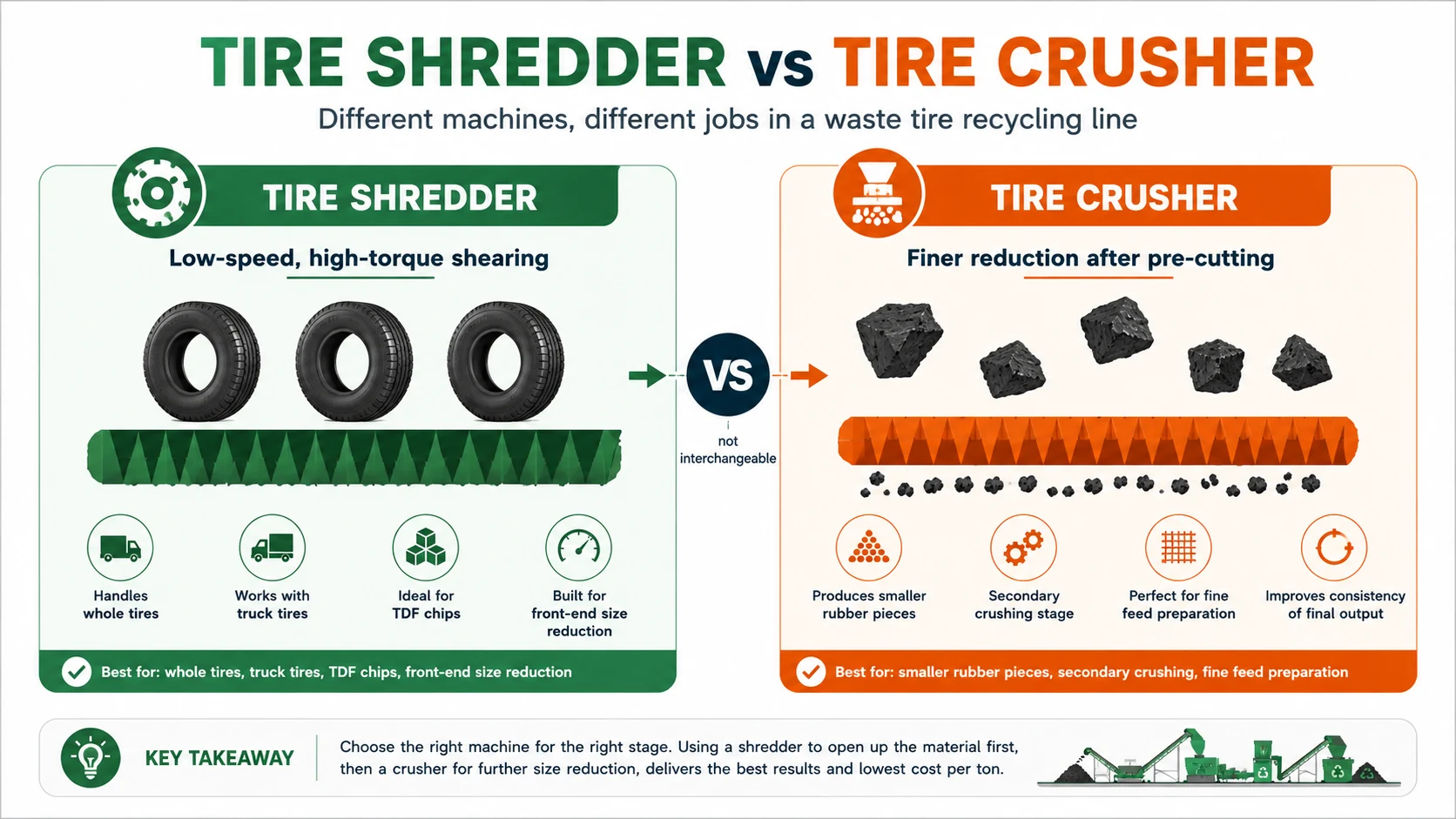
A tire shredder is normally the right front-end machine when the feed is whole tires, truck tires, pre-cut tire sections or material that still contains heavy bead wire. It uses low-speed, high-torque shearing to tear the tire into rough shreds or controlled chips.
A tire crusher, in tire recycling conversations, usually means a secondary reduction machine for smaller rubber pieces after shredding, cutting, screening or wire control. Some catalogs use “crusher” loosely, so the safe approach is to verify feed size, shaft/rotor structure, blade type, screen design and downstream target before buying.
Why the two names get mixed up
In real procurement emails, “tire shredder” and “tire crusher” are often used as if they mean the same thing. That is risky. A buyer may be describing the final result — “I want to crush tires into pieces” — while the supplier is thinking about a specific machine design. For whole tires, especially truck tires, the machine has to grab elastic rubber, tolerate steel wire and survive uneven feeding. That is a different job from reducing already-shredded rubber into smaller feedstock.
YUXI’s tire recycling equipment page frames the front-end line around preparation, cutting, shredding and size reduction before materials move toward TDF, rubber mulch, crumb rubber or rubber powder production. That sequence matters: the name on the quotation is less important than whether the machine is placed at the right point in the line.
Content distilled: compare the two machines by process position, feed condition, steel wire load and target output size. Do not compare only by motor power or by the translated machine name.
What is a tire shredder?
A tire shredder is primary size-reduction equipment. In most waste tire plants, it is selected when the material is too large, too elastic or too steel-reinforced for normal crushing equipment. A proper tire shredder pulls the tire into the cutting chamber and shears it into rough shreds, TDF chips or rubber chip feedstock.
The YUXI tire shredder machine is described as a twin-shaft design for whole tire pre-shredding, truck tire size reduction, TDF chip preparation and rubber recycling lines. Its disc screen return system sends oversized rubber pieces back automatically, which is useful when the buyer needs more controlled discharge without manual re-sorting.
That design logic is important for tires because rubber does not behave like brittle plastic or wood. It stretches, rebounds and contains steel and fabric reinforcement. Low-speed, high-torque shearing is usually more practical than high-speed impact when the feed still has tire structure.
What is a tire crusher?
A tire crusher is a less precise term. In some markets it means a secondary rubber crusher or granulator. In other catalogs it may simply be a translated name for a shredder. For a buyer, the question is not “does the supplier call it a crusher?” but “what feed size and steel condition can it actually handle?”
In the practical tire recycling line, crusher-type equipment is usually better after the tire is opened by the shredder or cutting machine. It can reduce rubber sheets to smaller particle feed, prepare wire materials, or support shredded rubber and powder processing. If the material still includes the entire tire, truck tire beads or OTR tire part, the ordinary crusher may face blockage, blade impact, heat, dust or excessive wear.
For buyers, the process position is more important than the machine name.
Smaller rubber chips, pre-cut pieces or controlled feedstock
Share maximum tire diameter and bead condition.
Cutting action
Low-speed, high-torque shearing
Crushing, cutting or granulating depending on design
Confirm shaft/rotor speed and blade structure.
Steel wire tolerance
Higher, especially with heavy-duty tire shredder configuration
Usually lower unless designed for wire-bearing feed
Confirm whether bead wire is removed before feeding.
Common output
Rough shreds, TDF chips, rubber chips for downstream separation
Smaller chips, granulator feed, crumb/powder line feed
Define output size range, not only capacity.
Main risk if misapplied
Oversized discharge if no screening or return loop
Jamming, heat, dust, blade damage or unstable output
Ask for test video using similar tires.
When you should choose a tire shredder
Choose a tire shredder when the first problem is to open the tire structure. This is usually the case for whole passenger tires, truck and bus tires, mixed collection-yard tires, tire bales that have been separated for processing, and pre-cut OTR pieces. The shredder’s job is not to make final fine rubber. Its job is to create a stable intermediate material that the rest of the line can handle.
For TDF projects, this point is especially important. EPA notes that tires may be used as fuel whole or shredded depending on the combustion device, and that TDF may require size reduction and de-wiring before use. That is why a front-end shredder with screening and metal-handling logic is usually central to a TDF line.
For example, a YUXI Tire TDF Plant is built around bead steel wire removal, tire cutting and tire shredding, with output commonly positioned around TDF chip requirements. In this type of project, the buyer should not start by asking for a “crusher.” The better question is: what chip size, steel tolerance and return-screening design will the fuel user accept?
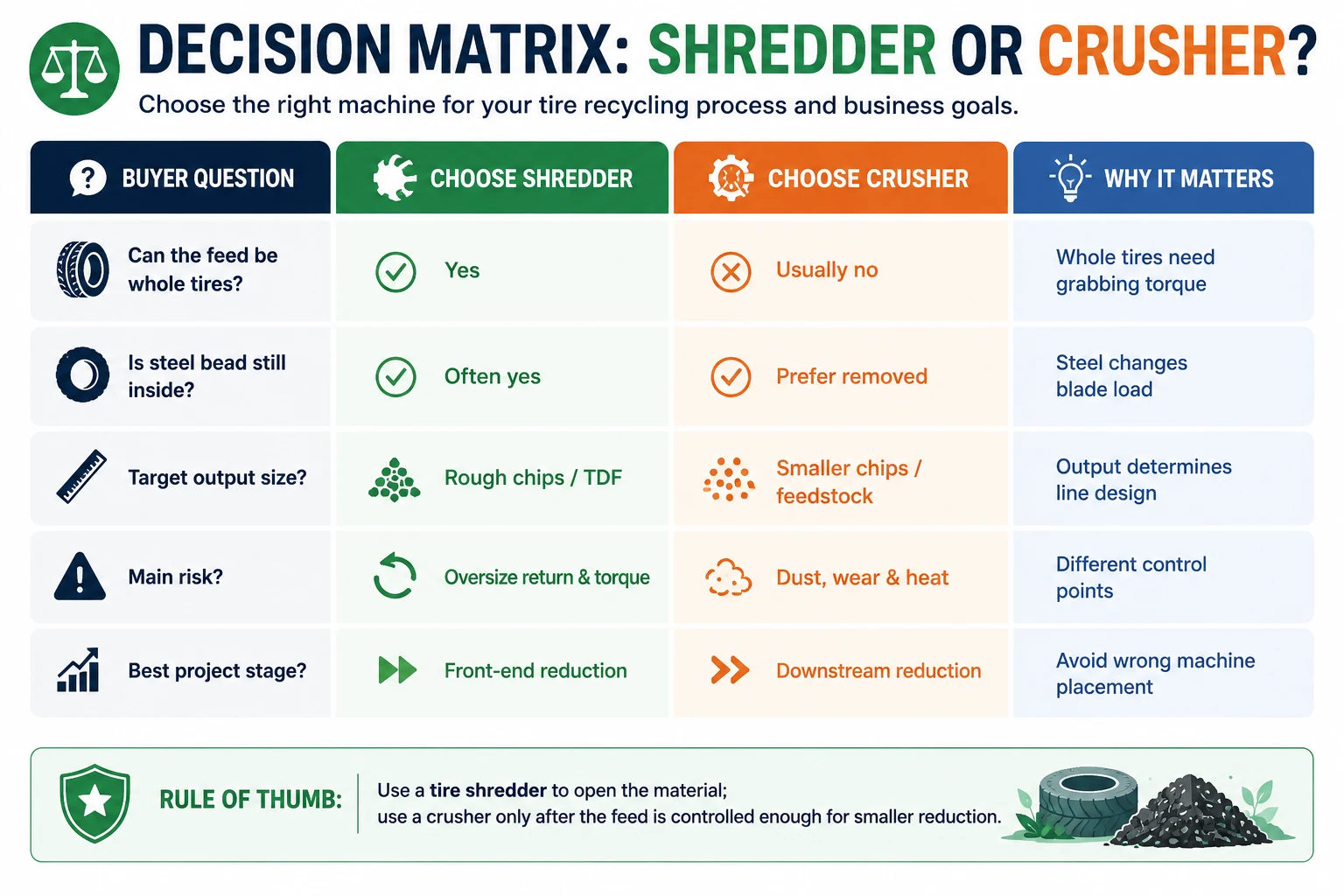
A quick decision matrix for incoming tire type, steel wire condition, output size and project stage.
When you should choose a tire crusher
Choose crusher-type equipment when the tire has already been reduced enough for controlled secondary processing. This may be after primary shredding, after bead removal and cutting, or after steel wire separation depending on the line. At this stage, the process goal is usually smaller, cleaner and more uniform feedstock rather than simply opening the tire.
Crusher or granulator stages are more relevant when the final product is crumb rubber, molded rubber feedstock, rubberized asphalt feed, or fine powder. USTMA describes Ground Tire Rubber as a circular market pathway for rubber-modified asphalt. CalRecycle’s market report defines crumb rubber as tire-derived material equal to or less than one-quarter inch and free of wire and fiber. Those downstream applications need more than a primary shredder: they need staged size reduction, separation and screening.
This is why a YUXI Tire Rubber Crumb Plant should be designed as a process, not as one standalone crusher. The crusher or granulator stage has to match the upstream shredder output and the downstream magnetic separation, fiber separation and screening targets.
Output size: the simplest way to make the right choice
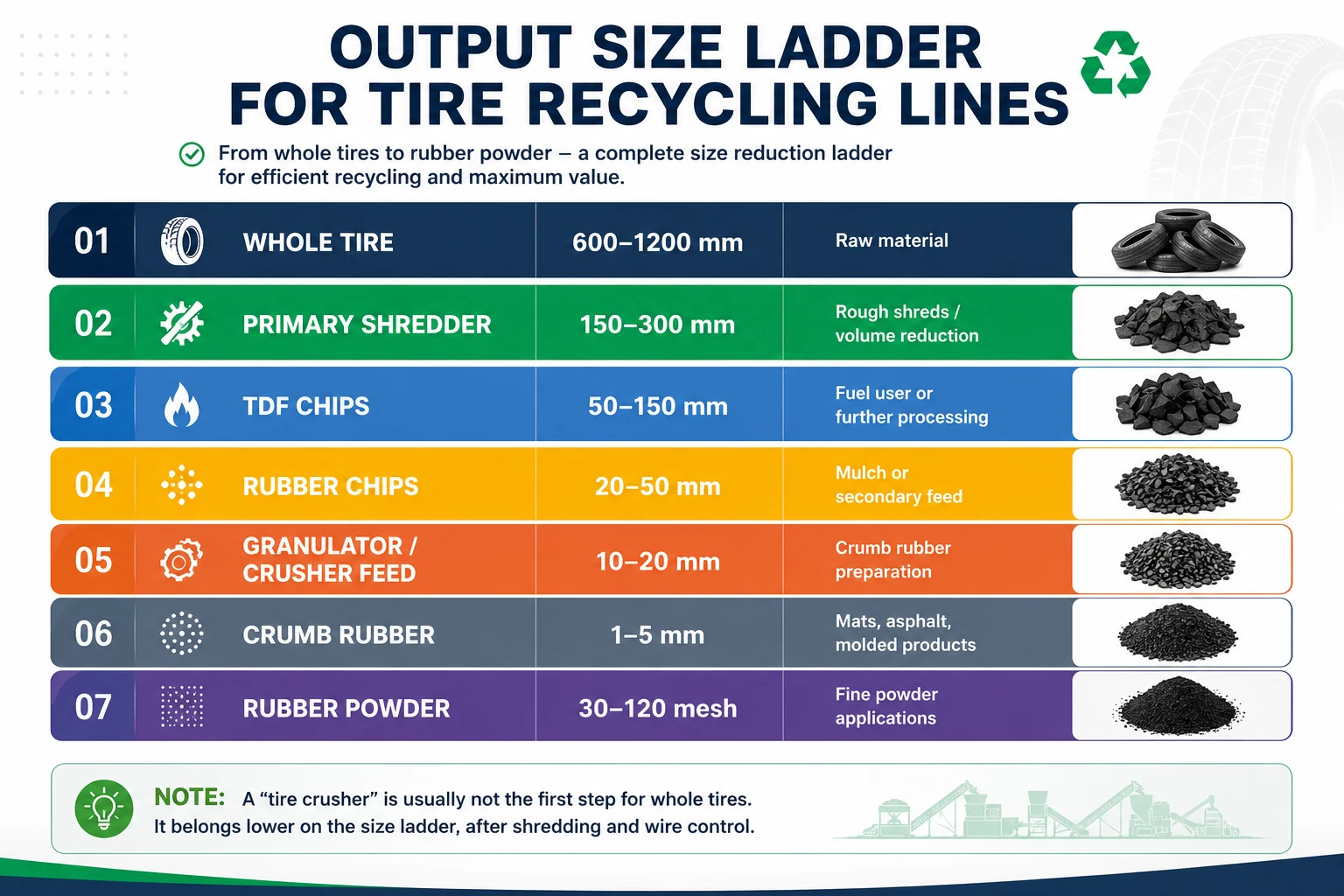
If the required product is rough tire shreds or TDF chips, start with shredder selection. If the required product is crumb rubber or powder, the shredder is still important, but it is only the first reduction stage. The smaller the final size, the more the line depends on secondary crushing, granulation, separation, screening and grinding.
In a buyer conversation, output size should be written as a range, not a vague word. “Small pieces” can mean 150 mm rough shreds to one buyer and 5 mm crumb rubber to another. This is where many wrong quotations start.
The smaller the output target, the more important screening, steel separation and downstream reduction become.
How YUXI equipment fits the comparison
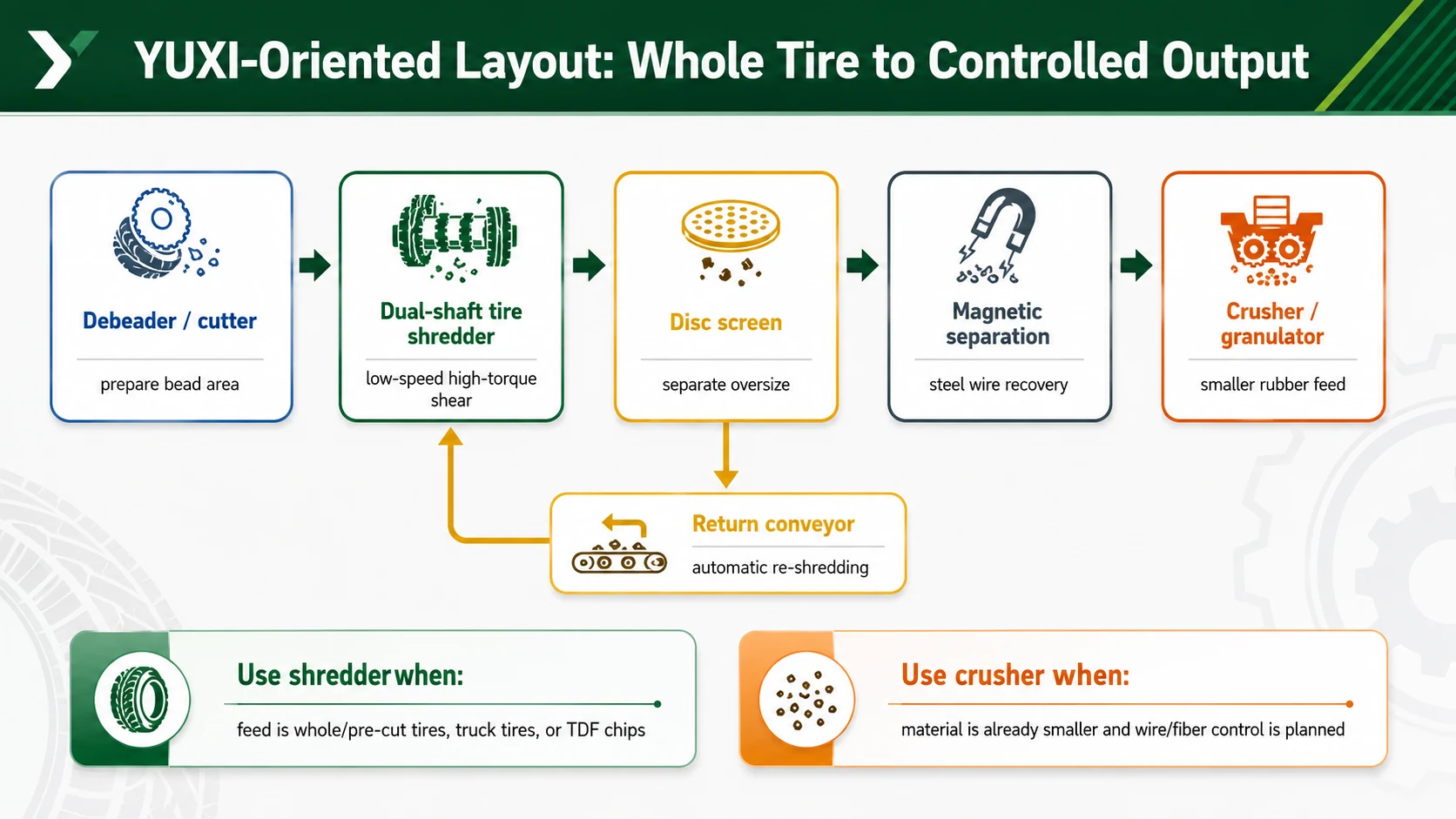
YUXI’s current tire recycling equipment content separates the front-end preparation machines from downstream recycling routes. Wire drawing, bead cutting and tire cutting prepare difficult tires before heavy shredding. The tire shredder then handles primary size reduction. Downstream equipment can move the material toward TDF, wire-free chips, crumb rubber or powder.
The important product point is the disc screen return system on the YUXI tire shredder. Oversized pieces are not simply discharged and left to the operator. They can be returned for another cutting pass, which helps stabilize material size before conveying, magnetic separation or downstream processing.
For rubber powder projects, a YUXI Tire Rubber Powder Plant needs more stages after shredding because mesh-size powder cannot be produced by a primary shredder alone. This is the correct place to think about secondary reduction and grinding rather than treating the “crusher” as the first and only machine.
YUXI-oriented line logic: shred first, screen and return oversize, then move to separation and smaller reduction where required.
Common buying mistakes
1. Asking only for motor power
Motor power does not tell you whether the chamber opening, shaft torque, blade thickness and screen return system match the tire type.
2. Ignoring bead wire
Truck tires and some heavy tires carry strong bead wire. If that condition is not discussed, the quotation may understate blade load and wear.
3. Treating TDF and crumb rubber as the same line
TDF chips and crumb rubber require different output control, separation depth and downstream machines.
4. Buying a crusher for whole tires
If the machine cannot grip, shear and discharge whole or pre-cut tires reliably, it is not the right first-stage solution.
Specification questions to send a supplier
Before requesting a quotation, send the supplier a clear material and output brief. A serious tire recycling equipment supplier should be able to recommend a process configuration, not just a model number.
What tire types will be processed: passenger, truck, bus, agricultural, OTR or mixed?
What is the maximum tire diameter and section thickness?
Will bead wire be removed before shredding?
What output size range is required: rough shreds, TDF chips, rubber chips, crumb rubber or powder?
Will the output go to fuel, mulch, crumb rubber, rubber powder or another product?
Does the line need a disc screen, return conveyor, magnetic separation or fiber separation?
What hourly capacity and daily operating hours are expected?
Can the supplier provide a test video using similar tires and similar output size?
Final recommendation
For most whole-tire recycling projects, start with a tire shredder, not a tire crusher. The shredder solves the first and most difficult mechanical problem: opening elastic and reinforced tire materials into fragments that can be controlled by other production lines. Choose crusher-type equipment only after the feed has been reduced, screened or separated enough for secondary processing.
Use “Tire Shredder vs Tire Crusher” as a process decision, not a word choice. If the project starts with truck tires and targets TDF chips, ask for a shredder-based line. If the project starts with already-shredded rubber and targets crumb rubber or powder, ask how crusher, granulator, separator and grinder stages will work together.
Get a Project Quote
Need a configuration based on tire type, output size and plant capacity?
FAQ: Tire Shredder vs Tire Crusher
Is the tire shredder the same as the tire crusher?
Not always. Some suppliers use the names loosely, but a tire shredder usually means low-speed, high-torque primary shearing for whole or pre-cut tires. A tire crusher usually refers to smaller secondary reduction after the material is already controlled.
Can a tire crusher process whole tires?
Only if the machine is actually designed as a whole-tire shredder or heavy-duty tire size-reduction machine. A normal downstream crusher is not the best first machine for whole tires, especially truck tires with bead wire.
Which machine is better for TDF production?
A tire shredder is usually the core machine for TDF production because the target is controlled tire chips rather than fine rubber powder. Screening, return conveying and metal handling should be matched to the fuel user’s specification.
Which machine is better for crumb rubber?
Crumb rubber usually needs several stages. A shredder creates the primary chips, while crusher, granulator, magnetic separator, fiber separator and screen stages help reach smaller, cleaner rubber particles.
Why does steel wire removal matter?
Steel bead wire increases cutting load and blade wear. For truck tires and heavy tires, wire drawing, bead cutting or tire cutting may be recommended before shredding, depending on the machine and line design.
What information should I provide before asking for price?
Provide tire type, maximum tire diameter, steel wire condition, target output size, required capacity, final product and available workshop layout. Without these details, “shredder vs crusher” quotations are easy to miscompare.
References and source notes
U.S. EPA, Tire-Derived Fuel: TDF background, size reduction and de-wiring context. Source
Marie has 8+ years of experience in tire shredding and recycling equipment,with a focus on tire shredders,rubber recycling machines,TDF production,rubber crumb processing,and complete tire recycling systems.