Rubber Powder Machine Price & Production Line Cost
A $15,000 “rubber powder machine” and a six-figure tire-to-powder line can both be legitimate offers. They are usually pricing different starting materials, different mesh targets and very different battery limits.1, 2
Before comparing prices, mark where the supplier’s scope starts and where the accepted product leaves the line.
Rubber powder machine price is difficult to compare for a simple reason: suppliers use the same phrase for different equipment. One quotation may cover only a fine grinder receiving clean 1–8 mm granulate. Another may begin with whole passenger and truck tires and include preparation, shredding, steel removal, granulation, screening, fiber separation and final grinding. A third may include the machines but leave conveyors, dust control, cooling, export packing and commissioning outside the number.
What Does a Rubber Powder Machine Cost?
A standalone rubber grinder can be a low-five-figure item in public listings. A complete rubber powder production line can move from tens of thousands to several hundred thousand dollars as upstream processing, separation depth, capacity, automation and installation scope are added. The lowest public number is therefore not automatically the cheapest route to saleable powder.
What the seller may call it
Typical starting material
What may be included
Price comparison risk
Rubber powder machine
Clean rubber granulate
Fine grinder, feeder, basic collection
Often mistaken for a complete tire recycling line
Rubber powder production line
Granulate, chips or tires
May include grinding, screening and some separation
Higher scope, but still may exclude installation and site works
Turnkey rubber powder plant
Whole tires
Machinery plus broader integration and service
“Turnkey” must still be defined line by line
Use public prices as a screening tool, not a project budget. If two offers differ by 5× or 10×, first check the feed boundary, mesh target, accepted output and included equipment. The explanation is usually there.
First Separate the Three Quote Boundaries
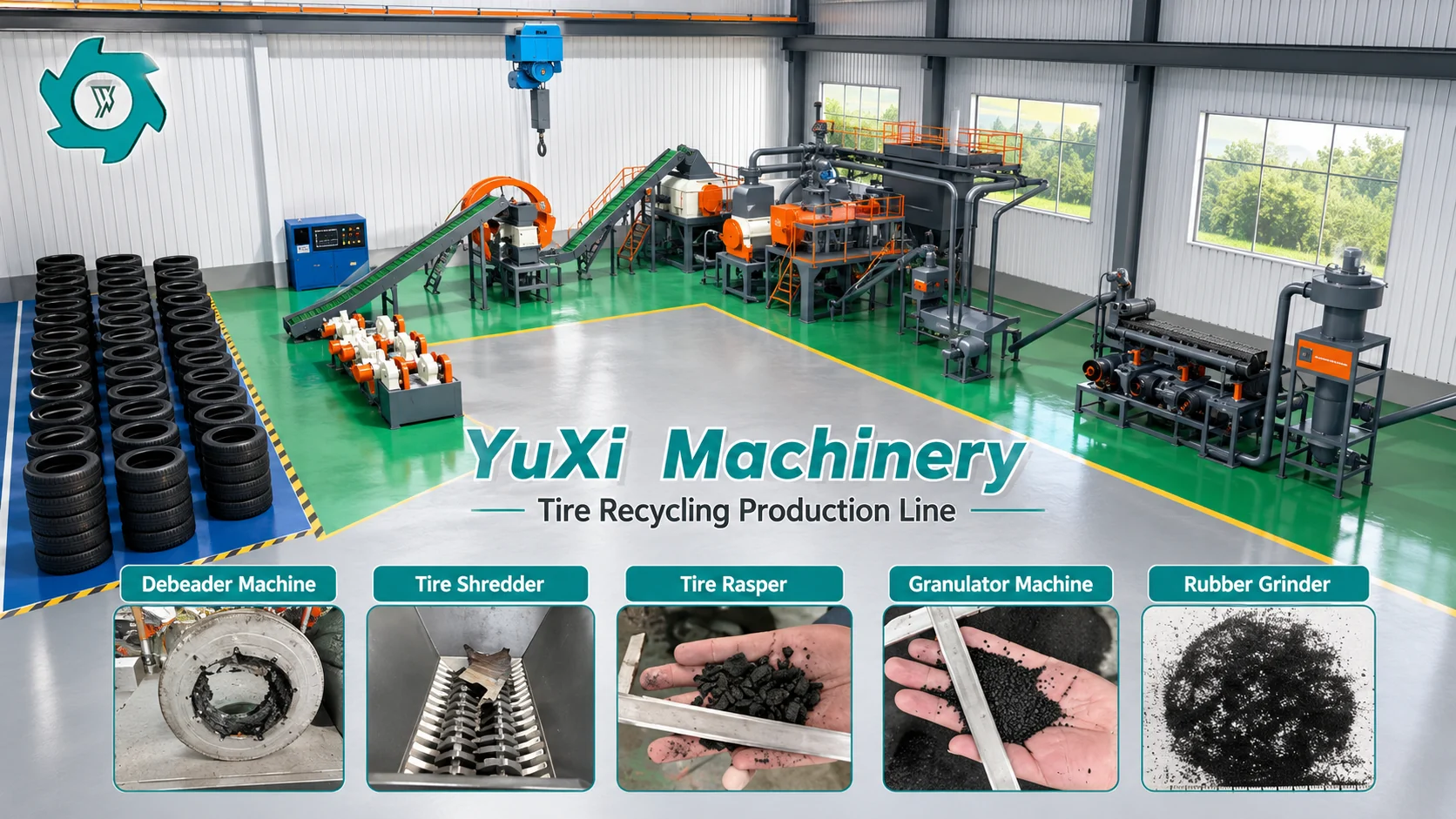
YUXI’s current tire rubber powder plant page describes an ambient mechanical route from waste tires to 20–120 mesh powder. The published process includes tire preparation, shredding, rasping, magnetic separation, granulation, grading, fiber separation and fine grinding. It also makes an important buying point: capacity should be checked at the required finished mesh, not only at the first machine.
1. Fine-grinding module only
The buyer already has clean, controlled rubber granulate. The supplier is being asked to reduce that feed into fine powder and collect the finished fraction. This is the narrowest scope and often the source of the lowest online prices. It is also useless to a buyer who only has whole waste tires.
2. Granulation plus fine-powder section
The project starts with prepared 10–20 mm wire-free chips or another agreed coarse rubber feed. The line still needs finer size reduction, magnetic cleanup, fiber removal, grading and the final grinding section. The budget is larger because the grinder is no longer working as a stand-alone island.
3. Complete whole-tire-to-powder line
This scope carries the front end as well: tire preparation where required, primary shredding, steel liberation, magnetic recovery and all of the handling needed before the material is clean enough for the fine section. Buyers comparing this scope with a grinder-only quote are not comparing suppliers; they are comparing two different factories.
If the decision between coarse product and fine product is still open, the existing rubber mulch vs crumb rubber guide is useful upstream of this price discussion. Every extra reduction stage should exist because there is a buyer for the smaller material, not because “finer” sounds more advanced.
Which Machines Actually Create the Production Line Cost?
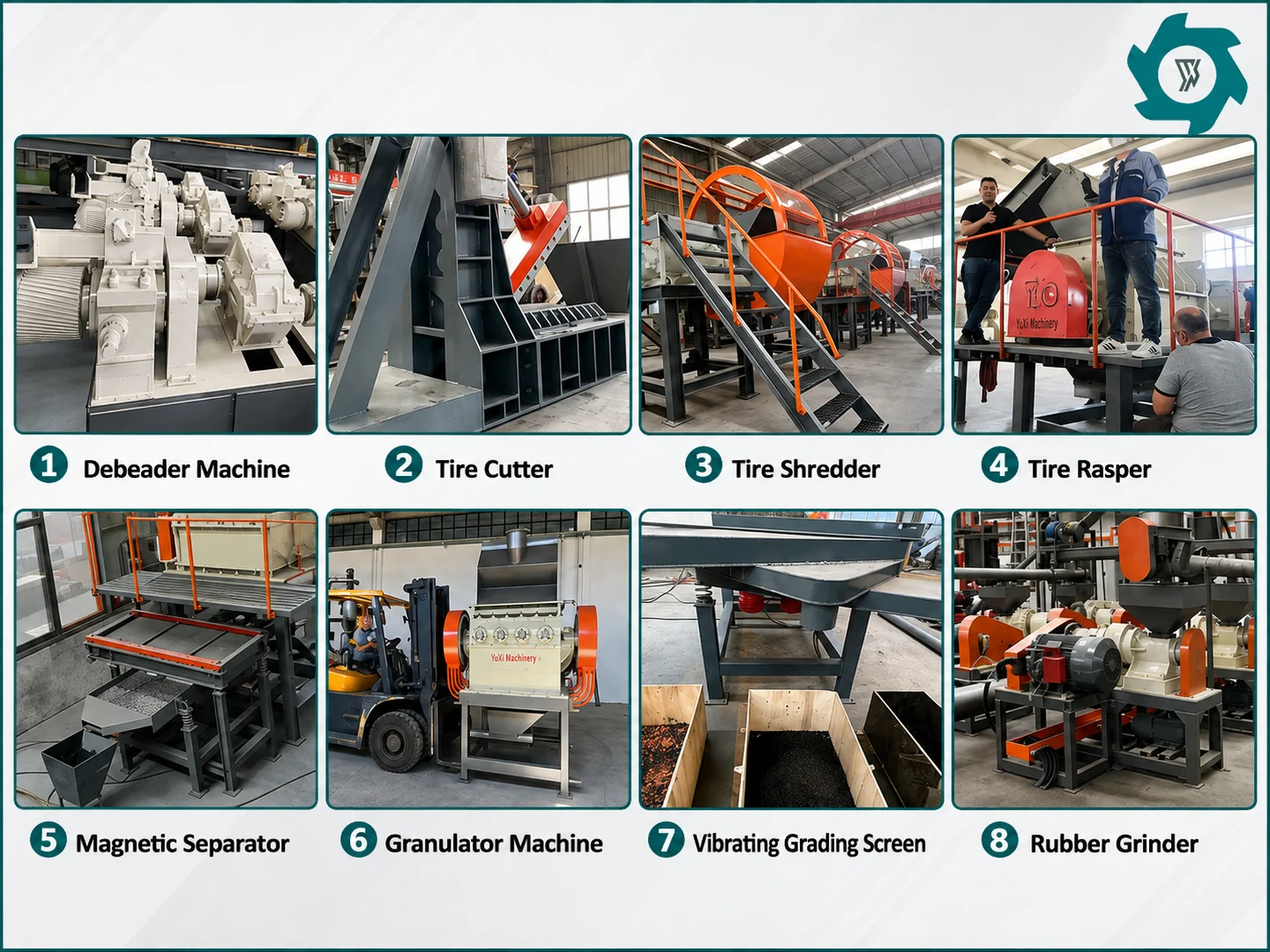
A price breakdown makes more sense when it follows the rubber through the plant. The YUXI pillar shows eight main machines from tire preparation to powder. That process order is a practical way to audit a quotation.
A complete line accumulates cost at every handoff: size reduction, steel recovery, fiber removal, grading, return handling and final grinding.
Tire preparation
Whole-tire projects may use a debeader and tire cutter before primary shredding. The exact route depends on tire size, tire construction and how the shredder is configured. Truck-tire percentage matters here. A line fed with clean passenger tires does not place the same mechanical load on the front end as a mixed stream with heavier truck casings.
Primary shredding
The shredder reduces bulky tires to controlled blocks. The machine itself is only part of the budget. Feed conveyors, discharge conveyors, screening, return routing, guards and controls can materially change the delivered scope. For buyers separating a stand-alone shredder quote from a production-line quote, the tire shredder machine price guide covers that upstream cost boundary in more detail.
Steel liberation and magnetic recovery
A rasper or comparable secondary reduction stage opens the rubber around embedded wire so magnets can remove it. This is one reason a cheap “grinder” should not be fed dirty tire chips. Residual steel can damage downstream knives, screens and fine-grinding components, while also lowering product quality. EPA’s tire crumb description likewise notes the use of magnets, air separation and screens during production.3
Granulation, screening and fiber separation
Once coarse steel is removed, the rubber is reduced into smaller granules, graded and cleaned of textile. Screen area, return load and air-separation duty all influence the equipment list. The rasper versus granulator comparison is worth reading here because the two machines do different jobs; one is not a cheaper substitute for the other simply because both reduce particle size.
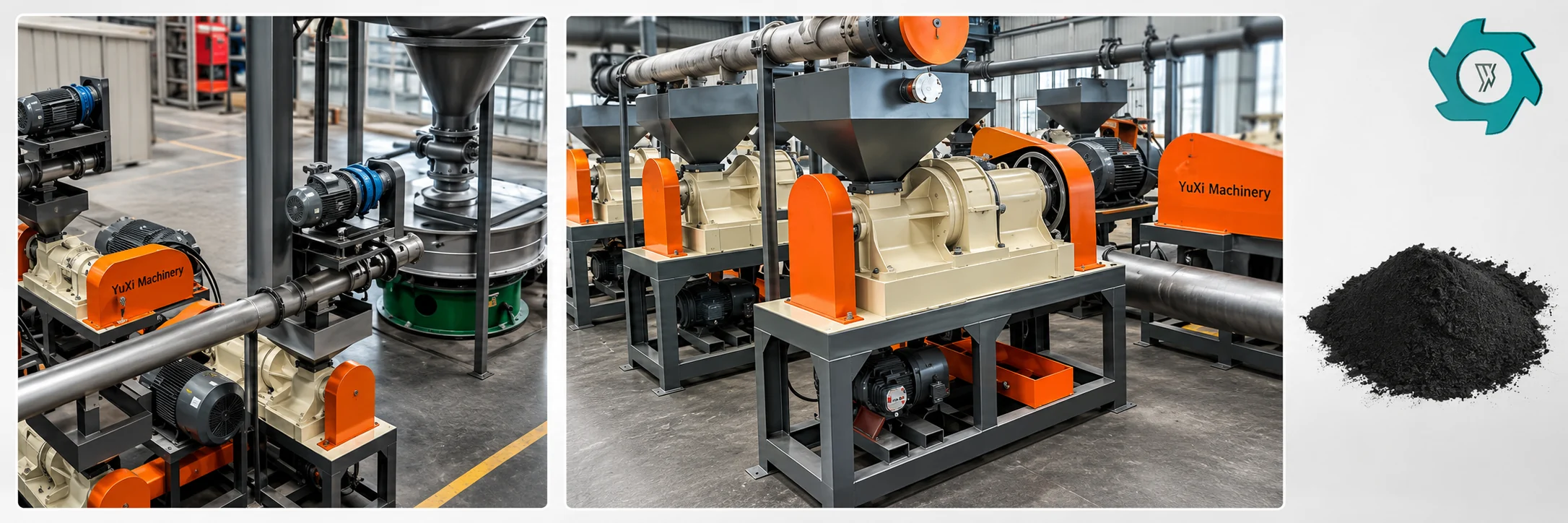
Fine grinding and collection
This is the section many listings label “rubber powder machine.” It receives clean granulate and pushes the product into the required mesh range. The finer the specification, the more important feeding stability, heat removal, classification and recirculation become. Collection, packaging and dust-control interfaces should be in the same conversation as the mill.
Why 20, 40, 80 and 120 Mesh Change the Budget
Mesh is not a cosmetic option on the quotation. It changes the duty. EPA’s older ground-rubber handbook describes fine material for some molded and extrusion applications and notes that the cost of ground rubber generally rises as particle size decreases.4 The same physical logic appears inside the plant: making finer material requires more work per accepted ton.
The commercial specification belongs at the finished powder point, not at the feed hopper of the first machine.
Powder target
What usually changes
Cost effect to verify
20–40 mesh
Moderate fine grinding and classification
Often higher practical throughput than very fine grades, but still needs clean feed and controlled screening
40–80 mesh
More grinding work, tighter classification, more return material
Higher energy and wear duty; accepted t/h may fall
80–120 mesh
Fine grinding becomes the dominant bottleneck
Cooling, dust handling, wear and additional grinding/classification capacity may become more important
Multiple saleable fractions
More screens, bins, conveyors and packaging interfaces
Higher plant complexity even if the total tire feed is unchanged
Do not buy the line on a label such as “up to 120 mesh.” Ask for the capacity at the actual mesh you intend to sell. A machine may be physically capable of producing a very fine fraction while delivering a much lower tonnage at that setting.
How Capacity Changes Rubber Powder Production Line Cost
More tons per hour do not scale price in a straight line. Some parts of the plant can be enlarged. Others need parallel equipment, wider screens, bigger separators, more conveying capacity or additional grinding units. The bottleneck also moves as the product becomes finer.
For this reason, a quotation should carry at least two capacity figures:
Incoming feed rate: tons per hour entering the agreed battery limit.
Accepted finished rate: tons per hour of powder that passes the written mesh, steel, fiber and cleanliness specification after return material is removed from the count.
A 2 t/h whole-tire feed claim is not the same as 2 t/h of accepted 80 mesh powder. If a supplier only publishes the upstream number, the fine-grinding section remains commercially undefined.
A useful capacity question
“At our specified tire mix and target mesh, what continuous accepted powder output will the complete line demonstrate after it reaches steady state, and how will oversize return be counted?”
Machine Price Is Not the Same as Installed Project Cost
A machine quotation is only one layer of the capital budget. This matters more on a complete tire-to-powder line because the plant has many conveyors, motors, transfer points and service interfaces. A supplier can be competitively priced and still leave the buyer with a large site-work bill.
Budget layer
Items to check
Why it moves the final number
Equipment supply
Main machines, screens, magnets, conveyors, controls, platforms, guards
Fine rubber creates more housekeeping and heat-management work than coarse chips
Installation and startup
Erection supervision, travel, accommodation, commissioning, training, performance test
Service scope varies widely between quotations
Initial spares
Knives, screens, wear plates, belts, filters, bearings and grinder wear parts
A low purchase price can be offset by an incomplete startup spare package
Dust deserves its own line in the budget. OSHA’s combustible-dust material includes tire and rubber manufacturing among industries where combustible dust hazards can exist, and the agency’s current National Emphasis Program addresses facilities that generate or handle combustible dust.5 That does not mean a generic dust collector size can be copied from another plant. It means the local project should have a real hazard review, suitable collection design and housekeeping plan instead of treating dust control as an optional accessory.
Seven Cost Drivers That Are Easy to Miss
1. Whole tires versus prepared feed
The front end can disappear from a quote when the supplier assumes 1–8 mm granulate is already available.
2. Truck-tire share
Heavier tire construction changes cutting, shredding and steel-liberation duty. A plant built around light passenger tires should not be priced against a line expected to accept a large truck-tire fraction without checking the feed boundary.
3. Steel and fiber limits
“Clean powder” is not a test method. Tighter contamination limits can require additional magnetic passes, more stable metering, stronger fiber separation, better classification and more careful sampling.
4. Return load
Oversize material that returns to a grinder or screen is real machine duty even though it is not saleable output. Under-sizing the return conveyor or pretending recirculated material is fresh production can make the line look better on paper than it runs.
5. Cooling strategy
Fine grinding generates heat. The YUXI pillar describes wind and water cooling at the grinding stage. The buyer still needs to know what the supplier provides, what the site provides, and what ambient conditions were assumed when the capacity was stated.
6. Packaging and product handling
One buyer sells bulk bags, another uses smaller bags, and a third transfers powder into a downstream compounding process. The grinder may be identical while the product-handling section is not.
7. Local electrical and safety requirements
Voltage conversion, transformer upgrades, local motor standards, guarding, emergency-stop zoning, fire protection and dust compliance can change the installed budget without changing the core process flow.
How to Compare Two Rubber Powder Line Quotations
Put every supplier into the same table. Do not compare total price until the empty cells are resolved.
Comparison item
Supplier A
Supplier B
Required buyer check
Starting material
Whole tires?
Granulate?
Same feed definition
Maximum tire size / tire mix
Stated?
Stated?
Include truck-tire share
Finished mesh
20–40?
20–120?
Compare at the same target grade
Accepted powder t/h
Guaranteed?
Guaranteed?
Not only feed t/h
Steel and fiber criteria
Test basis?
Test basis?
Same sampling method
Oversize return
Included?
Included?
Conveyor and capacity adequate
Dust collection
Included?
Interface only?
Mark battery limit
Cooling system
Included?
Site supply?
Write water/air requirements
Controls and interlocks
Scope?
Scope?
Same automation level
Installation / FAT
Scope?
Scope?
Same service basis
Spare parts
Included?
Included?
Compare wear package
Incoterm and freight
FOB/CIF?
FOB/CIF?
Normalize landed basis
One line can still be the better buy at a higher equipment price if it carries a stronger battery limit and avoids a second round of conveyors, controls, cooling or separation after installation. Conversely, a large turnkey quote can be poor value when the buyer already owns clean granulate and only needs a downstream powder section.
When the Cheaper Production Line Becomes More Expensive
Low purchase price becomes expensive when the missing scope appears after shipment. Typical examples are a grinder that cannot accept the actual feed, a magnetic system that leaves too much steel for the fine mill, a screen return that backs up, or a product collector that was sized around a different mesh.
Maintenance access is another quiet cost. Screens, knives and grinder wear parts have to be serviced. If the layout leaves no lifting route or the supplier has not allowed for removal space, the buyer pays for the mistake in downtime rather than on the original quotation.
There is also a market-side risk. USTMA reports that ground rubber remains a significant end market for U.S. end-of-life tires, but “ground rubber” covers several downstream uses rather than one universal powder specification.6 Build the equipment around a confirmed buyer requirement. A line that makes a technically finer product but cannot sell it consistently has not created a better business.
What to Send for an Accurate Rubber Powder Machine Quote
A useful RFQ does not need to be long. It needs to close the gaps that otherwise turn into assumptions.
Feed boundary: whole tires, pre-cut tires, 50–150 mm shreds, 10–20 mm wire-free chips or 1–8 mm clean granulate.
Tire mix: passenger, light truck, truck, bus or other approved tires, including maximum size and approximate truck-tire percentage.
Finished powder: required mesh range, whether multiple fractions are required, and the end application.
Accepted throughput: finished powder tons per hour at the specified mesh, plus planned shifts and operating hours.
Quality limits: steel, textile fiber, oversize and other buyer-specific acceptance requirements.
Electrical supply: voltage, frequency, available transformer capacity and local motor/control standard.
Workshop: length, width, clear height, door access, feeding route, maintenance access and available area for dust equipment.
Product handling: bulk bag, small bag, silo, bin or direct feed to another process.
Delivery scope: Incoterm, conveyors, controls, platforms, dust collection, cooling, packing, installation, training and spare parts.
Acceptance test: representative feed sample, run duration, sampling method and the pass/fail basis for mesh, contamination and output.
Once those items are fixed, a supplier can size the machines as one line rather than attaching a price to a search keyword. That is also the point where freight, local installation and startup costs can be estimated with much less guesswork.
The final grinder is only one cost center. Its feed quality, cooling, classification and collection system determine whether the quoted mesh can be produced continuously.
Rubber Powder Machine Price FAQ
How much does a rubber powder machine cost?
There is no single price because the term can describe a standalone fine grinder or a complete whole-tire recycling line. Public equipment listings reviewed for this guide range from low-five-figure grinder offers to complete systems priced in the tens of thousands or well into six figures. A usable quotation must define the starting material, final mesh, accepted output, separation target and delivery scope.
Why is an 80 mesh rubber powder line usually more expensive than a 20 or 40 mesh line?
Finer powder requires more grinding work, tighter classification, more return material, heat control and usually more attention to dust handling and wear. The accepted finished tons per hour can also fall as the mesh becomes finer, so the grinding section may need more installed capacity to meet the same saleable output target.
Is the rubber grinder the most expensive machine in a complete line?
Not necessarily. A whole-tire project may also need tire preparation, primary shredding, steel liberation, magnetic separation, granulation, fiber separation, screening, conveyors, controls and dust handling. The costliest section depends on feed condition, capacity and the required finished powder.
What costs are often excluded from the equipment quotation?
Common exclusions include inland and ocean freight, insurance, import duties and taxes, unloading, foundations, local electrical work, transformer upgrades, dust-control ducting, cooling-water infrastructure, installation labor, travel, accommodation, commissioning, spare parts and local compliance work. The quotation should mark every inclusion and exclusion.
Should production line capacity be compared by tire feed rate or powder output?
Compare both, but use accepted finished powder output for the commercial guarantee. A line can process a high upstream feed rate while producing less accepted powder after screening, oversize return, separation and fine grinding. The target mesh must be stated with the throughput guarantee.
What information is needed for an accurate rubber powder production line quote?
Provide tire type and maximum size, whether feed begins with whole tires or prepared granulate, required mesh range, target accepted tons per hour, steel and fiber limits, operating hours, voltage and frequency, workshop dimensions, dust-control expectations, packaging method, destination and the required installation and commissioning scope.
Need a Rubber Powder Line Budget?
Send your tire mix, starting material, target mesh, accepted tons per hour, voltage, workshop dimensions and destination. YUXI can separate the grinder price from the complete production-line scope and prepare a quotation on the same technical basis you intend to operate.
External Engineering and Market References
Made-in-China — Tyre Recycling Production Line / Rubber Powder Machine
Made-in-China — Tire Recycling Line Price marketplace results
Marie has 8+ years of experience in tire shredding and recycling equipment,with a focus on tire shredders,rubber recycling machines,TDF production,rubber crumb processing,and complete tire recycling systems.