




A TDF line does not end when chips pass the screen. The discharge conveyor, storage bay and truck-loading area can preserve product consistency—or introduce moisture, spillage, blocked flow and avoidable fire exposure.
Storage starts at the discharge point
Plan TDF handling as one controlled route: accepted chips leave the screen, pass through defined transfer points, enter an identified storage lot and move to dispatch without being mixed with wet, off-spec or uninspected material. Keep only the buffer the operation can justify, rotate it first-in/first-out, maintain clear access, and investigate heat, smoke, unusual odor or persistent belt friction immediately.
The dedicated Tire TDF Plant page explains the upstream mechanical route: preparation where required, cutting, shredding, screening and oversize return. This guide starts after material passes the selected screen. Its subject is the physical journey from finished-product discharge to the receiving plant.
Define the material before designing its storage
“TDF” is not a single bulk material with one fixed flow property. A coarse, relatively uniform chip can move differently from long strips, mixed-size pieces or material carrying exposed wire. Fines created by repeated handling add another behavior. Before choosing a conveyor angle, bunker opening or stockpile method, document the chip-size window, oversize rule, steel condition, expected bulk density range, maximum delivery moisture and contamination limit.
The receiver owns the final acceptance boundary. The processor should therefore connect the storage lot to the same checks used for shipment. Our TDF quality specifications guide covers sampling and lot-release fields in detail; storage records should preserve that identity instead of creating an anonymous common pile.
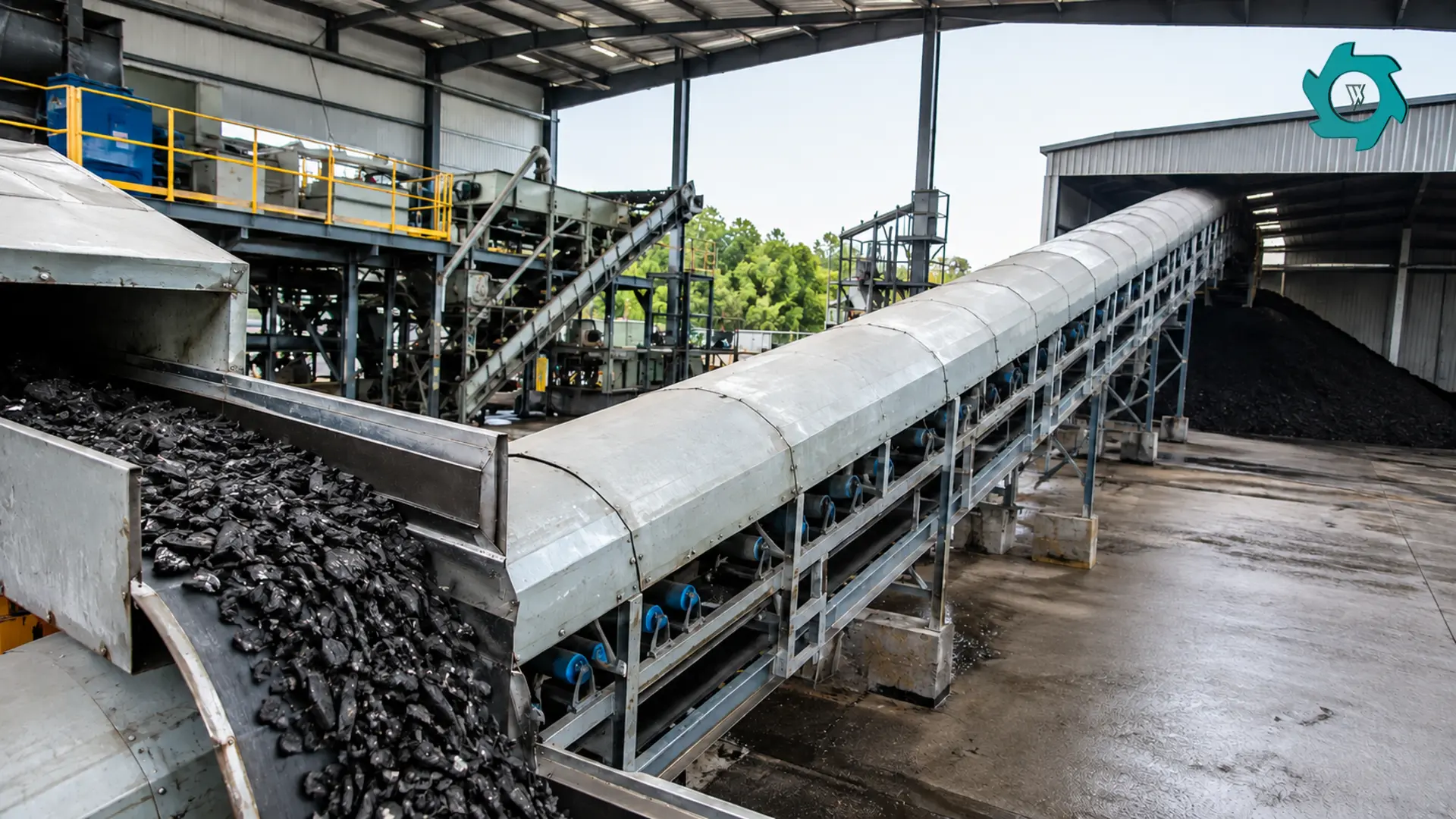
Design conveying around the chips, not a catalog belt speed
A conveyor may have enough rated capacity and still handle TDF poorly. Long flexible pieces can catch at a chute edge. Wire can snag skirts or wrap around rotating components. A narrow drop point may build a stagnant wedge until the chute suddenly releases. Fine rubber and textile residue can collect under return idlers or near bearings.
Use a material-flow test for critical transfers
Give the equipment supplier representative material, including the largest normal chips and the awkward tail. Confirm how the receiving belt is loaded, whether the stream lands in the direction of travel, and whether the chute remains accessible after guarding is installed. Where the layout has a high drop, abrupt direction change or narrowing cross-section, test that point rather than assuming the next conveyor will pull material through.
Make abnormal flow visible
Useful safeguards can include belt-drift detection, speed or zero-motion monitoring, plugged-chute detection, bearing-temperature checks and interlocks that stop upstream feed when downstream movement is lost. The exact protection scheme belongs in the site risk assessment. A stop signal that leaves two upstream machines feeding for another minute is not a complete sequence.
| Location | What operators look for | Why it matters |
|---|---|---|
| Screen discharge | Surges, oversize leakage, wire catching | Changes loading before the first transfer |
| Chutes and skirts | Polished rub points, packed material, gaps and spillage | Early signs of restriction or misalignment |
| Pulleys, idlers and bearings | Noise, drag, heat, damaged seals and wrapped wire | Friction and ignition-source control |
| Magnet area | Steel buildup and incomplete discharge | Can obstruct flow and carry metal forward |
| Reclaim hopper | Ratholing, bridging and loader damage | Controls the stability of dispatch feed |
If a chute repeatedly plugs, treat the event as a design or operating problem. The TDF plant troubleshooting guide separates flow symptoms from screen loading and blade-wear causes. Simply clearing the blockage and restarting preserves neither capacity nor safety.
Size inventory by operating need
A maximum pile marked on a drawing is not an inventory policy. Convert stored tonnes into meaningful operating units:
- production hours: how long the line took to make the stock;
- customer burn hours: how long the receiver can use it;
- dispatch days: how many normal truck movements it represents;
- age: the oldest lot and the date it entered storage.
If a site normally holds three dispatch days but inventory reaches nine, management can slow production, secure additional covered space or confirm the delivery plan before accumulation becomes routine. EPA guidance on scrap-tire site management emphasizes limiting accumulation and keeping storage tied to demonstrated operating and market history.1
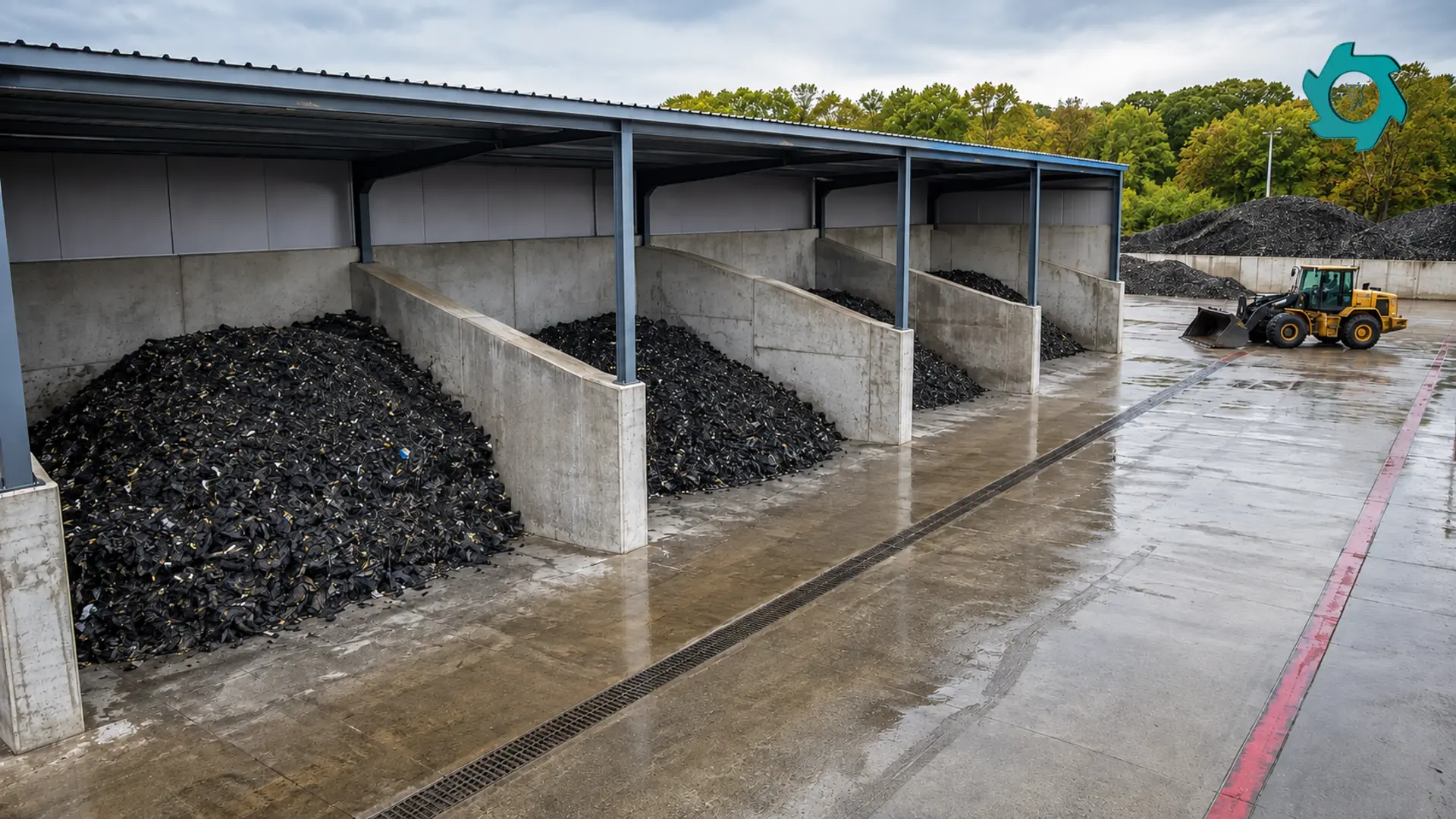
Build a stockpile area that can be operated and inspected
A workable storage area needs more than enough square metres. It needs a durable surface, controlled drainage, safe loader movements, clear lot boundaries, inspection access and a route for emergency response. EPA material notes that scrap-tire storage is widely regulated and that permits or registration may apply above jurisdiction-specific thresholds.2 Do not copy a pile height or separation distance from an article; obtain the written limit from the local environmental and fire authorities.
Keep lots identifiable
Use bay numbers or clearly marked zones. Record production period, material description, approximate tonnes, weather exposure, inspection status and intended customer. Run first-in/first-out unless a hold, investigation or receiver requirement overrides it.
Avoid blind faces and trapped edges
Operators should be able to view the pile surface and the floor line around it. Material pushed hard against an inaccessible wall is difficult to inspect and recover. Keep TDF away from unrelated combustibles, hot work, battery charging, smoking areas and ignition sources according to the approved site plan.
Control housekeeping without dispersing fines
Remove spilled chips, wire and fines before they collect around moving parts or escape routes. Cleaning methods must suit the assessed dust hazard. Compressed air can redistribute fine combustible material onto ledges and equipment. OSHA’s combustible-dust program cites fatal incidents involving accumulated rubber dust, which is why a coarse TDF pile and fine residue around processing equipment should not be treated as the same hazard.3
Rubber itself does not absorb water like biomass, but a TDF stockpile can retain water between irregular pieces. Fines, exposed textile and low spots increase the amount carried into the truck. The result can be higher delivered weight without added fuel value, inconsistent feeding, dirty runoff and a rejected load if the receiver has a moisture limit.
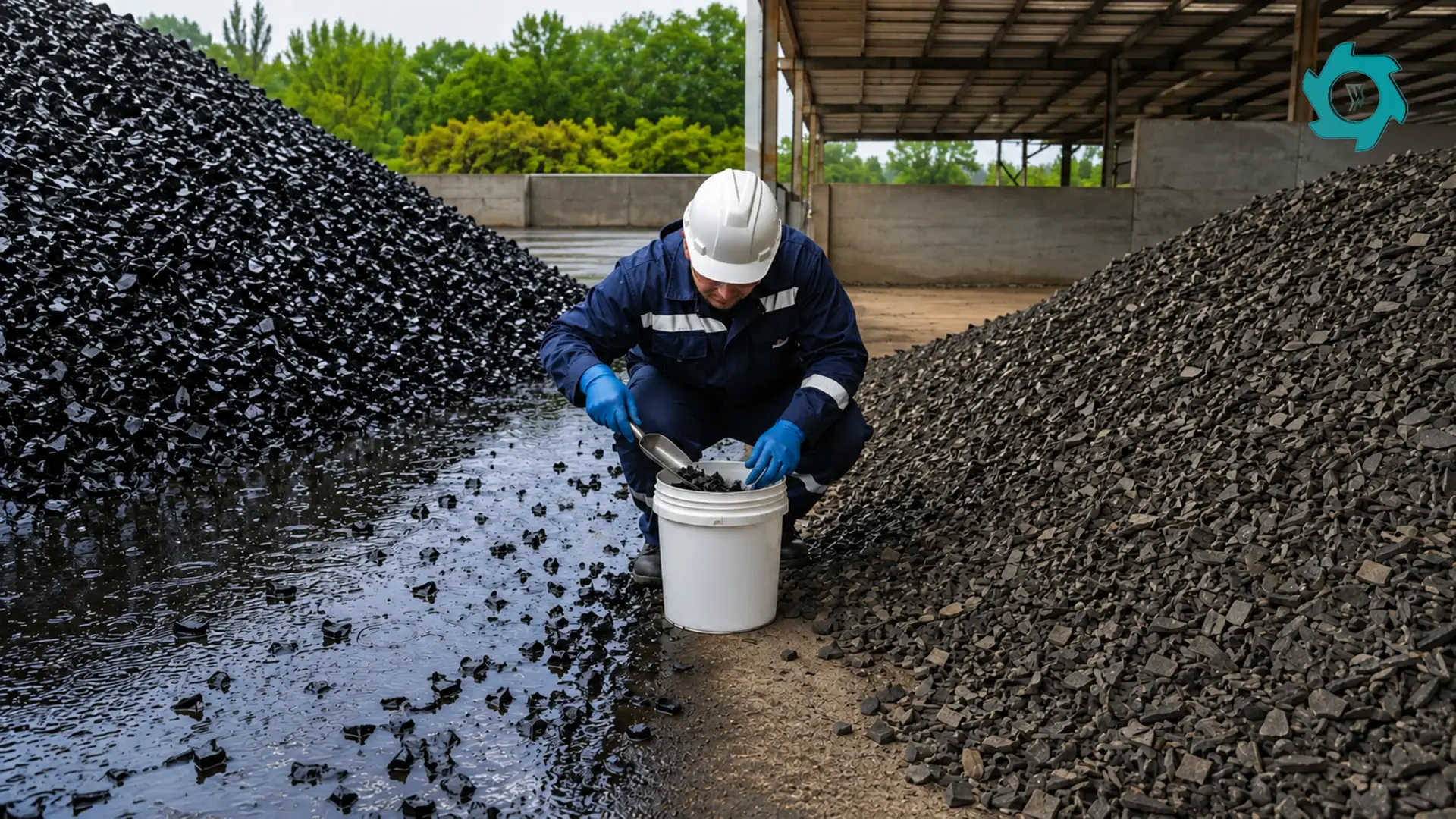
Use a weather-event hold
- Identify the affected bay, pile face or production period.
- Stop blending it into dry material merely to improve the average.
- Allow controlled drainage or use an approved conditioning method.
- Take a representative sample at the agreed point and test method.
- Release, recondition, redirect or reject the lot against the receiving specification.
A tarpaulin is not automatically a complete solution. A poorly secured cover can trap runoff, obstruct inspection or create unsafe manual handling. Permanent covered storage with managed drainage is usually easier to operate consistently, but the chosen design must match wind, rainfall, loading method and fire requirements.
Manage fire risk as several layers
Tire fires can be difficult to extinguish and can produce smoke and contaminated runoff. Large inventories and restricted emergency access can also make an incident harder to control, which is why pile limits, separation and fire lanes must follow the approved site plan. 4
| Layer | Examples to evaluate | Evidence to retain |
|---|---|---|
| Limit fuel inventory | Approved pile/bay capacity, age trigger, dispatch escalation | Daily tonnes and oldest-lot date |
| Control ignition | Bearing inspection, hot-work permit, electrical maintenance, smoking control | Inspection and permit records |
| Detect abnormal conditions | Operator rounds, temperature trend, odor/smoke observation, alarms | Baseline and exception log |
| Restrict spread | Separation, compartmentation, clear fire lanes, housekeeping | Marked site plan and audits |
| Respond safely | Isolation sequence, emergency contacts, water/runoff plan, drills | Approved plan and drill findings |
Trend conditions; do not rely on one universal temperature
A handheld thermal camera can help identify a bearing or pile area that is warmer than its normal baseline. It does not see deep into a stockpile, and a surface reading is not proof that the interior is safe. Define routes, comparable measurement points, frequency, escalation criteria and instrument limitations with the site’s fire professional. A rising trend, localized hot spot, persistent hot odor, smoke or unexplained haze deserves action even if a generic internet threshold has not been reached.

Use a condition-based response matrix
| Observed condition | Immediate operating decision | Next check |
|---|---|---|
| Normal baseline; no odor, smoke or unusual friction | Continue operation | Record routine round |
| Repeated spillage, belt rub or one bearing trending warmer | Stop and isolate affected equipment under the site procedure | Inspect alignment, obstruction, lubrication and damage before restart |
| Localized warm material without smoke | Stop adding to the affected lot; create an exclusion area | Escalate to the trained responsible person and monitor under the approved plan |
| Smoke, flame or rapidly increasing heat | Activate emergency response and keep personnel clear | Follow fire-service direction; protect drains/runoff where the plan requires |
Plan emergency access and environmental control together
Fire vehicles need a maintained route, turning space and access that is not occupied by finished inventory or parked trailers. Responders also need a current site plan showing storage zones, isolation points, water supply, utilities, drainage and nearby exposures. EPA’s archived state-program guidance shows that pile dimensions, storage time and fire prevention are common regulatory controls, but the exact requirements are local. 4
Tire-fire runoff may carry oil and contaminants. Determine in advance how drains can be isolated, where runoff would travel, what containment is available and who has authority to operate it. Avoid any arrangement that sends routine TDF runoff or emergency water directly to soil or surface water without the required controls.
Commissioning checklist for a TDF handling route
- Confirm the receiver’s chip, steel, moisture, contamination and delivery requirements.
- Test conveyors and transfers with representative normal and difficult material.
- Verify downstream-stop interlocks from every critical point.
- Demonstrate safe clearing and lockout procedures without reaching into moving equipment.
- Mark storage bays, traffic routes, fire lanes and maximum approved boundaries.
- Test lot identification from screen discharge through truck loading.
- Establish clean, dry baseline observations for bearings, pulleys and pile surfaces.
- Run a rain-event hold and release exercise.
- Walk the site with the fire authority and update the emergency plan.
- Confirm drainage isolation and runoff responsibilities.
For buyers still defining whether the product route fits the intended user, What Is Tire-Derived Fuel? explains how TDF differs from tire-derived aggregate, crumb rubber and pyrolysis feedstock.
Plan the line and storage route together
Send the tire mix, target chip specification, required accepted output, proposed layout, storage method and receiver requirements. YUXI can discuss the mechanical TDF line boundary and the information your local engineering and fire teams will need.
Frequently asked questions
Should TDF be stored indoors or outdoors?
Covered storage normally gives better control of rain, moisture variation and contaminated runoff. Outdoor storage may still be permitted, but the site needs a suitable hardstand, drainage, inventory limits, access and fire controls approved for the jurisdiction.
How much TDF should a plant keep in stock?
Set inventory from the operating buffer actually needed for production, transport and customer demand, then check it against permit and fire-code limits. Track tonnes and equivalent production or delivery days so excess accumulation becomes visible early.
Can wet TDF still be shipped?
Only if the receiving specification allows it and a representative test confirms compliance. Keep rain-exposed material separate, record the event, sample it after drainage or conditioning and release it as a distinct lot.
Where should a TDF conveyor be inspected most often?
Prioritize transfer points, skirt seals, return idlers, pulleys, bearings, magnets, blocked-chute switches and areas where wire or fines accumulate. These locations combine friction, spillage and restricted flow.
Can a loader compact a TDF pile to save space?
Do not treat uncontrolled compaction as a free capacity increase. It can make reclaim harder, hide hot material and exceed the storage arrangement accepted by the fire authority. Use the designed bay geometry and operating procedure.
What should operators do if a TDF pile smells hot or begins smoking?
Stop adding material, isolate nearby equipment if this can be done safely, keep people clear and activate the site emergency plan. Contact trained fire-response personnel. Do not dig into or move suspected hot material unless the approved response plan specifically directs it.
Engineering references
- U.S. EPA, cleanup guidebook: storage and cleanup planning.
- U.S. EPA, scrap tire handbook: recycling and handling context.
- OSHA, dust program: combustible-dust inspection focus.
- U.S. EPA, tire laws: state rule context.